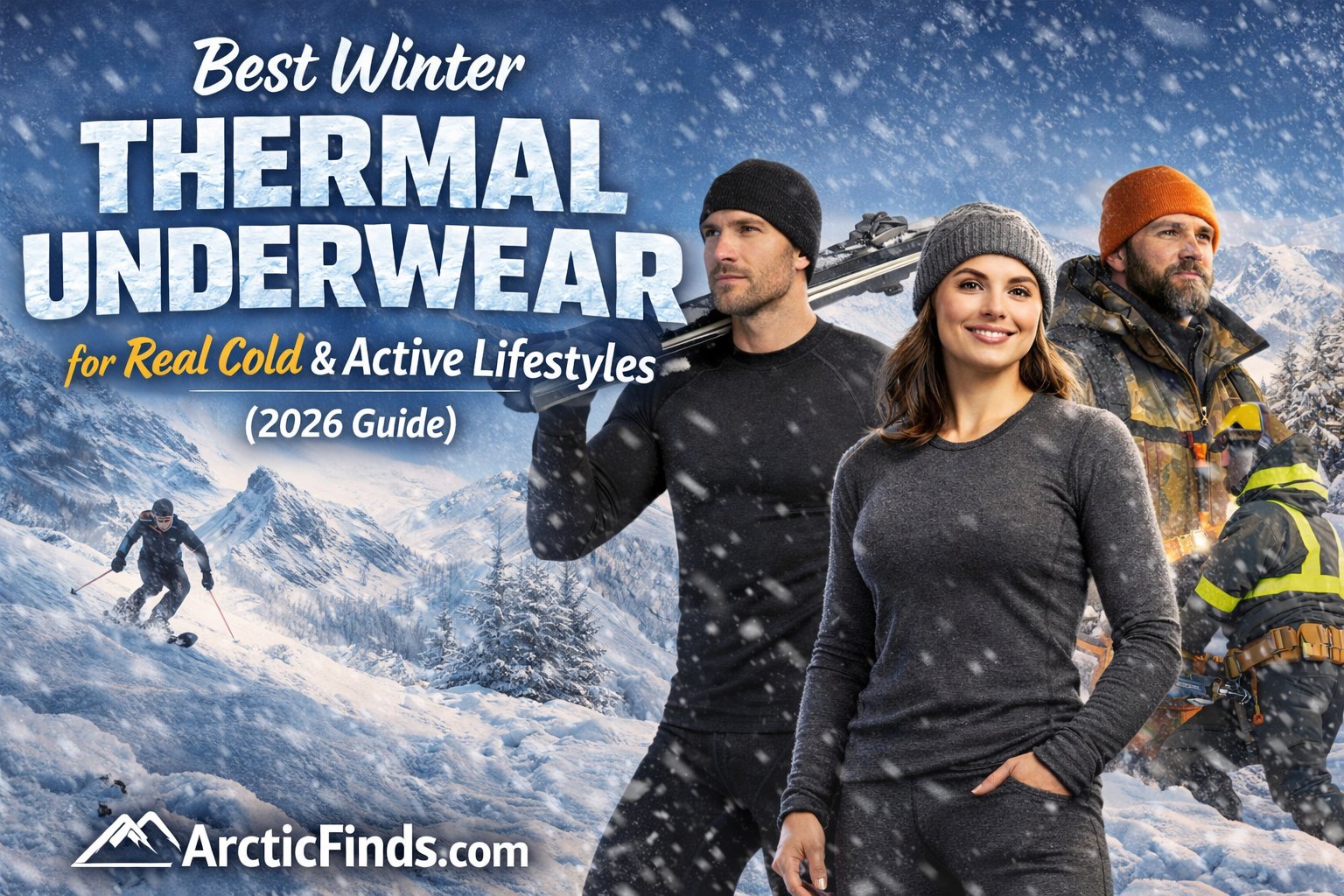
Winter can feel brutal, but the right thermal underwear turns biting cold into something you can actually enjoy. This guide walks you through the best types of thermals for different activities and budgets, plus a simple framework for choosing the right material, weight and fit.
Whether you are skiing, hiking, working outdoors or just trying to stay warm on your commute, use this article to quickly narrow down your options and avoid wasting money on layers that do not perform in real winter.
Quick Picks: Best Winter Thermal Underwear at a Glance
If you want fast recommendations, start here. These are the main “best for” categories most winter users fall into. Below, we’ll show you specific examples and detailed breakdowns that fit each category.
- Best overall: Midweight merino wool base layer set (top + bottom) with a close, non-restrictive fit.
- Warmest for extreme cold: Heavyweight merino or merino–synthetic blend with a brushed interior for extra loft.
- Best for high-intensity sports: Lightweight synthetic or synthetic-blend base layers focused on breathability and fast drying.
- Best budget option: Midweight synthetic base layer set from a reputable outdoor or workwear brand.
- Best everyday & sensitive-skin choice: Fine-micron merino or ultra-soft synthetic blend with flat seams and tagless design.
- Optional focus: Rugged thermals for outdoor work or easy-care thermals for kids, depending on your needs.
As you read on, keep your typical temperatures in mind. For clarity, this guide uses both Celsius and Fahrenheit, for example: about –10 to 0 °C (14 to 32 °F).
How to Choose Winter Thermal Underwear
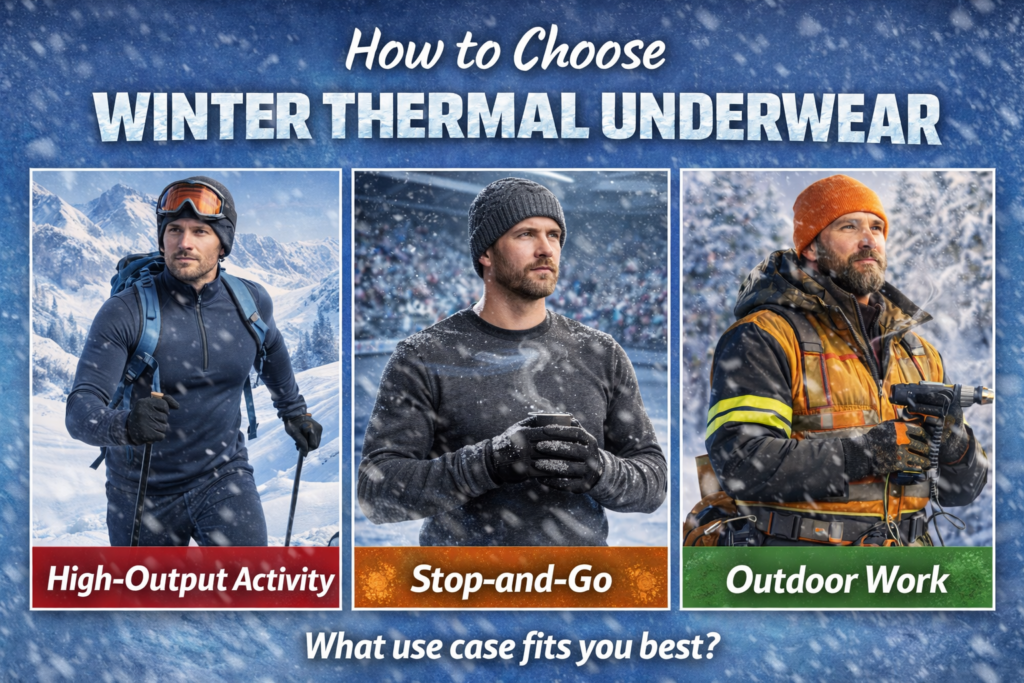
The “best” thermals for you depend on what you are doing, how cold it really is and how your body reacts to cold and sweat. Answer a few quick questions and you will know exactly what to look for.
1. Define Your Use Case
Start by being honest about how and where you will use your base layers most:
- High-intensity sports: Ski touring, winter running, fast hiking, snowshoeing. You will sweat a lot and generate plenty of heat.
- Moderate activity: Resort skiing, casual hiking, snow shoveling, walking the dog. You move regularly but not constantly.
- Low activity or static: Ice fishing, hunting blinds, sitting in stadiums, watching kids at the sledding hill.
- Outdoor work: Construction, delivery, road crews and other jobs where you are outside for long periods.
- Everyday/commuting: Walking to work, riding public transport, light errands around town.
Most people will fit into more than one category, but try to pick the one that describes your coldest, most demanding conditions. Buy for that, and everything milder becomes easy.
2. Materials: Merino Wool vs Synthetic vs Blends
Base-layer fabric matters even more than thickness. Here are the main options.
Merino Wool
- Pros: Excellent warmth-to-weight; naturally odor-resistant; feels comfortable over a wide temperature range; good even when slightly damp.
- Cons: Usually more expensive; can be less durable over many seasons than high-quality synthetics; some people are mildly wool-sensitive.
- Best for: Multi-day trips where showering and daily washing are limited; people who run cool; everyday wear and travel.
Synthetic (Polyester, Polypropylene, etc.)
- Pros: Dries very quickly; often the most durable; typically cheaper; excellent for high-output activities where sweat is inevitable.
- Cons: Prone to odor buildup; can feel clammy if you stop moving suddenly; sometimes less soft than fine merino.
- Best for: Ski touring, running, fast hiking, intense work and anyone on a tighter budget who still wants solid performance.
Blends (Merino + Synthetic)
- Pros: Aim to combine the strengths of both: better durability than pure merino, better odor resistance and comfort than pure synthetic.
- Cons: Quality varies a lot between brands; still can be relatively pricey.
- Best for: All-rounders who want one set to do almost everything reasonably well.
Important: Avoid cotton for winter base layers. Cotton absorbs moisture, dries slowly and will make you feel cold once you stop moving.
Merino vs Synthetic: Which Should You Choose?
Still unsure which material is right for you? Use these quick decision points:
- Choose merino wool if: You prioritize all-day comfort, odor resistance, and warmth in varied conditions. You’re willing to invest more for multi-day wearability and a softer feel.
- Choose synthetic if: You need fast drying, maximum durability, and lower cost. You’re doing high-intensity activities where sweat management is critical.
- Choose a blend if: You want the best of both worlds—better durability than pure merino with better comfort than pure synthetic. You need one versatile set for multiple activities.
- Choose merino for: Multi-day backcountry trips, travel, everyday wear, people who run cold.
- Choose synthetic for: Ski touring, winter running, budget-conscious buyers, jobs requiring frequent washing.
- Avoid cotton completely: It traps moisture, loses insulation when wet, and can be dangerous in true cold.
This comparison alone often determines which thermal underwear will work best for your specific winter needs.
3. Weight & Warmth: Light, Mid or Heavy
Base layers are usually categorized by weight, which loosely translates to warmth:
- Lightweight: Thin, very breathable and great for high-intensity sports or milder winter days, roughly 0 to 10 °C (32 to 50 °F).
- Midweight: The “do-everything” option for most people, suitable for around –10 to 0 °C (14 to 32 °F) with appropriate mid-layers and a shell.
- Heavyweight: Thick, cozy and built for serious cold, around –20 °C (–4 °F) and below, especially when you are not moving much.
Heavier does not always mean better. If you run hot or plan intense activity, too-heavy base layers can cause sweating, which then cools on your skin and makes you feel colder later.
4. Fit & Comfort
Thermal underwear should feel like a comfortable second skin:
- Fit: Close to the body without restricting movement. Too loose and it will not move moisture efficiently; too tight and it will be uncomfortable and may restrict circulation.
- Seams: Look for flatlock seams to reduce chafing under backpacks, harnesses and outer layers.
- Waist & cuffs: Soft, wide waistbands and cuffs that stay put without digging in.
- Sensitivity: If you have sensitive skin, prioritize ultra-soft merino or smooth, brushed synthetics with tagless labels.
Best Winter Thermal Underwear by Category
Once you know your main use case, material preference and weight, use the categories below to dial in the best type of thermal underwear for your winter.
Best Overall: Midweight Merino Wool Base Layer Set

For most people in typical winter climates, a midweight merino base layer set is the sweet spot between warmth, comfort and versatility. If you’re only buying one set of thermals and experience proper winter, this is the safest all-round choice.
Why it works so well:
- Warm enough for most winter days down to about –10 °C (14 °F) when paired with a decent mid-layer and shell.
- Comfortable to wear all day, indoors and outdoors, without feeling swampy or itchy.
- Naturally resists odor, so you can wear it multiple days in a row on trips.
- Adapts well to different activities: skiing one day, commuting the next.
If this sounds like you—someone who needs reliable, everyday winter performance without specializing for extreme conditions—this category is where to focus your search.
Warmest for Extreme Cold: Heavyweight Merino or Merino–Synthetic Blend

If you spend time in deep cold, such as around –20 °C (–4 °F) or below, or you are often standing or sitting still outside, a heavyweight base layer becomes extremely valuable. This is the category for ice fishers, hunters, outdoor workers in severe climates, and anyone who simply cannot afford to get cold.
Look for features like:
- Thicker fabric with a brushed or grid interior to trap more warm air against your skin.
- High collar or zip-neck top for extra coverage and adjustable ventilation.
- Long hem and sleeves that do not ride up under other layers.
- Merino or blended fibers for better comfort across temperature swings.
Pair heavyweight thermals with an insulating mid-layer (like a fleece or light puffer) and a proper winter shell to create a system that keeps you comfortable in punishing conditions.
If you face genuinely extreme temperatures or spend long periods stationary in the cold, heavyweight base layers are not optional—they’re essential.
Best for High-Intensity Winter Sports: Lightweight Synthetics and Blends

When you are working hard—running, ski touring, fast hiking—you generate a lot of heat. In these cases, the priority is getting sweat off your skin fast so you do not chill when you slow down. If you’re an active winter athlete, this is your category.
Prioritize these traits:
- Lightweight or ultralight fabrics that feel cool and breathable against your skin.
- High-wicking synthetic fibers that move moisture outward quickly.
- Mesh or zoned panels in high-sweat areas (back, underarms, chest).
- Zip-neck tops for instant venting on climbs.
In milder conditions, you may be able to wear just the lightweight base layer and a breathable shell. In colder temperatures, combine it with a mid-layer that you can remove or vent easily.
Choose this category if you sweat heavily during winter activities and need base layers that dry fast and breathe well, even when you’re pushing hard.
Best Budget Winter Thermal Underwear: Midweight Synthetic Sets

You do not have to spend a fortune to get functional winter base layers. Well-made synthetic sets from reliable outdoor or workwear brands offer solid performance at a friendlier price. This is the best starting point for occasional winter users or anyone testing thermal underwear for the first time.
What to look for on a budget:
- Midweight polyester or polypropylene fabric (not cotton blends).
- At least some mention of moisture management or wicking ability.
- Decent construction: flat or low-profile seams, cuffs that hold shape.
- Fit that is close to the body without obvious bagginess or sagging.
The main trade-offs versus premium options are usually long-term durability, fine-tuned fit and odor control. For occasional winter trips or lighter climates, a good budget synthetic set can still be an excellent choice.
If cost is your primary concern but you still want real winter performance, focus here—just avoid the cheapest cotton-blend options.
Best Everyday & Sensitive-Skin Choice: Soft Merino or Gentle Blends

If you plan to wear thermals under office clothes or around the house, comfort and skin feel are just as important as pure warmth. This category is for people who prioritize all-day wearability and hate anything itchy or bulky.
Ideal everyday and sensitive-skin thermals tend to be:
- Made from fine-micron merino wool or very soft synthetic blends.
- Lightweight to midweight, so they do not feel bulky indoors.
- Constructed with flat seams and tagless labels to minimize irritation.
- Cut in a low-profile style that disappears under shirts and trousers.
For many people with sensitive skin, high-quality merino is less itchy than traditional wool and more comfortable than some coarse synthetics. If you are very wool-sensitive, look for ultra-soft synthetic blends marketed specifically for sensitive skin.
Choose this category if you need thermals that feel invisible under regular clothes and won’t irritate your skin during long wear.
Thermal Underwear for Outdoor Work

If you work outside for long hours, your base layers need to be tougher than typical “recreational” thermals. Construction workers, delivery drivers, road crews and similar professions need thermals that can handle daily abuse and frequent washing.
- Prioritize durability, reinforced knees and seat, and robust seams.
- Look for compatibility with work uniforms and safety gear (e.g., FR-rated where required).
- Consider midweight or heavyweight synthetics or blends for easier care and faster drying between shifts.
If your job keeps you outside all day in winter, investing in work-specific thermals will pay off in comfort and durability.
Thermal Underwear for Kids

Children run hot when they play but chill quickly when they stop, and they tend to be rough on clothing. The best kids’ thermals balance warmth, comfort and durability while being easy enough to care for that parents don’t dread laundry day.
- Choose soft, itch-free fabrics that kids will actually wear without complaining.
- Look for easy-care materials that can handle frequent washing and drying.
- Err toward slightly bigger sizes so they last at least a full season.
For parents, the key is finding thermals kids won’t refuse to wear—comfort and softness matter more than marginal warmth gains.
How Thermals Fit into a Winter Layering System
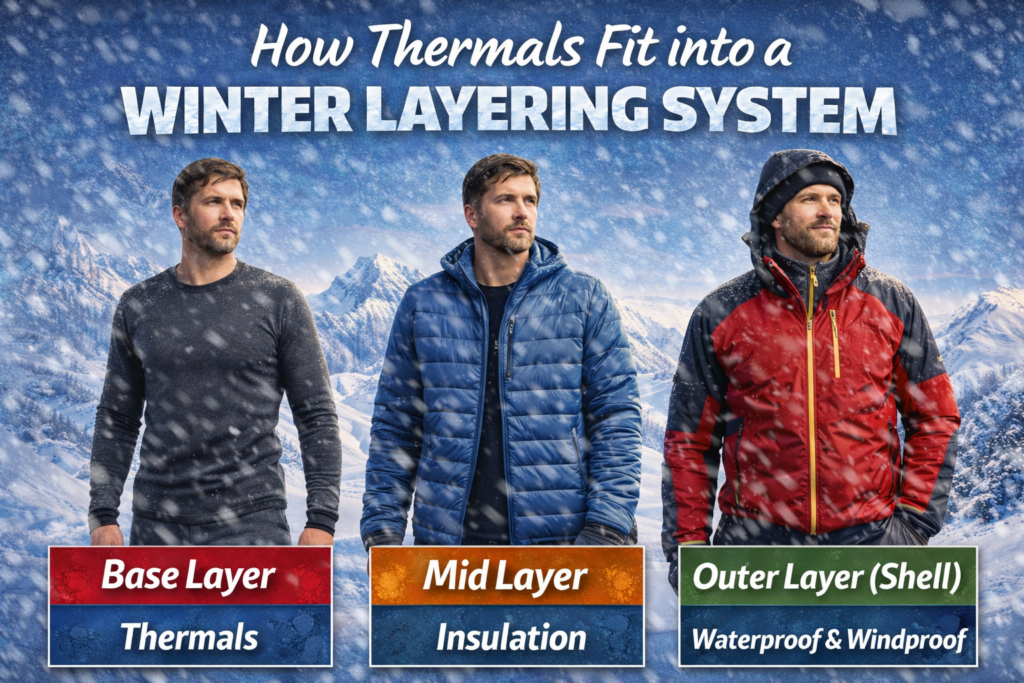
Thermal underwear is the foundation of your winter clothing system, but it is only one part of the picture. The classic approach is a three-layer system:
- Base layer: Your thermals, worn next to skin to manage moisture and provide the first layer of warmth.
- Mid layer: Fleece, wool or synthetic insulation that traps heat.
- Outer layer (shell): A windproof and often waterproof jacket and pants that shield you from the elements.
In moderate cold around –5 to 0 °C (23 to 32 °F), a midweight base layer, a light fleece and a windproof shell can be enough for walking or skiing. In deeper cold around –15 to –20 °C (5 to –4 °F), many people move to heavier base layers and thicker mid-layers, while still relying on a good shell to block wind and precipitation.
Sample Layering for Different Conditions
- Resort skiing at –10 °C (14 °F): Midweight base layer + light fleece or thin synthetic jacket + insulated ski shell.
- Active winter hiking at –5 °C (23 °F): Lightweight base layer + breathable softshell or light mid-layer + packable windproof jacket.
- Ice fishing at –20 °C (–4 °F): Heavyweight base layer + thick fleece or down jacket + heavy winter parka and insulated bibs.
- City commuting in damp, near-freezing weather: Midweight merino base layer + sweater or casual jacket + waterproof shell.
Common Layering Mistakes to Avoid
- Wearing cotton next to your skin: It absorbs sweat and loses all insulating value when wet.
- Going too heavy on your base layer: Overdressing at the base causes overheating, sweating, and then getting chilled when you stop moving.
- Not adjusting layers during activity: Vent or remove mid-layers when you’re working hard; add them back when you stop to avoid getting soaked in sweat and then freezing.
If you often face severe temperatures or multi-day winter trips, consider reading a dedicated winter layering guide that goes into more detail on combining base, mid and outer layers effectively.
Care, Washing & Longevity of Thermal Underwear
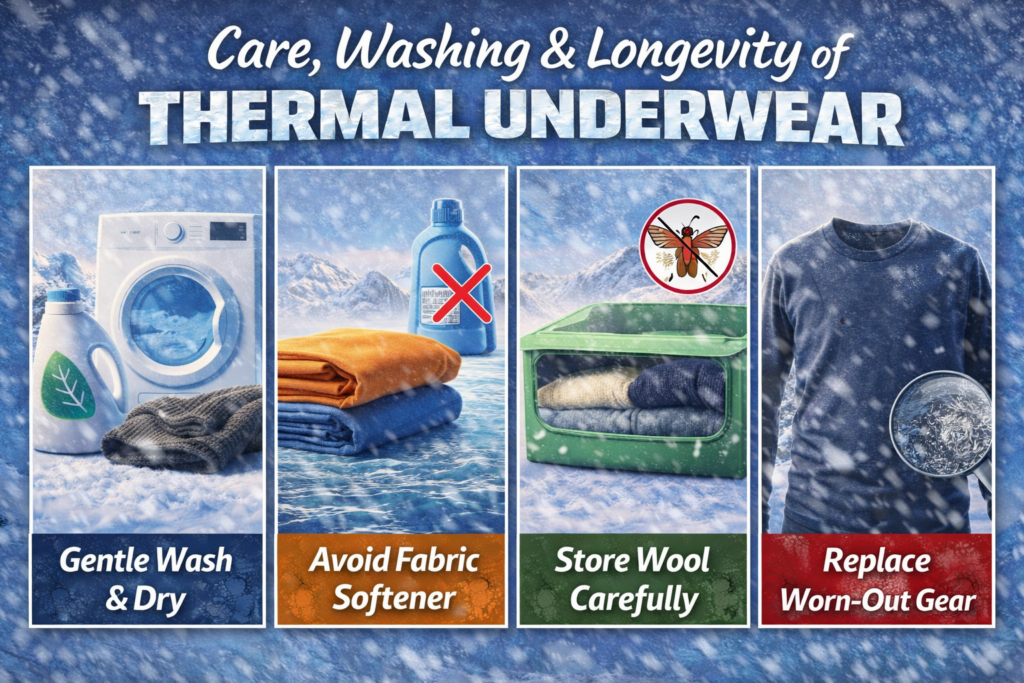
Look after your thermals properly and they will keep you warm for many seasons.
How Often to Wash
- Merino wool: Can be worn several times between washes unless heavily soiled; natural odor resistance keeps it fresher for longer.
- Synthetics: Often need more frequent washing, especially after intense, sweaty activity.
Washing Tips
- Use cool or lukewarm water and a gentle cycle.
- For merino, choose a wool-safe detergent; avoid bleach.
- Avoid fabric softener, which can reduce wicking performance.
- Air-dry where possible, or use low heat if the care label allows it.
Storage & When to Replace
- Store merino in a clean, dry place; consider sealed containers if moths are an issue.
- Replace thermals when they lose their stretch, develop thin spots or holes, or no longer feel warm compared to when new.
Quick Shopping Checklist
Before you buy, run through this 30-second checklist:
- What is the coldest temperature I realistically face? (e.g., –20 °C / –4 °F or just around freezing?)
- Will I mostly be very active, moderately active or mostly standing/sitting?
- Do I value odor resistance and comfort more, or is price my main concern?
- Which material fits that answer best: merino, synthetic or a blend?
- Given my climate and activity, should I choose lightweight, midweight or heavyweight?
- Will this base layer work with the mid-layers and shell I already own?
Once you have those answers, it becomes much easier to scan product descriptions and reviews and immediately see whether a given set of thermals matches your needs.
FAQs About Winter Thermal Underwear
Is merino wool really warmer than synthetic?
Merino wool is not magically warmer in all situations, but it has excellent warmth-to-weight and feels comfortable across a wide temperature range. It also stays more pleasant when slightly damp. High-quality synthetics can be just as warm at a given thickness, but may feel less comfortable when you are cooling down after heavy exertion.
How tight should thermal underwear fit?
Thermals should be close-fitting, like a comfortable second skin, without pinching, cutting off circulation or restricting movement. If the fabric is visibly bagging or wrinkling, it is probably too loose to move moisture effectively; if you see deep impressions in your skin after wearing, it may be too tight.
Can I wear the same thermals for several days in a row?
Many people wear merino wool base layers for multiple days, especially on trips, thanks to their natural odor resistance. Synthetics may need more frequent washing because they hold onto smells more readily. In both cases, let your thermals dry fully between uses and wash them when they start to smell or feel dirty.
How many sets of thermals do I need?
For everyday winter life, two sets are usually enough: one in use and one clean and dry. For a week-long winter trip with limited laundry, three sets give you more flexibility, especially if you are doing high-intensity sports and sweating a lot.
Can I just use leggings and a long-sleeve shirt instead of thermals?
Regular leggings and long-sleeve tops made from cotton or casual fabrics are rarely as warm, breathable or moisture-managing as purpose-built base layers. They might work for short, mild outings, but for serious cold or long days outside, proper thermal underwear is worth the upgrade.
Conclusion
The best winter thermal underwear is not simply the thickest you can find—it is the set that matches your climate, activity level, budget and comfort preferences. Decide how and where you will use your thermals, choose the right material and weight, and aim for a close, comfortable fit that works with the layers you already own.
Start with the category that fits you best—overall midweight merino, extreme-cold heavyweight, high-intensity synthetic or budget-friendly midweight synthetic—and build your winter wardrobe from there. With the right base layers, even the coldest days become far easier to handle.