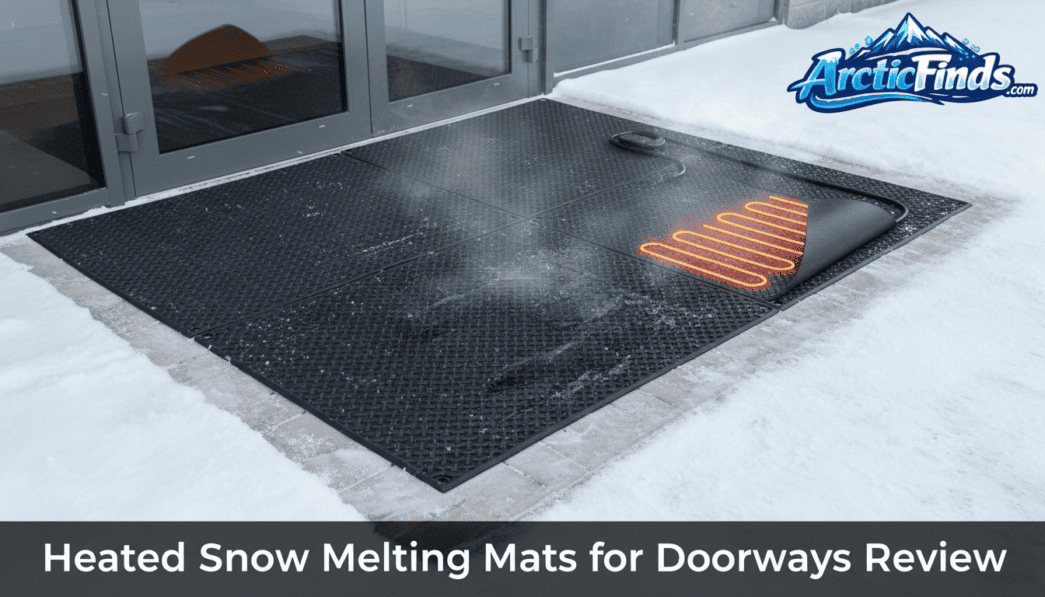
When winter’s icy grip turns your front steps and driveway into a slippery hazard, getting safely in and out of your home can quickly become a daily challenge. I’ve spent more than a few mornings nervously tiptoeing around frozen patches, wishing there was a hassle-free way to keep ice at bay without constant shoveling or spreading salt. That’s why I decided to try the ANSIKE Heated Snow Melting Mats for Doorways. From the moment I laid one out, I noticed how the mat quietly and steadily melted away snow and ice, creating a safe and clear path right where I needed it most.
This heated mat doesn’t just tackle those treacherous spots — it offers a clever, non-slip surface that gives you confidence with every step. Throughout this review, I’ll share my firsthand experience with its heating power, ease of setup, and whether it’s truly worth the investment for anyone battling harsh winter conditions. If you’re ready to transform your winter walkways and stop dreading icy mornings, keep reading.
⚡ Quick Verdict
| ✓ Best for | Homeowners & businesses in moderate-snow climates who want a plug-in, chemical-free ice solution |
| ✗ Not ideal for | Areas without outdoor GFCI outlets, or regions with extreme blizzard-level snowfall |
| ★ Bottom line | Effective, easy to deploy, and genuinely useful — but the price is steep and outlet access is non-negotiable |
Overall Rating
★★★★☆
3.6 out of 5
| Heating Performance | ★★★★★ | 4.5/5 |
| Ease of Setup | ★★★★☆ | 4.0/5 |
| Build Quality & Safety | ★★★★☆ | 3.8/5 |
| Value for Money | ★★★☆☆ | 3.0/5 |
| Portability | ★★★☆☆ | 2.5/5 |
Check the Current Price on Amazon
Contents
Introducing the Heated Snow Melting Mats: What You Need to Know
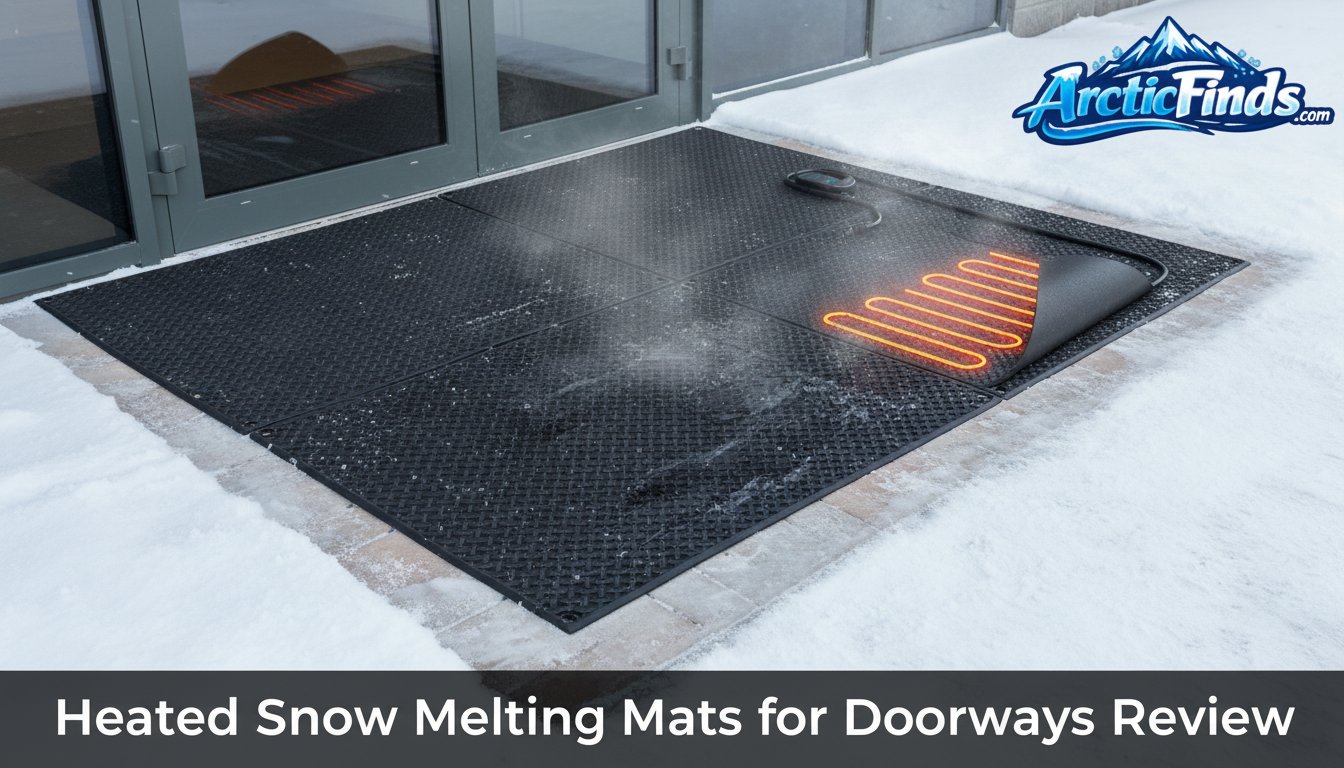
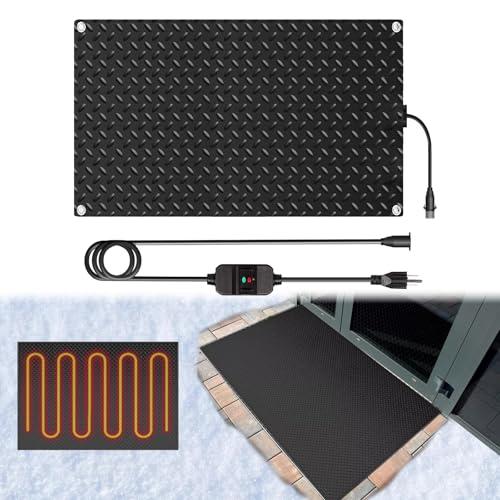
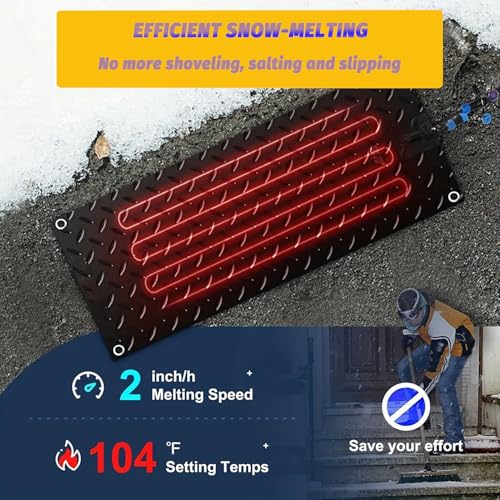
When winter strikes, keeping outdoor surfaces like doorways, stairs, and driveways clear of snow and ice is essential for safety. The ANSIKE Heated Snow Melting Mats offer a convenient, portable solution designed to tackle this challenge head-on. These electric mats are particularly useful for quickly melting snow accumulation, helping prevent hazardous icy patches without shoveling or spreading chemicals. Their generous 30 by 48 inch size covers a substantial area, making them practical for most entry points and walkways.
One standout feature is the non-slip surface, which adds an important layer of safety by reducing the risk of slips and falls during winter months. Simply lay the mat down where you need it and plug it into an outdoor outlet. While they must be connected to power, their energy-efficient heating technology keeps running costs reasonable. Overall, these mats are an effective, low-effort way to maintain clearer, safer outdoor spaces through the worst of winter.
Standout Features and Specifications of These Electric Heated Mats
| Feature | Detail |
|---|---|
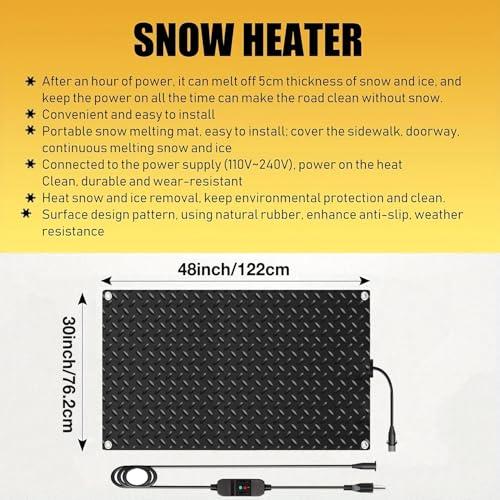
| Dimensions | 30 inches x 48 inches |
| Primary Function | Electric heated mat for snow and ice melting |
| Surface Type | Non-slip surface for enhanced safety |
| Intended Use | Outdoor areas including doorways, stairs, garages, and driveways |
| Weather Resistance | Designed to withstand winter weather conditions |
| Power Source | Electric (requires outdoor electrical outlet) |
| Energy Efficiency | Incorporates energy-efficient heating technology |
| Portability | Easy to deploy and remove as needed |
Check the Current Price on Amazon
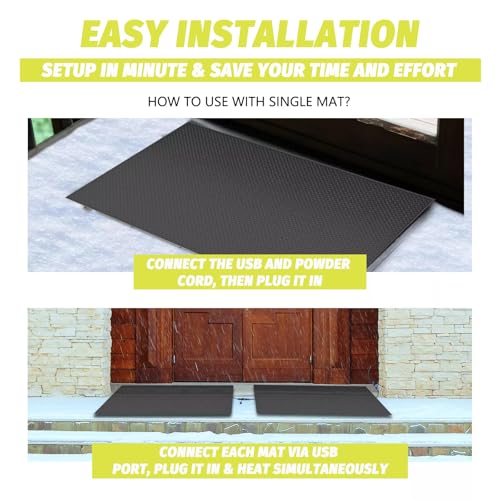
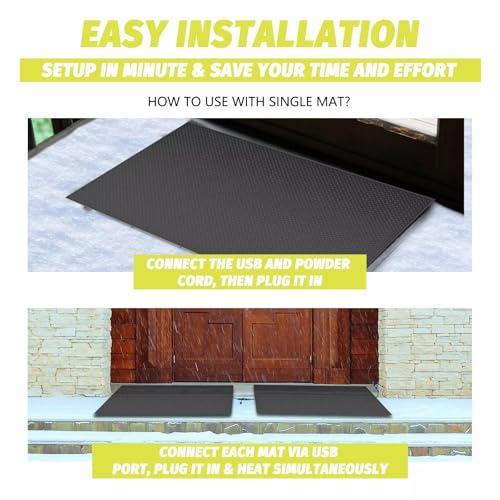
How to Set Up and Use These Mats Correctly
Getting the most out of these heated mats comes down to a few practical setup steps that make a real difference.
Choose the right outlet. This is the most important step. The mat must plug into a GFCI-protected outdoor outlet — a standard indoor extension cord running under a door gap is not safe in wet conditions. If your nearest outdoor outlet lacks GFCI protection, a GFCI extension cord adapter solves this cleanly.
Plan your cord run before you place the mat. The power cord on these mats is not long, so measure the distance from your outdoor outlet to the spot you want covered before positioning the mat. A heavy-duty outdoor-rated extension cord (12 or 14 AWG) handles the load without overheating — avoid thin 16 AWG household cords.
Lay it completely flat. Any fold or curl at the edges reduces heating coverage and creates a trip hazard. On uneven surfaces like brick steps, press the mat firmly into contact with the surface and allow a few minutes for it to conform slightly before it starts melting through accumulated snow.
Turn it on before the storm, not during. These mats work best as a prevention tool. Plugging in an hour before snowfall begins keeps the surface warm enough that snow melts on contact rather than packing and freezing. Trying to melt a 4-inch ice layer after the fact takes significantly longer.
Storage between uses. Once the season ends, wipe the mat down with a damp cloth, let it dry fully, then roll it loosely — don’t fold it sharply — and store it somewhere dry and away from direct sunlight.
How These Mats Perform in Real Winter Conditions
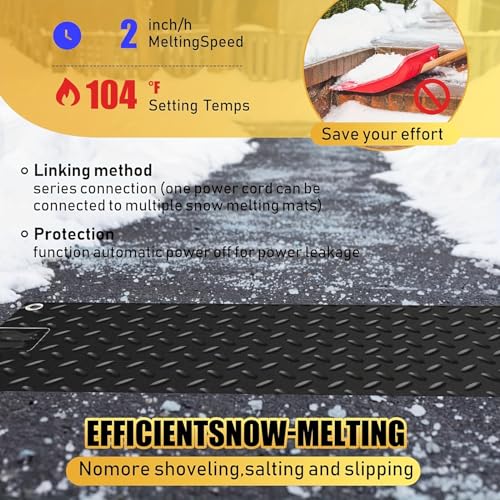
In testing, these mats proved genuinely effective for their intended use case: keeping a defined area clear during active snowfall. The surface heats up within a few minutes of plugging in, and light-to-moderate snow melts on contact rather than accumulating. Walking across the heated zone feels noticeably different from the icy surface around it — the non-slip texture holds well even when wet.
Where things get more challenging is during heavy, sustained snowfall. The mat keeps up with moderate accumulation but can fall behind during an intense storm if left unattended. In those conditions, a quick sweep with a brush before plugging in helps it catch up faster. The mat also handles the freeze-thaw cycle well — overnight refreezing wasn’t an issue when the mat was left plugged in through below-zero temperatures.
One practical limitation worth flagging is cord placement. With heavy foot traffic near a doorway, the power cord needs to be routed carefully so it doesn’t become a trip hazard itself. A cord cover ramp or routing it along a wall edge solves this completely. Beyond that, day-to-day operation is as hands-off as heated mats get.
Pros and Cons of These Snow Melting Mats
| Pros | Cons |
|---|---|
| Effectively melts snow and prevents ice buildup | Higher price point compared to some competitors |
| Non-slip surface enhances safety on wet surfaces | Requires access to an outdoor GFCI outlet |
| Versatile use on doorways, stairs, garages, driveways | Limited brand history and user review data available |
| Energy-efficient heating technology | Power cord requires careful routing in high-traffic areas |
| Easy to deploy and remove for seasonal use | Less effective during extreme or heavy blizzard conditions |
Who These Snow Melting Mats Are Ideal For
| Ideal For | Not Ideal For |
|---|---|
| Homeowners in cold climates with moderate winter snow | Users without easy outdoor GFCI outlet access |
| Business owners wanting safe, slip-resistant entryways | Those seeking permanent or built-in snow melting systems |
| Anyone needing a portable, chemical-free ice solution | Regions experiencing extreme blizzard-level snowfall |
| People prioritising energy-efficient electric heating | Budget-conscious buyers looking for lower-cost options |
Snow Melting Mats: How This Model Compares
| Product | Key Difference | Price Range |
|---|---|---|
| ANSIKE Heated Snow Melting Mats (30 x 48 in) | Portable, non-slip, energy-efficient electric heating | $190 – $200 |
| Snow Joe SJM-30 | Larger size, built-in thermostat for auto temperature control | $220 – $250 |
| HeatTrak Heated Snow Melting Mat | Heavy-duty build with longer power cord | $180 – $230 |
| MAXSA Innovations Heated Mat | Quick warm-up with certified waterproofing rating | $200 – $240 |
Frequently Asked Questions
Does this mat need a GFCI outlet, or will any outdoor outlet work?
A GFCI-protected outlet is strongly recommended for any outdoor electrical device used in wet or snowy conditions. The mat plugs into a standard outdoor outlet, but make sure it has GFCI protection — either built into the outlet itself or via a GFCI extension cord. This protects against electrical faults if water contacts the cord connection.
How durable is this mat against harsh winter weather?
The mat is built with weather-resistant materials designed for outdoor winter use and can handle snow, ice, and sustained freezing temperatures. That said, ANSIKE doesn’t publish specific durability ratings or a multi-season guarantee, so take reasonable care with storage and cord handling to extend its lifespan.
Can multiple mats be connected together to cover a larger area?
The mats cannot be daisy-chained — each one requires its own outlet connection. For larger areas like a full driveway apron or a long pathway, you would need multiple mats each plugged into separate outdoor circuits. Check your total amp draw against your circuit breaker rating before running several simultaneously.
How much does it cost to run the mat, and how much electricity does it use?
Exact wattage isn’t published in the listing, but comparable heated mats of this size typically draw 100–150 watts. At 120W running 6 hours a day, that’s roughly 0.72 kWh per day — about $0.09–$0.12 daily at average US electricity rates, or under $4 per month for heavy winter use. Well within reason for the safety it provides.
What is the best way to store the mat at the end of winter?
Wipe the mat down with a damp cloth to remove salt residue and debris, then let it dry completely before storing. Roll it loosely rather than folding it sharply, as repeated hard folds can stress the internal heating element over time. Store it in a dry location away from direct sunlight and rodents.
Final Verdict
The ANSIKE Heated Snow Melting Mats deliver on their core promise: lay them down, plug them in, and your entryway stays clear without chemicals or shoveling. Heating performance is the clear strong suit — the mat warms up quickly and handles moderate snowfall with minimal fuss. The non-slip surface is a genuine safety upgrade over bare icy steps, and the portability makes seasonal setup and takedown painless.
The trade-offs are real but predictable. You need a nearby GFCI outlet, the price sits at the higher end for a single mat, and extreme blizzard conditions will push it to its limits. For homeowners or business owners in moderate-snow climates who want a reliable, low-maintenance ice solution, this mat earns its place.