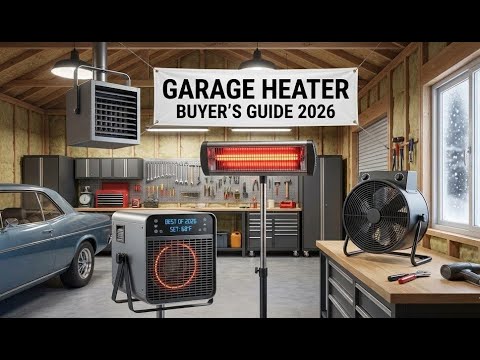
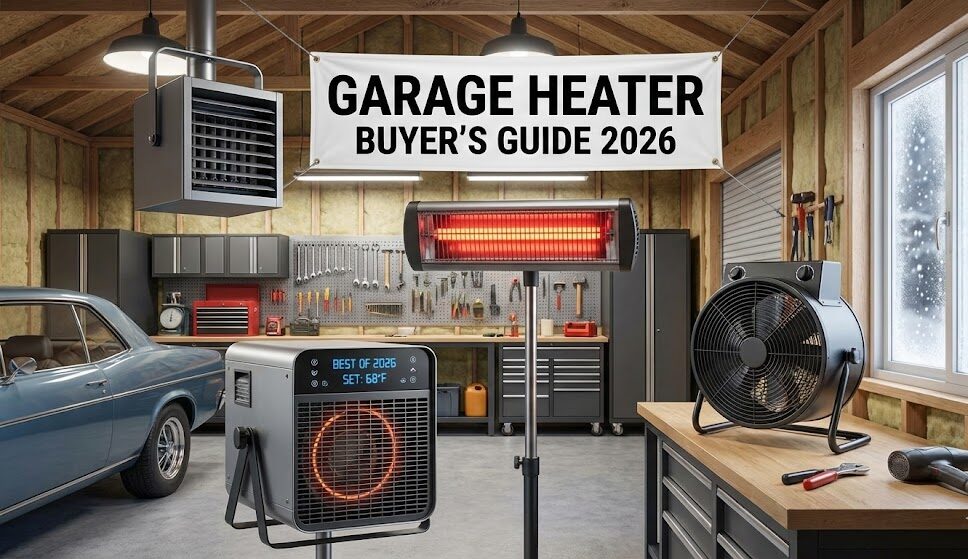
The “Frozen Wrench” Reality: There is nothing worse than picking up a steel wrench in January when it’s 20°F. It sucks the heat right out of your hand. Whether you are trying to finish a DIY project, keep your car battery from freezing, or just want to use your gym equipment without seeing your breath, a cold garage is a useless garage.
Finding the best garage heater requires navigating a minefield of voltage requirements, fuel types, and safety specs. A unit that works perfectly in a drafty barn might suffocate you in an insulated workshop. And that “powerful” electric garage heater you saw online? It might require a specialized outlet you don’t have.
In this guide, we’ve cut through the marketing fluff to bring you the top portable heater solutions for 2026. We’ve analyzed heating capacity, safety features like tip-over protection and Oxygen Depletion Sensors (ODS), and real-world usability to help you reclaim your workspace this winter. Whether you need a hardwired electric garage heater, a versatile portable heater, or even a premium patio heater for outdoor spaces, this comprehensive guide covers the best heating solutions available.
Table of Contents
- Quick Picks: Best Garage Heaters by Use Case
- How to Choose the Right Heater for Your Space
- Understanding Power Requirements (120V vs 240V)
- Top 10 Garage Heater Reviews
- Side-by-Side Comparison Chart
- Safety Zone: Critical Clearances & Carbon Monoxide
- Maintenance & Care Tips
- Frequently Asked Questions
- Final Recommendations

Quick Picks: Best Garage Heaters by Use Case
If you just want the heat without the homework, here are the top performers based on specific needs:
- 🏆 Best Overall Garage Heater: Dr. Infrared Heater DR-975 (240V Hardwired)
- 🔥 Best Portable Heater for Uninsulated Spaces: Mr. Heater Big Buddy (Propane)
- ⚡ Best 120V Plug-and-Play Electric Garage Heater: Dr. Infrared Portable DR-968 (Standard Outlet)
- 🏭 Best for Large Workshops (1,000+ sq ft): Remington 80,000 BTU (Diesel/Kerosene)
- 🎯 Best for Workbench Spot Heating: Presto Heat Dish Plus (Parabolic)
- 🧱 Best for Dust/Woodworking Shops: NewAir G56 (Portable 240V)
- 🏠 Best Smart Heater: Heat Storm Phoenix Wi-Fi (Wall-Mount Infrared)
- 💰 Best Value Electric: Isiler 1500W Ceramic (Compact)
- 🌿 Best Premium Patio Heater: Solo Stove Tower (Wood Pellet – Outdoor)
- 🛋️ Best Multi-Use Indoor/Outdoor: Briza Infrared Tripod (Weatherproof)
How to Choose the Right Heater for Your Space
Before you buy a garage heater, you need to match the unit to your specific environment. A heater that is too small will run constantly without warming the space, while one that is too big will short-cycle and waste fuel.
A. Heating Capacity: The Math Behind the Warmth
You can estimate your needs using the “10-watt rule” for electric garage heater sizing: generally, you need 10 watts of power for every square foot of space in a standard insulated garage.
- Small Garage (150-250 sq ft): 1,500W Electric or 4,000–9,000 BTU Propane portable heater.
- 2-Car Garage (400-600 sq ft): 5,000W–7,500W Electric (240V) or 20,000–30,000 BTU Propane.
- Large Workshop (800+ sq ft): 10,000W+ Electric or 50,000+ BTU Gas.
Note on Insulation: If your garage is uninsulated (bare studs, thin metal doors), you are essentially heating the neighborhood. In this case, standard electric garage heater models will struggle. You will likely need the raw power of a propane portable heater or diesel unit to overcome the heat loss.
B. Fuel Type Reality Check
| Fuel Type | Best For | Pros | Cons |
|---|---|---|---|
| Electric (240V) | Woodworking shops, attached garages | Clean, dry heat (no rust), no fumes, safe for paints/finishes. Ideal for permanent garage heater installations. | Requires dedicated circuit/electrician. Higher monthly running cost. |
| Propane (LP) | Detached garages, job sites | Massive heat output, portable heater flexibility, works in power outages. | Adds moisture to air (rusts tools), requires ventilation for CO safety. |
| Infrared | Drafty areas, high ceilings | Heats objects, not air (instant warmth), silent. | Directional heat only; if you move out of the “beam,” you get cold. |
Understanding Power Requirements: 120V vs 240V
🚨 Critical Information: Read This Before Buying an Electric Garage Heater
Many of the most powerful electric garage heater models on this list require 240V circuits—the same heavy-duty power used by electric dryers or ovens. You cannot plug these into standard wall outlets.
120V Models (Plug-and-Play)
- The Limit: Capped at 1,500 Watts (approx. 5,100 BTUs) due to standard breaker limits.
- Reality: Good for warming a small room or keeping your hands warm at a bench. They will not heat a frozen 2-car garage to 70°F.
- Installation: None. Plug your portable heater in and go.
240V Models (The Heavy Hitters)
- The Power: 4,000W to 10,000W+ (13,000–34,000+ BTUs).
- Reality: Capable of maintaining comfortable temps in large spaces. These are true garage heater solutions.
- Installation: Requires a dedicated breaker and often “hardwiring” by an electrician. Some portable 240V models (like the NewAir G56) require a specific NEMA receptacle (like a dryer plug).
💡 Pro Tip: If you’re renting or want flexibility, stick with 120V portable heater models. If you own your garage and need serious heat, budget $150-300 for professional 240V installation.
Top 10 Garage Heater Reviews
1. Dr. Infrared Heater DR-975 – Best Electric Garage Heater Overall

⚡ ELECTRICIAN REQUIRED – 240V Hardwired
Quick Verdict: The DR-975 is the heavy-duty solution for homeowners who want a permanent, “set it and forget it” heating system. It’s powerful, reliable, and keeps floor space clear.
Best For: 🏆 The Committed Shop Owner with 500-700 sq ft to heat.
Specifications:
- Power: 7,500 Watts / 25,597 BTU
- Coverage: Up to 750 sq ft
- Installation: Wall/Ceiling Hardwired
- Price Range: ~$300–$350
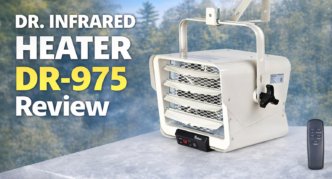
If you are tired of tripping over extension cords and portable heater units, the Dr. Infrared DR-975 is the upgrade you need. This electric garage heater mounts to your wall or ceiling and is hardwired directly into your panel, meaning it requires a dedicated 240V circuit.
The fan-forced design circulates heat effectively to prevent stratification (where heat gets stuck at the ceiling). Unlike cheaper coil heaters, the DR-975 uses a fully enclosed motor, which is better for longevity in dusty shop environments. It features a remote control and a built-in thermostat, allowing you to set a temperature and let the unit cycle on and off automatically.
Pros:
- ✅ High output (7,500W) heats 2-car garages efficiently
- ✅ Ceiling mount saves valuable floor space
- ✅ Remote controlled thermostat
- ✅ Adjustable louvers to direct airflow
- ✅ Enclosed motor handles dusty environments
Cons:
- ❌ Not DIY-friendly: Requires hiring an electrician for most people
- ❌ Higher upfront cost ($300-350 + installation)
- ❌ Fan noise is noticeable (like a loud refrigerator)
- ❌ Permanent installation—not portable
2. Mr. Heater Big Buddy – Best Portable Heater for Garages

🔥 NO ELECTRICITY REQUIRED – Propane Powered
Quick Verdict: The ultimate portable heater solution for uninsulated spaces or emergency heat. It cranks out serious warmth without needing a single wire.
Best For: 🔧 Uninsulated detached garages and emergency backup.
Specifications:
- Power: 4,000 / 9,000 / 18,000 BTU
- Coverage: Up to 450 sq ft
- Fuel: Propane (1lb cylinders or 20lb tank with hose)
- Safety: ODS (Oxygen Depletion Sensor) & Tip-over switch
- Price Range: ~$180–$220
For uninsulated garages where electric garage heater models struggle to keep up, the Big Buddy is king. This portable heater uses radiant heat technology, meaning you feel the warmth immediately, even if the air is still cold. It runs on two 1lb camping propane cylinders tucked inside the unit, or you can hook it up to a standard BBQ tank with an adapter hose (sold separately) for longer run times.
Safety is a highlight here: it includes an Oxygen Depletion Sensor (ODS) that shuts the unit off if oxygen levels drop, making it safer for indoor use than standard job-site heaters. However, you must still provide ventilation (crack a window or door).
Pros:
- ✅ True portable heater—requires no electricity (great for power outages)
- ✅ High heat output (18,000 BTU) beats 120V electric heaters
- ✅ Quiet operation (no loud fan unless you use the battery blower)
- ✅ Indoor-safe rating with ODS protection
- ✅ Three heat settings for flexibility
Cons:
- ❌ Moisture: Propane combustion releases water vapor, which can rust cast-iron tools
- ❌ Requires ventilation (cracked door/window)
- ❌ Burning fuel costs more than electricity in some regions
- ❌ Propane tank purchases/refills needed
3. Dr. Infrared Portable DR-968 – Best 120V Plug-and-Play
⚡ 120V PLUG-IN – No Electrician Needed
Quick Verdict: If you rent or can’t install 240V wiring, this is the best garage heater you can buy in the 120V category. It won’t heat a freezing 2-car garage to 70°F, but it will take the edge off a workspace effectively.
Best For: 💼 Renters and small workshops (under 400 sq ft).
Specifications:
- Power: 1,500 Watts / 5,200 BTU
- Coverage: 150 sq ft (primary) / 600+ sq ft (supplemental)
- Type: Hybrid (Infrared + Convection)
- Price Range: ~$130–$160
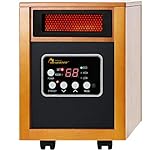
This isn’t your average plastic space heater. The DR-968 is a heavy, furniture-grade cabinet heater that combines infrared quartz tubes with a PTC ceramic element. This “dual heating” system delivers a mix of radiant heat (warming you instantly) and convection heat (warming the air).
It is limited by the 120V outlet (1500W max), so manage your expectations: it is a supplemental portable heater. However, its high-velocity blower pushes heat further than cheap ceramic towers. It sits on caster wheels, making it easy to roll right up to your workbench.
Pros:
- ✅ Plugs into any standard wall outlet
- ✅ “Dual Heat” system feels warmer than standard fan heaters
- ✅ Caster wheels for easy positioning
- ✅ Furniture-grade wood cabinet stays cool to the touch
- ✅ Best 120V electric garage heater available
Cons:
- ❌ Limited power (1500W) struggles in uninsulated spaces
- ❌ Bulky compared to plastic tower heaters
- ❌ Thermostat can be slightly inaccurate
4. Solo Stove Tower – Best Premium Patio Heater (Wood Pellet)

🌿 WOOD PELLET POWERED – Outdoor Only
Quick Verdict: More “fireplace” than “appliance,” this is for the homeowner who wants ambiance and serious heat on the patio or driveway.
Best For: 🍷 Outdoor entertaining and ambiance.
Specifications:
- Power: 72,000 BTU
- Fuel: Wood Pellets
- Coverage: 10-foot radius
- Price Range: ~$400–$600
This is the outlier on our list. The Solo Stove Tower runs on wood pellets, utilizing a gravity-fed hopper to provide a smokeless, roaring flame. It puts out a massive 72,000 BTUs, providing a 10-foot circle of warmth.
Unlike propane patio heater models that heat just your head, the Solo Stove radiates heat from the ground up. However, it requires active attention—you have to refill pellets every few hours, and it is strictly for outdoor use (patios/driveways), never inside a garage.
Pros:
- ✅ Incredible heat output (72,000 BTU)
- ✅ Beautiful, smokeless flame ambiance
- ✅ Heavy-duty stainless steel construction
- ✅ Premium patio heater design
- ✅ Creates outdoor gathering focal point
Cons:
- ❌ High Maintenance: Requires refueling every 45-90 minutes and ash cleanup
- ❌ Outdoor Only: Cannot be used in enclosed spaces (not a garage heater)
- ❌ Expensive ($400-$600+)
- ❌ More “experience” than practical heating
5. Remington 80,000 BTU – Best for Large Workshops

MULTI-FUEL FORCED AIR – Industrial
Quick Verdict: The “Jet Engine.” If you have a massive, uninsulated pole barn or commercial garage and need heat now, this is the tool.
Best For: 🏭 Large, drafty workshops (1,000+ sq ft) and construction sites.
Specifications:
- Power: 80,000 BTU
- Fuel: Kerosene, Diesel, Jet Fuel, Fuel Oil
- Coverage: 2,000+ sq ft
- Price Range: ~$350–$400
This forced-air “torpedo” heater is a beast. It can raise the temperature of a freezing 2-car garage by 20 degrees in about 15 minutes. It runs on multiple fuel types (Kerosene is cleanest, Diesel is cheapest).
The trade-off is noise and smell. It sounds like a jet engine and smells like a truck stop, especially on startup. It requires significant ventilation, meaning you must keep a door or window open.
Pros:
- ✅ Extreme heating speed and power
- ✅ Works in massive, uninsulated spaces
- ✅ Rugged construction for job sites
- ✅ Multi-fuel capability
- ✅ Portable heater design despite high power
Cons:
- ❌ Loud: Not for quiet hobby work
- ❌ Fumes: Requires significant ventilation (carbon monoxide risk)
- ❌ Open flame hazard
- ❌ Fuel smell during operation
6. Isiler 1500W Portable – Best Value Electric
⚡ 120V COMPACT – Budget Pick
Quick Verdict: Small, cheap, and effective for spot heating. Perfect for sitting on your workbench to warm your hands.
Best For: 🤏 Spot heating hands or feet in a small area.
Specifications:
- Power: 1,500 Watts
- Price: ~$30–$40
- Size: Very compact (approx 6×7 inches)
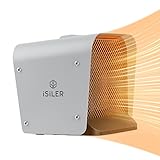
Don’t let the size fool you; for under $40, the Isiler punches above its weight. This compact portable heater uses a ceramic heating element to produce instant heat. It won’t warm the whole garage, but if you point it at your hands while working at a bench, it makes a huge difference. It has a simple adjustable thermostat and tip-over protection.
Pros:
- ✅ Very affordable
- ✅ Compact and lightweight
- ✅ Instant focused heat
- ✅ Best budget portable heater
Cons:
- ❌ Zero residual heat (cold immediately when off)
- ❌ Fan can be buzzy
- ❌ Strictly a “personal” heater, not a room heater
7. Presto Heat Dish Plus – Best for Targeted Spot Heating

⚡ 120V PARABOLIC – Radiant
Quick Verdict: The sniper rifle of heaters. It beams heat across the room directly to you, ignoring the cold air in between.
Best For: 🎯 Working at a bench in a large, cold warehouse.
Specifications:
- Power: 1,000 Watts
- Technology: Parabolic Reflector
- Price Range: ~$60–$80
The Presto Heat Dish uses a parabolic reflector to concentrate infrared heat into a tight beam. It feels like a spotlight of sunshine. Because it focuses energy rather than scattering it, it uses less power (1000W) than standard heaters but feels hotter on your skin. It glows bright orange and has a buzzer if tipped over.
Pros:
- ✅ Effective even in open, freezing spaces (heats you, not the air)
- ✅ Lower energy consumption (1000W)
- ✅ Silent operation
- ✅ Unique portable heater approach
Cons:
- ❌ Fire Hazard: The concentrated beam gets very hot; needs clearance
- ❌ No thermostat (usually just On/Off)
- ❌ Bright orange glow can be distracting
8. NewAir G56 – Best 240V Portable
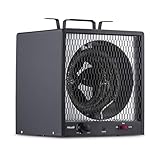
⚡ 240V PORTABLE – Heavy Duty
Quick Verdict: The power of a hardwired unit with the flexibility of a portable heater. Requires a NEMA 6-30P outlet (like some welders or compressors).
Best For: 🏗️ Serious DIYers who want 240V power but need to move the heater around.
Specifications:
- Power: 5,600 Watts / 19,107 BTU
- Connection: NEMA 6-30P Plug (240V)
- Coverage: Up to 600 sq ft
- Price Range: ~$150–$200
This unit bridges the gap. It delivers 5,600 Watts (almost 4x a standard space heater) but is portable with a carrying handle. It’s rugged, built for garages, and includes an overheat shut-off. Note: You cannot plug this into a standard wall outlet. You need a dedicated 240V, 30-amp circuit installed.
Pros:
- ✅ Serious heating power (heats a 2-car garage easily)
- ✅ Portable heater convenience (move it to where the work is)
- ✅ Built-in thermostat
- ✅ Rugged construction for workshop environments
- ✅ Best for woodworking/dust environments
Cons:
- ❌ Requires specific 240V receptacle (NEMA 6-30P)
- ❌ Fan runs loud
- ❌ Short cord usually requires the outlet to be well-placed
9. Heat Storm Phoenix Wi-Fi – Best Smart Heater
No products found.⚡ 120V WALL MOUNT – Smart Tech
Quick Verdict: The modern solution for insulated garages. Mounts on the wall to save space and lets you pre-heat the garage from your phone.
Best For: 📱 Tech-savvy users with insulated attached garages.
Specifications:
- Power: 1,500 Watts
- Control: Wi-Fi / Smartphone App
- Mount: Wall-mountable
- Price Range: ~$140–$180
The “killer app” here is the App. You can turn this electric garage heater on from your kitchen 20 minutes before you go out to the garage. It mounts flat against the wall (saving floor space) and is safe to touch, making it great for families. It uses infrared heat, so it’s efficient, but remember—it’s still limited to 1500W, so it’s best for insulated spaces.
Pros:
- ✅ Wi-Fi control (pre-heat your shop!)
- ✅ Space-saving wall mount
- ✅ Cool-touch surface (safe for kids/pets)
- ✅ Smart thermostat programming
Cons:
- ❌ Limited 1500W output
- ❌ Requires Wi-Fi signal in the garage
- ❌ More expensive than dumb heaters
10. Briza Infrared Tripod – Best Multi-Use
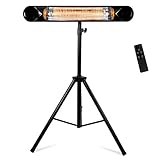
⚡ 120V INFRARED – Weatherproof
Quick Verdict: A versatile heater you can use on the patio in the fall and move into the garage in the winter.
Best For: 🔀 Homeowners who want one heater for both the deck and the shop.
Specifications:
- Power: 1,500 Watts
- Rating: IP55 Weatherproof
- Mount: Tripod or Wall
- Price Range: ~$120–$160
The Briza uses carbon infrared technology to produce instant heat. It comes with a tripod stand, so you can set it up anywhere. It is rated IP55, meaning it can withstand rain and dust, making it tough enough for garage life or patio heater duty. It’s silent and doesn’t blow dust around, which is a bonus for painting or finishing work.
Pros:
- ✅ Weatherproof (Indoor/Outdoor use)
- ✅ Silent operation (no fan)
- ✅ Tripod stand included for versatility
- ✅ Works as both garage heater and patio heater
Cons:
- ❌ Directional heat (only warms what it points at)
- ❌ Top-heavy on the tripod (trip hazard)
- ❌ Light/glow might be annoying to some
Side-by-Side Comparison Chart
| Model | Type | Power/BTU | Coverage | Voltage | Price | Best For |
|---|---|---|---|---|---|---|
| Dr. Infrared DR-975 | Electric | 7,500W | 750 sq ft | 240V | ~$300-350 | Overall Garage |
| Mr. Heater Big Buddy | Propane | 18,000 BTU | 450 sq ft | N/A | ~$180-220 | Uninsulated / Backup |
| Dr. Infrared DR-968 | Electric | 1,500W | 150 sq ft | 120V | ~$130-160 | Renters / Standard Plug |
| Solo Stove Tower | Wood Pellet | 72,000 BTU | 10ft radius | N/A | ~$400-600 | Premium Patio |
| Remington 80k | Diesel | 80,000 BTU | 2,000 sq ft | N/A | ~$350-400 | Huge/Drafty Shops |
| Isiler 1500W | Electric | 1,500W | Spot heating | 120V | ~$30-40 | Budget/Personal |
| Presto Heat Dish | Electric | 1,000W | Directional | 120V | ~$60-80 | Spot Heating |
| NewAir G56 | Electric | 5,600W | 600 sq ft | 240V | ~$150-200 | Heavy Duty Portable |
| Heat Storm Phoenix | Electric | 1,500W | 150 sq ft | 120V | ~$140-180 | Smart Features |
| Briza Infrared | Electric | 1,500W | Directional | 120V | ~$120-160 | Indoor/Outdoor |
🎯 Quick Filter Guide:
- Need 120V plug-in? → Dr. Infrared DR-968, Isiler 1500W, Presto Heat Dish, Heat Storm Phoenix, Briza Infrared
- Have 240V available? → Dr. Infrared DR-975, NewAir G56
- No electricity? → Mr. Heater Big Buddy, Remington Diesel, Solo Stove Tower
- Outdoor only? → Solo Stove Tower (wood pellet patio heater), Briza Infrared (dual-use)
Safety Zone: Critical Clearances & Carbon Monoxide
This Section Could Prevent a Fire or Save a Life
The Garage Reality: You’re Surrounded by Combustibles
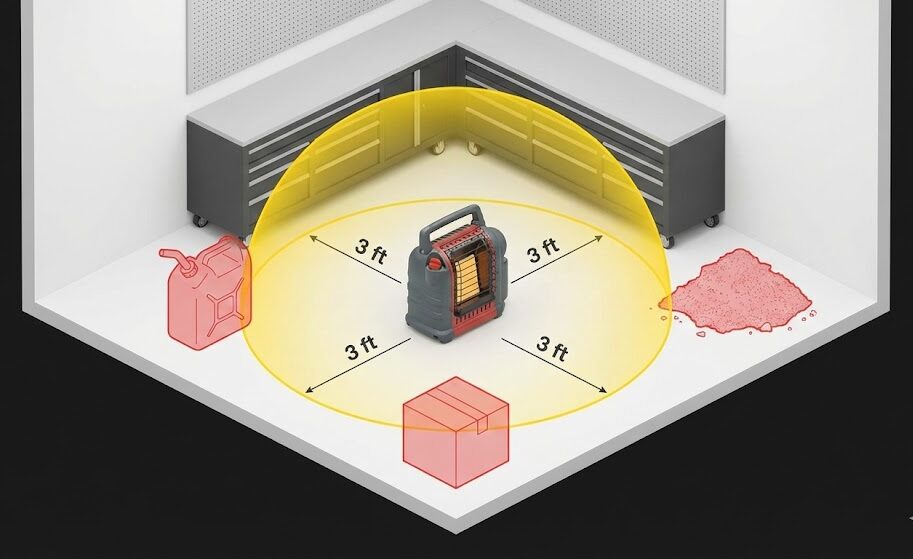
Garages aren’t just empty boxes—they’re typically packed with gasoline, paint cans, oily rags, sawdust, cardboard boxes, and other highly flammable materials. A garage heater or portable heater positioned incorrectly can turn a cold workspace into a fire hazard.
Clearance to Combustibles: The 3-Foot Rule (Minimum)
Standard Safety Clearances for Most Garage Heaters:
- Front/Sides: 3 feet minimum from any combustible material
- Top (ceiling-mount): 18-24 inches minimum
- Rear: Check manufacturer specs (typically 6-12 inches)
What Counts as “Combustible”?
- ❌ Gasoline cans, propane tanks, fuel containers
- ❌ Cardboard boxes, paper products
- ❌ Wood shelving, lumber storage
- ❌ Oily rags, shop towels
- ❌ Paint cans, solvents, chemicals
- ❌ Sawdust accumulation
- ❌ Hanging jackets, tarps, plastic sheeting
💡 Pro Tip: Create a mental “safety zone” around your garage heater. If you can’t comfortably walk around it in all directions, it’s too close to something.
The Sawdust Problem (Workshop-Specific)
Woodworking shops face unique challenges with any garage heater. Fine sawdust can:
- Clog heater intakes and reduce efficiency
- Settle on heating elements and combust
- Create explosive dust clouds near open flames
Workshop Heater Best Practices:
- ✅ Position heaters upwind from primary dust sources
- ✅ Regular intake filter cleaning (weekly during heavy use)
- ✅ Consider infrared over forced-air (less dust circulation)
- ✅ Never run propane portable heater models during sanding operations
- ✅ Clean surrounding floor area before each use
Carbon Monoxide: The Silent Killer
When CO Becomes Dangerous:
Any fuel-burning heater (propane, diesel, kerosene, natural gas) produces carbon monoxide. In well-ventilated outdoor spaces, CO dissipates harmlessly. In enclosed garages, it accumulates to lethal levels.
Non-Negotiable CO Safety Requirements:
- ✅ Install a CO detector within 15 feet of any fuel-burning portable heater
- ✅ Ensure active ventilation — crack a garage door 4-6 inches or open a window
- ✅ Never run fuel heaters overnight unattended or while sleeping
- ✅ Test your CO detector monthly (most have test buttons)
- ✅ Replace CO detectors every 5-7 years (they expire!)
CO Poisoning Symptoms (Get fresh air immediately and seek medical attention):
- Headache, dizziness, nausea
- Confusion, disorientation
- Shortness of breath
- Loss of consciousness
🔥 Pro Tip: Electric garage heater models produce ZERO carbon monoxide. If you have any doubts about ventilation or forget to crack doors, stick with electric.
Extension Cord Safety (Electric Heaters)
The Hard Rule: DON’T USE EXTENSION CORDS WITH GARAGE HEATERS
High-wattage electric garage heater models draw massive current:
- 1,500W heater = 12.5 amps
- 5,600W heater = 46 amps (240V) or overload (120V)
Why This Matters:
- Undersized extension cords overheat and cause fires
- Voltage drop reduces heater efficiency
- Most manufacturer warranties void with extension cord use
If You Absolutely Must:
- 12-gauge minimum for heaters under 1,500W
- 10-gauge for 1,500W models (limited to 10-foot length)
- NEVER for heaters above 1,500W—install proper outlets instead
Better Solution: Hire an electrician to install a dedicated outlet near your heating zone ($150-300).
Fire Extinguisher Placement
Every garage with a heater should have:
- ✅ ABC-rated fire extinguisher (handles all fire types: wood, electrical, flammable liquids)
- ✅ Mounted within 10 feet of the garage heater location
- ✅ Clear access path (don’t block with storage)
- ✅ Annual pressure check (gauge should be in the green zone)
💡 Pro Tip: A 5-lb ABC extinguisher costs $20-40 and can be wall-mounted near your garage entry door for easy access.
Maintenance & Care Tips
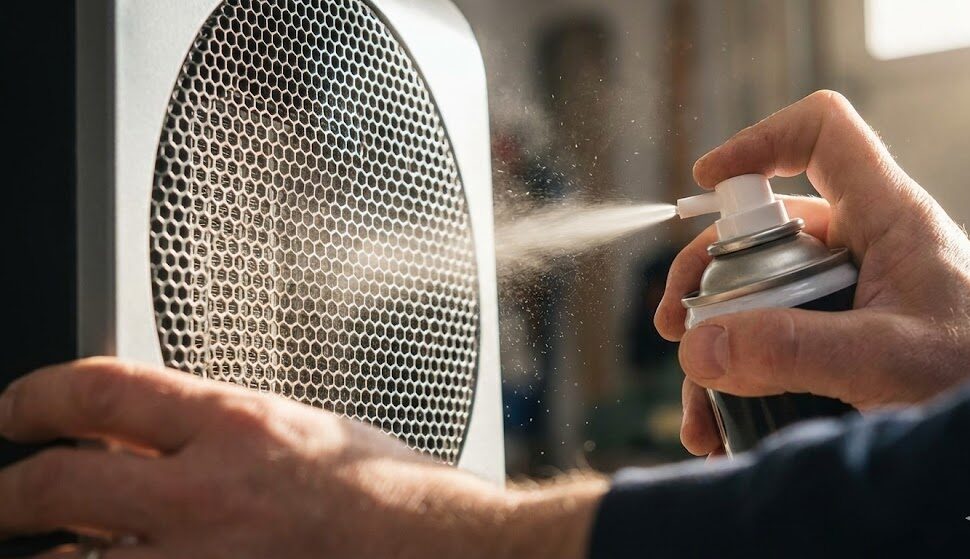
Keep Your Garage Heater Running Efficiently
Monthly Maintenance (During Heating Season):
Electric Garage Heaters:
- Clean intake grilles and filters (vacuum or compressed air)
- Check power cord for fraying or damage
- Test thermostat accuracy with separate thermometer
- Inspect mounting brackets for stability (wall/ceiling units)
- Vacuum around base and internal components
Propane Portable Heaters:
-
- Inspect fuel lines and connections for cracks or leaks
- Test ODS (oxygen depletion sensor) functionality
- Check piezo igniter performance
- Clean burner surfaces of dust and debris
- Verify proper flame color (blue = good, yellow/orange = needs service)
- Spray soapy water on hose connections to check for bubbles (leaks) before lighting
All Heater Types:
- Check for unusual sounds or odors during operation
- Verify all safety features function (tip-over, overheat)
- Keep manufacturer manual accessible
Annual Maintenance:
- Professional inspection for 240V hardwired units
- Replace batteries in CO detectors
- Deep clean all heating elements
- Lubricate fan motors if applicable
Off-Season Storage (Summer):
- Clean thoroughly before storage
- Drain propane lines completely
- Store in dry location with cover
- Disconnect power or remove batteries
- Document any repairs needed for next season
- Never store propane tanks inside the house—always store outdoors
When to Replace vs. Repair:
- ❌ Replace: Cracked heating elements, failed safety sensors, extensive rust/corrosion
- ✅ Repair: Thermostats, fan motors, simple electrical components
- 💡 Rule of thumb: If repair costs exceed 50% of replacement price, buy new
Frequently Asked Questions
Q1: What size garage heater do I need for a two-car garage?
A typical two-car garage (400-600 sq ft) requires either a 5,000-7,500W electric garage heater (240V) or a 20,000-30,000 BTU propane portable heater. If your garage is well-insulated, you can use the lower end of this range. The NewAir G56 (5,600W) or Dr. Infrared DR-975 (7,500W) both handle this size perfectly. For uninsulated garages, consider the Mr. Heater Big Buddy (18,000 BTU propane) or go with a higher-wattage electric model.
Q2: Can I safely use a propane heater inside my garage?
Yes, but only models specifically rated for indoor use with Oxygen Depletion Sensors (ODS) and tip-over protection. You must ensure adequate ventilation by cracking a door or window at least 1-2 inches, install a working carbon monoxide detector within 15 feet of the heater, and never leave the unit running unattended or overnight. The Mr. Heater Big Buddy is approved for indoor use when these guidelines are followed. Even “indoor-safe” propane portable heater models consume oxygen and produce CO, so ventilation is non-negotiable.
Q3: What’s the difference between 120V and 240V electric garage heaters?
120V models plug into standard wall outlets and require no special installation, but they’re limited to around 1,500 watts of heating power—enough for small spaces or supplemental heat. 240V units require a dedicated circuit and professional installation (similar to an electric dryer), but they deliver 5,000-7,500+ watts—enough to heat two-car garages effectively. If you’re renting or need a portable heater, stick with 120V. If you own your space and need serious warmth for a permanent garage heater installation, budget $150-300 for 240V electrical work.
Q4: Is it cheaper to run an electric or propane garage heater?
In most U.S. regions, electricity costs $0.12-0.15 per kWh while propane runs $2.50-3.50 per gallon. For intermittent use (a few hours at a time), electric garage heater models typically cost less. For all-day heating in very large spaces, propane can be more economical despite higher fuel costs. A 1,500W electric heater running 3 hours costs about $0.50-0.65, while the Big Buddy on high (18,000 BTU) uses about $2-3 in propane for the same period. Calculate your specific local rates to decide, but electric is usually cheaper for moderate, occasional use.
Q5: Can I use a patio heater in my garage temporarily?
Most traditional propane patio heater models (like mushroom-style units) produce enormous BTU outputs designed for open-air use and require substantial ventilation that most garages cannot safely provide. The Solo Stove Tower and similar outdoor-only models should never be used in enclosed spaces. Some dual-rated models like the Briza Infrared work for both applications, but classic outdoor patio heater units should stay outside. If you need temporary garage heating, choose a model specifically rated for indoor/enclosed spaces with proper ODS safety features.
Q6: Do I need a permit to install a hardwired electric garage heater?
Plug-in portable heater units require no permits. Hardwired 240V installations typically require an electrical permit in most jurisdictions, and the work should be performed by a licensed electrician. Permit costs vary by location ($50-150 typically), and your electrician will usually handle the filing. Skipping permits can create liability issues and problems when selling your home. Always check local building codes—some areas also require permits for installing dedicated 240V outlets, even for plug-in models like the NewAir G56.
Q7: How much does it cost to run a 7,500-watt electric garage heater?
At average U.S. electricity rates ($0.13 per kWh), a 7,500-watt electric garage heater like the Dr. Infrared DR-975 running continuously costs about $0.98 per hour or $23.40 for 24 hours of operation. In practice, thermostatic control means the unit cycles on and off, so actual costs are typically 40-60% lower. For weekend project use (4-6 hours on Saturdays and Sundays), expect $5-12 per week during winter months. This is considerably less than running multiple smaller heaters that can’t maintain temperature efficiently.
Q8: What’s the safest type of garage heater?
From a pure safety standpoint, electric garage heater models with modern safety certifications (ETL/UL) present the lowest risk since they produce no carbon monoxide, require no ventilation, and eliminate fuel storage concerns. Among electric options, hardwired units like the Dr. Infrared DR-975 are safer than portable heater models since they eliminate extension cord hazards and can’t be knocked over. Propane heaters are safe when used correctly with proper ODS sensors, ventilation, and CO detectors, but they require more vigilance. If safety is your top priority and you have electrical access, choose electric.
Q9: Can a portable heater handle sawdust in a woodworking shop?

This depends on the heater type. Forced-air models that actively circulate air can spread fine sawdust and clog filters quickly, requiring frequent maintenance. Infrared radiant heaters (like the Presto Heat Dish or Dr. Infrared models) work better in dusty environments since they heat objects directly without blowing air around. Never operate any open-flame propane portable heater during active sanding or sawdust-generating operations due to combustion and explosion risks. Fine airborne sawdust can ignite. For woodworking shops, sealed electric garage heater units with regular filter cleaning are the safest choice.
Q10: How long do garage heaters typically last?
With proper maintenance, quality electric garage heater models typically last 10-15 years, while propane portable heater units last 8-12 years. The heating elements or burners may need replacement after 5-7 years of heavy use. Budget models often fail sooner (3-5 years), while commercial-grade units like the Dr. Infrared DR-975 can exceed 20 years with annual professional inspections. Hardwired 240V units generally outlast portable models due to less physical wear and tear. Factors affecting lifespan include: usage frequency, maintenance quality, environmental conditions (dust, moisture), and build quality. Annual professional service for hardwired models significantly extends longevity.
Final Recommendations
Choosing the right heating solution for your garage, workshop, or patio doesn’t have to be overwhelming. Here’s the decision framework to guide your choice:
For Permanent Installation with Maximum Power:
The Dr. Infrared DR-975 (240V hardwired) remains the gold standard among electric garage heater options. Yes, you’ll need to hire an electrician and invest $450-650 total (unit + installation), but this investment transforms your garage into a true year-round workspace. The 7,500-watt output handles two-car garages with ease, and the ceiling-mount design keeps valuable floor space clear. This is the best garage heater for committed DIYers and serious workshop owners.
For Renters or Standard Outlet Convenience:
The Dr. Infrared DR-968 (120V) delivers the best performance you can get from a standard wall plug. It won’t heat a freezing, uninsulated barn to 70°F, but it’ll make an insulated garage comfortable for projects. At $130-160, it’s a quality portable heater that you can take with you when you move. For ultra-budget spot heating, the Isiler 1500W ($30-40) provides surprising value for warming hands and feet at a workbench.
For Uninsulated Spaces or No Electrical Access:
The Mr. Heater Big Buddy (propane, $180-220) and Remington 80,000 BTU (diesel, $350-400) provide the raw power needed when insulation isn’t on your side. These portable heater units deliver heat fast and don’t depend on electrical outlets. Just remember: proper ventilation and carbon monoxide detectors are absolutely non-negotiable. Never compromise on these safety essentials.
For Outdoor Entertaining:
The Solo Stove Tower (wood pellet, $400-600) redefines patio heater experiences with its smokeless fire ambiance and impressive 72,000 BTU output. It requires active tending (pellet refills every 45-90 minutes), but the atmosphere it creates is unmatched. For a more traditional, set-and-forget patio heater, classic propane mushroom models remain reliable workhorses.
For Serious DIYers Who Want Portable Power:
The NewAir G56 (240V portable, $150-200) bridges the gap between permanent installation and mobility. You’ll need a 240V outlet installed (NEMA 6-30P), but once you have it, you get 5,600 watts of heating power in a unit you can move around your workspace. Perfect for woodworking shops where you need to position heat near different work areas.
Key Takeaways:
- ✅ Match heater capacity to your space (use the 10-watt per sq ft rule for electric)
- ✅ Understand 120V limitations vs. 240V power before buying
- ✅ Prioritize safety: maintain 3-foot clearances, use CO detectors with fuel heaters, never use extension cords
- ✅ Consider total cost of ownership (installation + fuel/electricity)
- ✅ Choose electric for safety and convenience; choose fuel for raw power and portability
The safest garage heater is one that matches your space, respects clearance requirements, and is used according to manufacturer guidelines. Measure your space, assess your electrical situation, and prioritize safety features over flashy specs.
Your Next Steps:
- Measure your garage square footage
- Check what electrical options you have (120V outlets vs. 240V capability)
- Assess insulation quality (this dramatically affects heating requirements)
- Set a realistic budget (including installation if needed)
- Buy a CO detector if choosing any fuel-burning portable heater
Bookmark this guide for reference throughout the heating season, and check back for updated reviews as new models are released.
Have questions about your specific garage setup? Drop a comment below—we read and respond to every one. Share your experiences with these heaters to help fellow DIYers make informed decisions.
Stay warm, work safely, and reclaim your garage from winter.