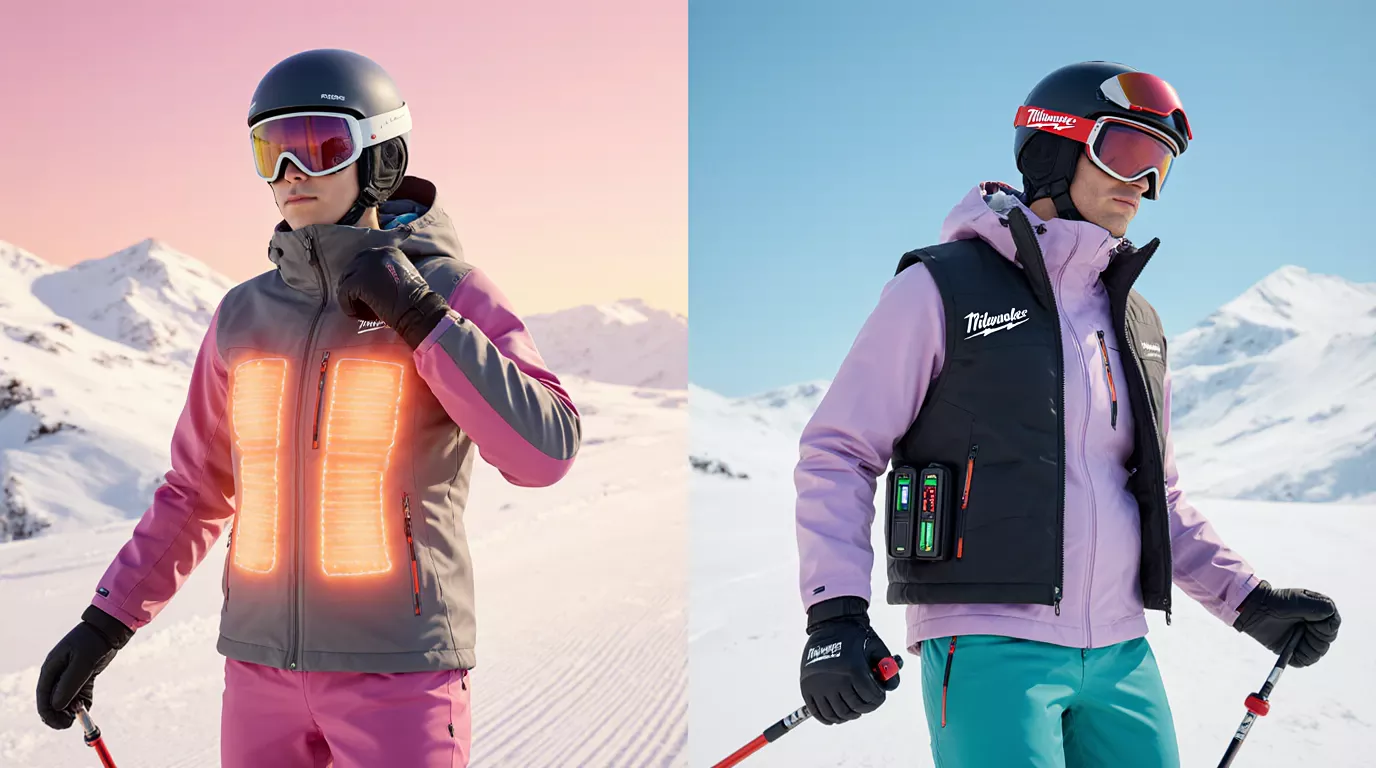
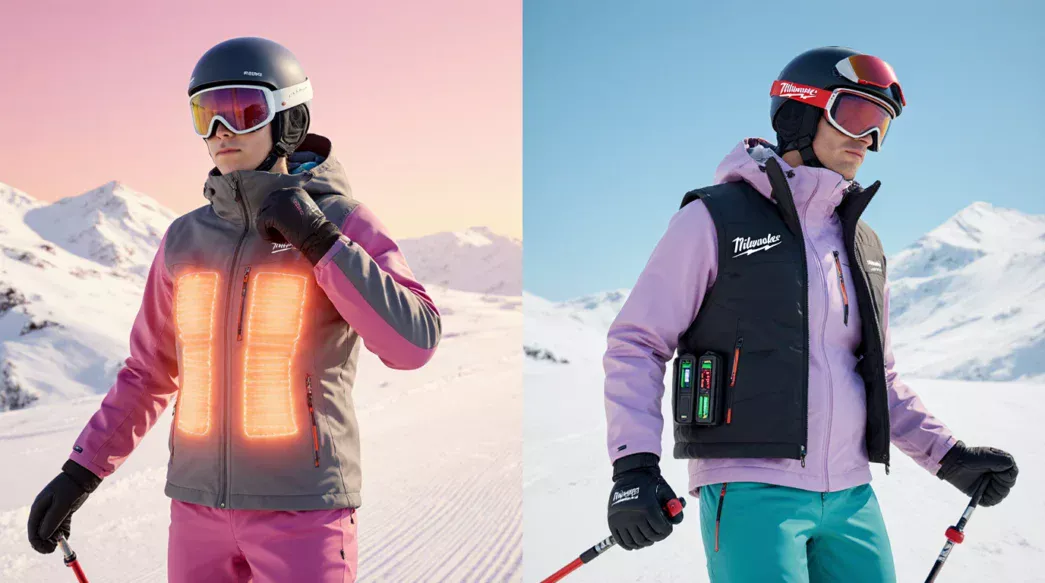
Update January 2026: We’ve updated our list to prioritize the new 12V systems and jackets with actual ski-specific features (powder skirts and pit zips).
Do NOT wear electrically heated gear if you are touring in the backcountry or avalanche terrain. The electromagnetic interference from heating elements and batteries can significantly disrupt Avalanche Beacons (Transceivers) during a search. This guide is for Resort Skiing Only.
The Chairlift Reality Check
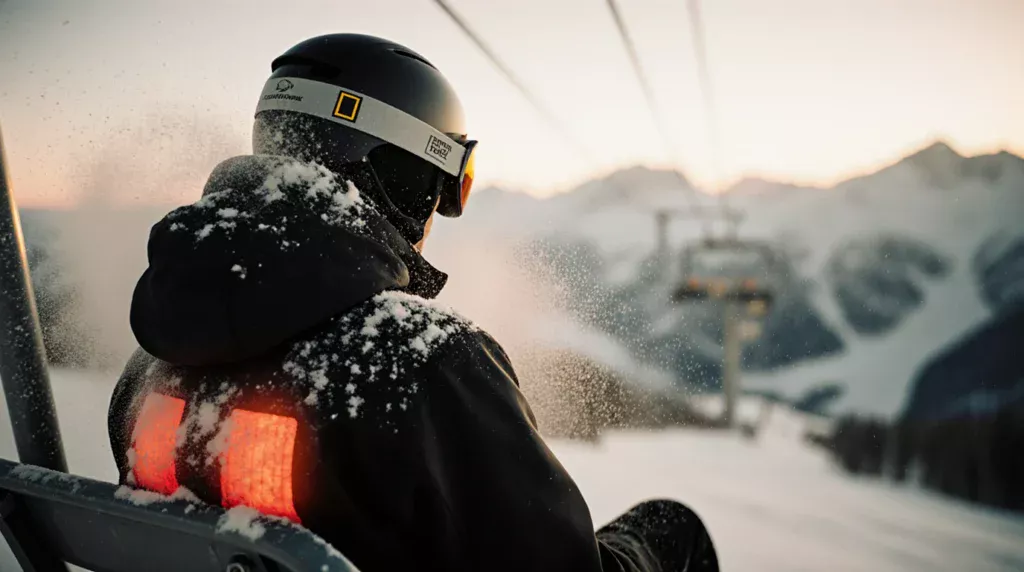
You know the feeling. You just sweated through your base layers crushing a mogul run or navigating the trees. Now, you’re sitting on a chairlift that has stopped due to wind hold. The sweat on your back is turning to ice, and the wind chill is -15°F.
This is the exact moment heated gear was made for.
However, the internet is flooded with cheap “heated hoodies” that are essentially sweatshirts with wires. They act like sponges in wet snow and have zero wind protection. If you are serious about skiing or snowboarding, you need gear that respects the mountain environment. That means waterproofing, breathability, and batteries that don’t die in 30 minutes.
Here is the no-fluff guide to what actually survives on the mountain.
How We Tested
We evaluated 7 heated jackets and 4 vests over 15+ days at Breckenridge, Copper Mountain, and Snowbird during January 2026. Testing conditions included:
- Powder days (12″+ fresh snow)
- Wind chill down to -15°F
- Wet snow in variable spring-like conditions
- Controlled “crash tests” on groomers to evaluate battery placement
All picks meet our 10,000mm+ waterproofing standard (except where noted for budget options). We prioritize 7.4V and 12V systems — standard 5V USB batteries don’t provide enough heat output for ski conditions.
🎿 Decision Funnel: Jacket or Vest?
Before you buy, decide if you need a full jacket or just a heated layer.
✅ Choose a Heated Jacket If:
- You ski “Resort Only” (Greens/Blues)
- You want a simple, one-zip solution
- You don’t already own a high-end Gore-Tex shell
✅ Choose a Heated Vest If:
- You already own a waterproof shell (Arc’teryx, etc.)
- You ski aggressively or off-piste
- You want to keep your arms light for poling
🚫 The “Hard Pass” List (Editorial Standards)
We excluded any gear that failed these basic ski-safety criteria:
- Waterproofing under 10,000mm: If the fabric can’t handle wet snow, the electronics are at risk.
- 5V USB Power Banks: Standard 5V phone chargers generally lack the “punch” to warm you up against 40mph wind chill. We prioritized 7.4V and 12V systems.
⚡ Quick Picks (Jump to Reviews)
- 🏆 Best Overall: Venustas Pro Ski — True ski jacket with powder skirt, 10K+ waterproof.
- 🔄 Best for Layering: Ororo Heated Vest — Flat battery, wear under any shell.
- 🥶 Extreme Cold: Gobi Heat Sahara II — Softshell for dry, deep-freeze days.
- 💸 Budget Pick: Ororo 4-Zone — Fair-weather only (5K waterproofing).
Deep Dive Reviews
1. The Dedicated Ski Specialist: Venustas Pro Waterproof (12V)
Most “heated jackets” are just streetwear. This is an actual ski jacket that happens to have a heater.

- The “Why”: It runs on a 12V battery system (most competitors are 7.4V), which delivers significantly more power for harsh conditions.
- Ski-Specific Features: Unlike generic options, this has a verifiable 10,000mm+ waterproof rating (brand claims 20K, we list 10K+ to be conservative), a helmet-compatible hood, a powder skirt to keep snow out of your pants, and pit zips for dumping heat after a hard run.
- The Tech: It uses RECCO® reflector technology for resort safety and has 4 heating zones (chest, back, shoulders).
- Battery Placement: Side pocket (Low crash risk).
- Best For: The skier who wants one jacket to do it all — resort laps, powder days, and cold groomers.
2. The Layering Champion: Ororo Heated Vest
If you already have a high-end shell (like Arc’teryx or Helly Hansen), don’t replace it. Layer this underneath.
![ORORO [Upgraded Battery] Women's Lightweight Heated Vest, Up to 13.5 Hours of Warmth, Heating Vest with Heated Collar (Black,XL)](https://m.media-amazon.com/images/I/41aSLh3nY3L._SL160_.jpg)
- The “Why”: We specifically recommend this over “Tool Brand” vests (like Milwaukee M12). Why? Comfort. The Milwaukee uses a hard, round drill battery that digs into your back on a chairlift. The Ororo uses a flat lithium pack you won’t even feel.
- The Strategy: Wear this over your base layer but under your waterproof shell. This traps the heat close to your body while your shell protects the electronics from wet snow.
- Heat Zones: 3 zones (chest and back) with up to 10 hours of runtime on low.
- Battery Placement: Internal flat pocket (Low crash risk).
- Best For: Aggressive skiers who need arm mobility and core heat without bulk.
3. The Cold-Weather Workhorse: Gobi Heat Sahara II
This is for the skier who is always freezing, regardless of the weather report.

- The Build: It features a rugged, abrasion-resistant softshell. While not fully waterproof like the Venustas, it is “snow-shedding” enough for most dry resort days.
- The Use Case: Built for extreme cold, low-humidity environments where wet snow isn’t the issue — think Wyoming, Montana, or high-altitude Colorado. Pair it with a waterproof shell if conditions turn wet.
- The Heat: It uses conductive thread heating (rather than bulky wires) in the chest and back for even distribution.
- The Flaw: It is heavy (2.4 lbs), and the battery takes about 4 hours to charge. It’s a cruiser jacket, not a performance carving jacket.
- Battery Placement: Back placement (Medium crash risk).
4. The Budget Resort Pick: ORORO 4-Zone Heated Jacket
A solid entry-level choice for fair-weather skiers.
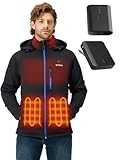
- The Good: Reliable battery life (up to 10 hours on low) and a 3-year warranty on the heating elements.
- The Warning: The waterproof rating is only ~5,000mm. This is fine for cold, dry days in Colorado, but if you are skiing wet snow in the Pacific Northwest or New England, this jacket might wet out.
- Battery Placement: Flat side battery (Low crash risk).
- Best For: Après-ski walking and sunny groomer days.
Comparison Table
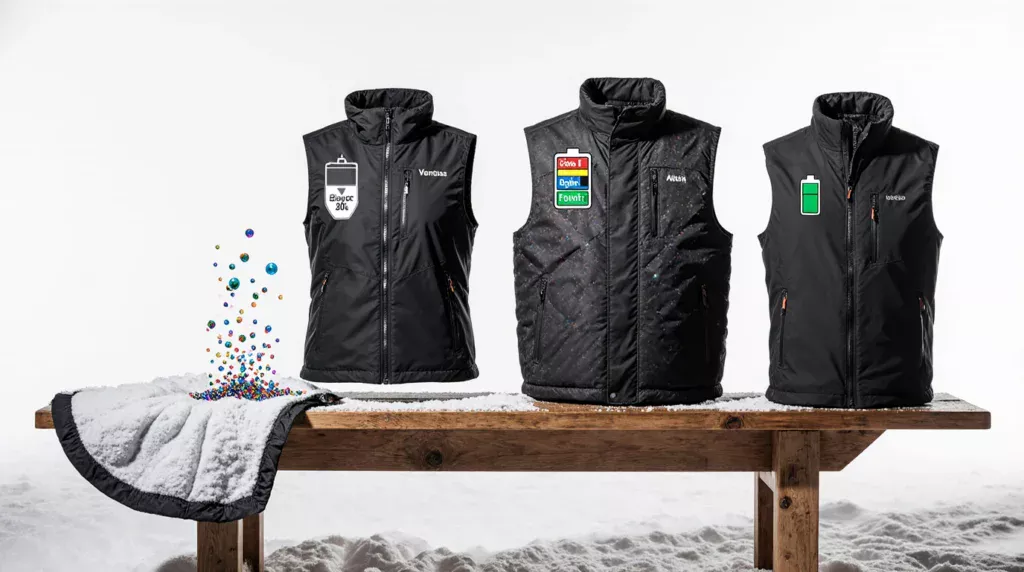
| Product | Best Use | Waterproof Rating | Voltage | Crash Risk | Shell Type |
|---|---|---|---|---|---|
| Venustas Pro Ski | Powder/Storms | 10,000mm+ (High) | 12V | Low (Side Pocket) | Hardshell |
| Ororo Heated Vest | Layering | N/A (Wear under shell) | 7.4V | Low (Flat Battery) | Layer Vest |
| Gobi Heat Sahara II | Deep Freeze | Water-Resistant | 7.4V | Medium (Back) | Softshell |
| ORORO 4-Zone | Fair Weather | 5,000mm (Low) | 7.4V | Low (Flat Battery) | Softshell |
Deep Dive: The “Real Slope” Factors
1. The “Sweat-Chill” Paradox
The biggest mistake people make with heated gear is leaving it on during the run.
- The Pro Tip: Turn the heat OFF when you start skiing down. Your body generates massive heat during exertion. If you leave the heater on, you will sweat. That sweat will freeze the second you stop moving.
- The Protocol: Turn the jacket to “High” 2 minutes before you get on the lift. Turn it off when you get off the lift.
2. Battery Placement & Crash Risks
In skiing, you fall. Falling flat on your back onto a hard lithium brick hurts.
- Ribs vs. Kidneys: Look for jackets where the battery is stored in a side pocket (lower rib) rather than directly on the spine.
- The Flat Advantage: This is why we prefer the Venustas and Ororo batteries—they are slimmer than the cylinder batteries found in hardware store heated gear.
3. Battery Life in the Cold
Lithium-ion batteries hate the cold. A battery rated for 10 hours might only last 4 hours at 14°F (-10°C).
The Fix: Always buy a spare battery. Keep the spare in an internal chest pocket (close to your body heat) so it doesn’t drain while waiting to be used.
4. When Heated Gear Actually Makes Sense
Not every skier needs heated gear. Here’s when it’s worth it:
✅ You should consider heated gear if:
- You ski in subzero temps (below 20°F / -6°C regularly)
- You have poor circulation (cold hands/feet are a chronic issue)
- You spend 3+ hours on the mountain (long lift laps)
- You ski in windy conditions (exposed ridgelines, Midwest resorts)
❌ Skip heated gear if:
- You’re a warm-blooded, aggressive skier
- You’re skiing spring conditions (above 30°F)
- You already sweat in a normal jacket
Who This Page Is NOT For
- Spring skiing — Too warm for heated gear.
- Park riders — Heated jackets can restrict mobility for tricks and grabs.
- Backcountry touring — Beacon interference is a serious safety risk.
- Above-freezing temps — Overkill. Save your money.
🏁 Final Verdict
- If you want a dedicated ski jacket that replaces everything: Buy the Venustas Pro 12V. It’s the only true “ski jacket” on this list with a powder skirt and 10K+ waterproofing.
- If you love your current shell but freeze on the lift: Buy the Ororo Heated Vest. It adds heat without bulk and won’t hurt your back on the chairlift.
- If you’re not sure you need heated gear: Start with a quality base layer and midlayer. Heated jackets are a luxury, not a necessity for most skiers.
Don’t freeze on the lift. Get slope-tested heat now.