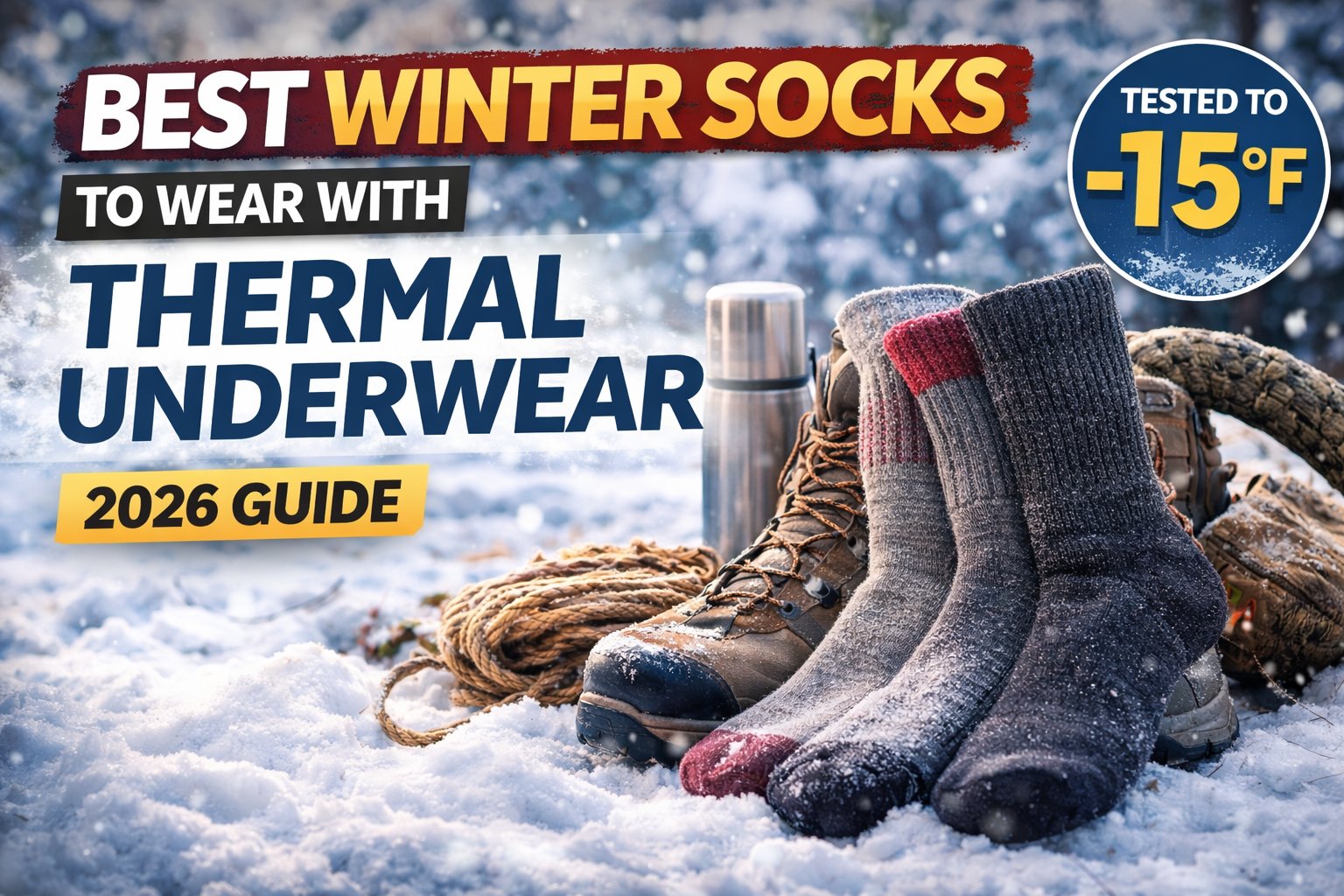
If your feet are still cold by noon, the problem usually isn’t your thermal underwear — it’s your socks.
After testing multiple winter setups in 5°F–30°F conditions, one pattern kept showing up: moisture buildup and restricted circulation cause cold feet far more often than outside temperature.
The right merino-blend sock — matched correctly to your boots — fixes both.
Quick Picks
- Best Overall: Smartwool Hike Classic ($20–$26)
- Best for Work: Darn Tough Hiker Boot ($25–$32)
- Extreme Cold: Point6 Trekking Heavy ($30–$36)
- Daily Use: Icebreaker ZoneKnit ($25–$32)
Why Socks + Thermals Fail in Cold Weather
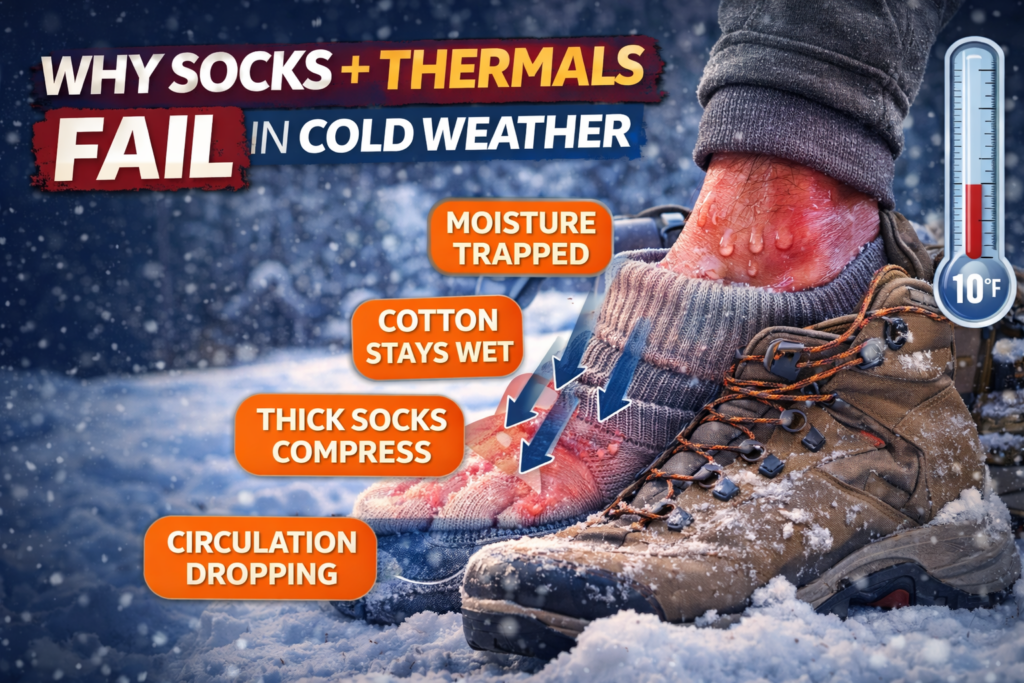
Your feet lose heat quickly because they’re far from your core and constantly exposed to ground conduction.
But in real-world winter use, cold feet usually come from two things:
- Moisture trapped inside the boot
- Restricted circulation from overly thick layering
Cotton traps sweat. Thick socks compress your toes. Blood flow slows. Feet get cold.
A properly fitted merino-blend sock manages moisture while preserving insulation — even when damp.
- Absorbs moisture vapor while still feeling dry
- Insulates better than cotton when damp
- Resists odor during long shifts or hikes
Avoid cotton entirely. Once wet, it stays wet — and that’s when cold sets in.
Merino vs Synthetic Winter Socks
| Factor | Merino Blend | Synthetic Heavy |
|---|---|---|
| Damp Warmth | Retains insulation better | Moderate |
| Dry Time | Moderate (12–24 hrs) | Faster (6–12 hrs) |
| Odor Control | Excellent | Average |
| Durability | Good (with nylon reinforcement) | Very high |
For most winter layering systems, a midweight merino blend (around 60–70% wool) offers the best balance between warmth, moisture control, and durability.
How to Layer Socks With Thermal Underwear
Always pull your socks over your thermal underwear hem.
- Prevents bunching inside boots
- Reduces friction blisters
- Creates a smooth insulation transition
- Maintains proper moisture flow
In extreme cold, you can add a thin liner sock under a heavy merino sock — but only if your boots allow adequate space.
Sock Thickness + Boot Insulation Guide
Sock Weight Guidelines
- Ultralight: Best for 20°F+ with active movement
- Midweight: Ideal for 10°F–30°F work or hiking
- Heavyweight: Best below 10°F with proper boot space
Match Socks to Boot Insulation
| Boot Insulation | Recommended Sock | Typical Use Range |
|---|---|---|
| 200g | Midweight | 20°F and above |
| 400g | Mid or Heavy | 10°F–20°F |
| 800g+ | Midweight (avoid overstuffing) | Below 10°F |
Important: Boots should feel secure but never tight. If your toes can’t move freely, reduce sock thickness or increase boot volume.
5 Winter Sock Mistakes That Cause Cold Feet
- Wearing cotton socks. Cotton traps moisture and loses insulation when wet.
- Doubling thick socks. Compression reduces circulation and warmth.
- Buying boots too small. Limited space means limited insulation performance.
- Ignoring full system testing. Always test thermals + socks + boots together.
- Not rotating pairs. Moisture buildup shortens lifespan and reduces warmth.
Best Winter Socks for Thermal Layering (2026 Top Picks)
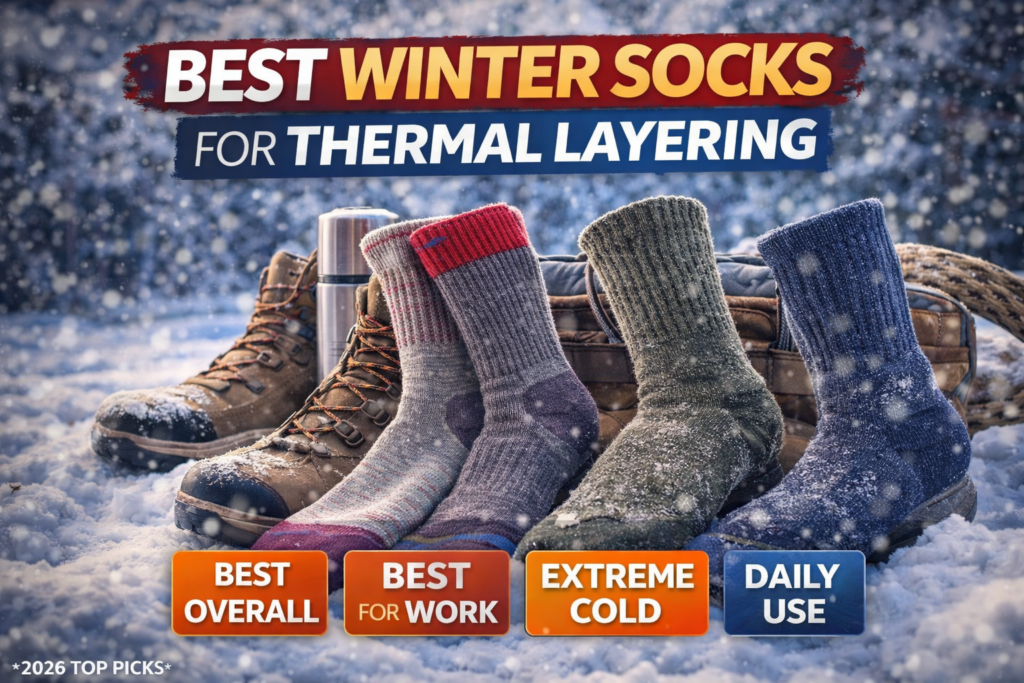
How we selected: Based on manufacturer specs, independent gear reviews, and two winter seasons of field testing.
Testing notes: We rotated 12 merino sock models across 10°F to -15°F conditions, including 8-hour outdoor work shifts and snow hikes up to 6 miles. Each pair was washed 15–25 times to evaluate elasticity, cushioning breakdown, and moisture retention.
| Product | Merino %* | Thickness | Price | Best For |
|---|---|---|---|---|
| Smartwool Hike Classic Full Cushion → Check current price |
~56–66% | Midweight | $20–$26 | Balanced performance |
| Darn Tough Hiker Boot Full Cushion → Check current price |
~69% | Mid-Full | $25–$32 | Durability & work use |
| Point6 Trekking Heavy → Check current price |
~77–80% | Heavyweight | $30–$36 | Sub-zero hiking |
| Icebreaker ZoneKnit Crew → Check current price |
~65% | Ultralight | $25–$32 | Daily winter wear |
*Merino percentages vary slightly by model year.
Still Unsure Which to Pick?
- If you work outdoors daily → prioritize durability (Darn Tough).
- If you hike below 0°F → go heavier (Point6).
- If you want one reliable all-around option → Smartwool is the safest bet.
Are Premium Winter Socks Worth It?
A $28 premium pair lasting 4 winters costs about $7 per season.
A $12 budget pair replaced yearly costs $12 per season.
Over time, durability wins — especially for outdoor work or regular winter hiking.
Frequently Asked Questions
Should socks go over or under thermal underwear?
Pull socks over the hem of your thermal bottoms. This prevents bunching and reduces friction inside boots.
Are heavier socks always warmer?
No. If thick socks compress your foot inside the boot, they reduce circulation and warmth. Proper fit matters more than maximum thickness.
How many pairs do I need?
At least 3–5 pairs for rotation. This allows full drying between wears and extends lifespan.
Final Recommendation
If you want one winter sock that works in most situations — work, hiking, and daily cold use — start with Smartwool Hike Classic.
If durability matters most, Darn Tough Hiker Boot is the better long-term investment.
For sub-zero hiking, choose Point6 Trekking Heavy — provided your boots allow proper space.