
Your shift starts at 6 AM. The sun isn’t up yet. You grab cold steel tools, frozen ladder rungs, or an icy steering wheel. Chemical hand warmers might last two hours if you’re lucky, but after that, it’s numb fingers and a sloppy grip for the rest of the day.
Working outside all day changes everything. You don’t need a device that stays “warm for 20 minutes” while you wait for a bus. You need reliable heat for 8+ hours without having to babysit a battery. When cold hands lead to lost dexterity, you risk mistakes, injuries, and lost pay.
Here is the honest breakdown of the gear that actually survives a job site.
The Hard Truth: Why “All-Day Heat” Is Usually a Lie
If you read the box on most rechargeable hand warmers, you’ll see claims of “10 hours of heat.” That testing is usually done in a room-temperature lab on the ‘Low’ setting.
The Reality: On a job site, you are dealing with wind, handling cold metal tools, and constantly pulling the warmer out of your pocket. These factors suck the heat out of the device. In real-world testing at 40°F ambient temperature, most “10-hour” warmers die in 2 to 3 hours on high.
If you are a continuous-use worker—not just a commuter—you need to look at specifications differently.
Buying Guide: What Actually Works
1. The Battery Reality
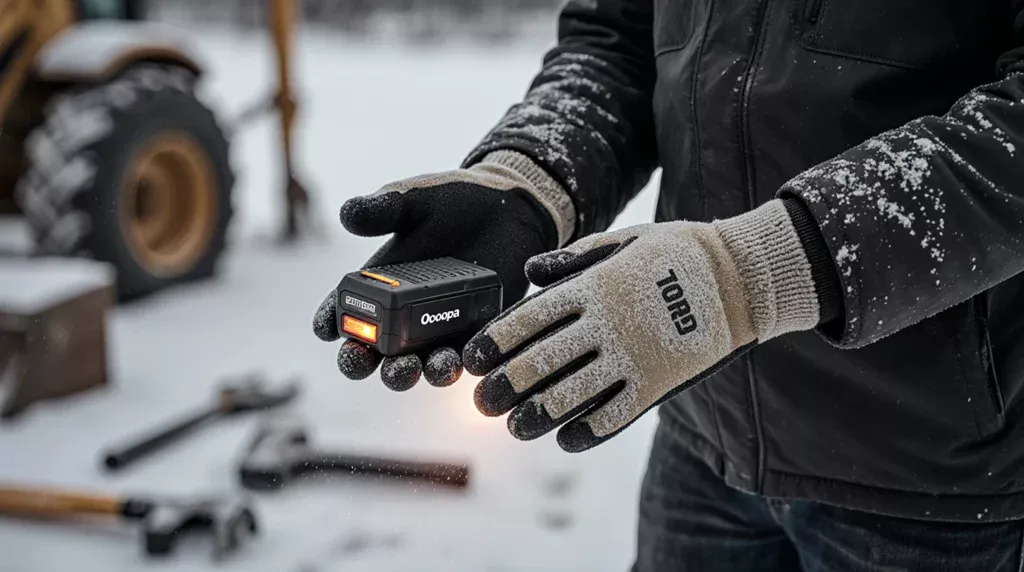
Ignore the marketing fluff. You need a minimum viable spec of 35Wh+ total capacity. Anything less won’t last a full shift. Also, look for replaceable batteries over sealed units.
2. Swap > Recharge
Power banks are not heat generators. Cold weather kills recharge efficiency, and you don’t have time to sit next to an outlet for three hours. Swapping a battery beats trying to charge one on-site every single time.
3. Pockets vs. Gloves (Safety Critical)
Do NOT place electric warmers inside tight work gloves. The compression combined with the high heat (140°F+) can cause low-temperature burns or damage the lithium battery cells. The Pro Move: Use them in your vest/jacket pockets to warm your hands during micro-breaks.
The “Ziplock Hack”: If you work with drywall or sawdust, keep your warmer inside a thin sandwich bag in your pocket. It keeps the USB-C port from clogging with dust but lets the heat pass through perfectly.
The Cheat Sheet (2026 Winners)
Breakdown of the best units for outdoor labor.
| Category | Product | Real Runtime (High) | The Flaw |
|---|---|---|---|
| 🏆 Best Overall | Ocoopa Union 5S | 4h 20m (per core) | Heavy/Bulky in pocket. |
| 🔄 Best Swappable | Union 5S + Extra Core | Unlimited (Swap-based) | Extra cost for spare battery. |
| 🧱 Most Durable | Zippo HeatBank 9s | ~4 Hours | Not Waterproof. |
| 🧤 Best Pocket Pair | Ocoopa UT3 Pro | ~3.5h (per side) | Easier to lose one half. |
Deep Dive Reviews
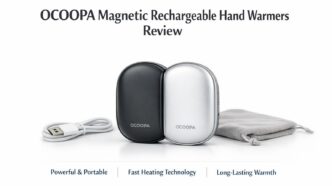
1. The Only Real “All-Day” Option: Ocoopa Union 5S
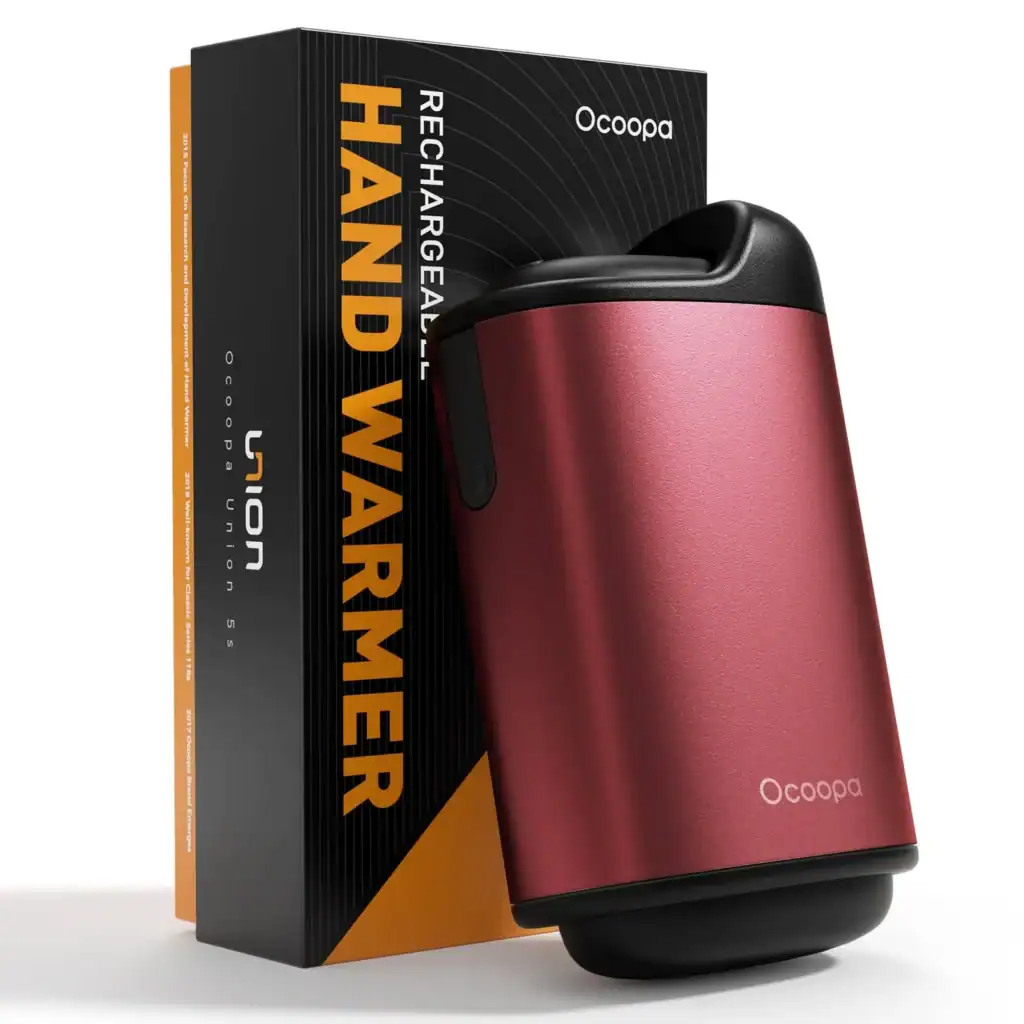
This is currently the only hand warmer designed like actual work equipment.
- The “Why”: It features a detachable battery core. This means zero downtime. When one core dies, you swap it out just like you would a cordless drill battery.
- The Job Site Fit: It is rated for cold performance and built like a brick. This is the closest thing to a power tool battery that produces heat.
- Best For: Construction, farming, and oil & gas workers who cannot be tethered to a charger.
2. Built Like a Tool: Zippo HeatBank 9s
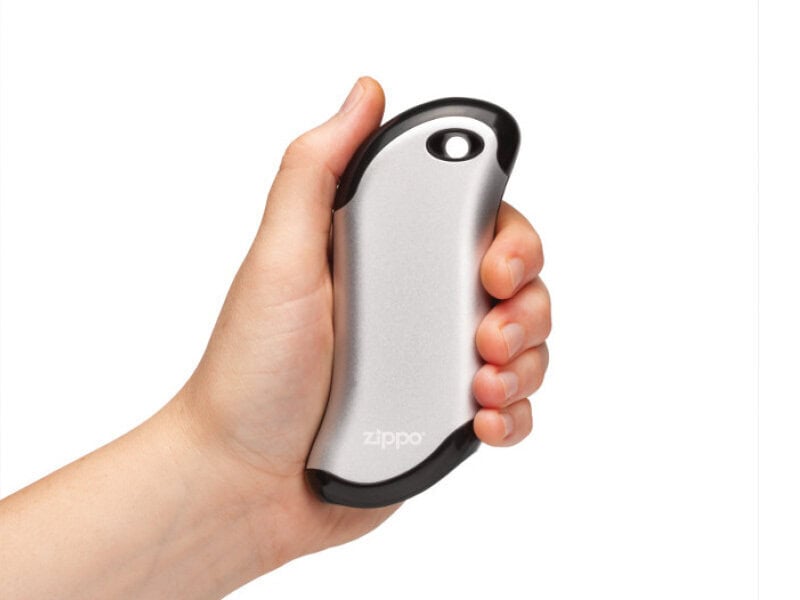
This unit isn’t the hottest or the longest-lasting, but it is reliable.
- The Ergonomics: It features physical buttons, which are essential when you are wearing work gloves (touch screens don’t work with riggers).
- Durability: It offers decent drop resistance thanks to the bumper design.
- Wet Work Warning: While rugged, this unit is not waterproof. If you are a plumber or work in wet mud, keep this in a sealed pocket.
3. Best for Moving Jobs: Ocoopa UT3 Pro
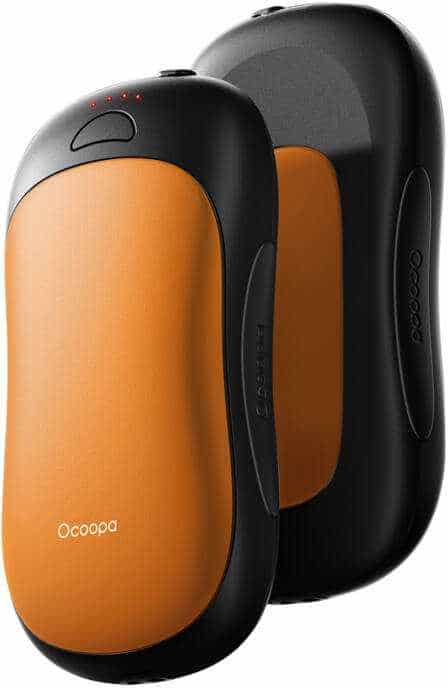
If your job involves constant movement—like delivery drivers or warehouse pickers—you can’t be weighed down.
- The Design: This unit splits into two separate warmers.
- The Strategy: Put one in each pocket. This allows you to keep both hands warm simultaneously without carrying one heavy unit.
- Mobility: It prioritizes mobility over raw power, making it ideal for inspectors or anyone climbing in and out of vehicles.
Real Work Scenarios
“I work 8–10 hours outside”
Do not buy a single unit. Get the Ocoopa Union 5S plus a spare battery core. Keep the spare core inside an inner jacket pocket to keep the cells warm until you need to swap.
“I handle cold metal all day”
Go with the Zippo HeatBank. Use a pocket cycling strategy: keep the warmer in your pocket and switch hands during micro-breaks to maintain blood flow.
🚩 Red Flags: Do Not Buy These
If you see these features, the device is made for a commute, not a job site:
- Claims of 12-24 Hours: Physically impossible at high heat in the cold.
- Touch-only Buttons: You cannot operate these with work gloves.
- Single-sided Heat: Useless for warming a whole hand.
- Ultra-light Plastic: If it feels like a phone accessory, it is not job-site gear.
FAQ: Worker Specifics
Do they still work below freezing?
Yes, but expect a 30–40% loss in runtime. Batteries struggle in extreme cold, which is why swapping (Union 5S) is superior to recharging.
Are they safe around tools?
Generally, yes. However, avoid direct contact with wet metal, which can sap the heat instantly or cause issues with the device housing.
Can I charge them in my truck?
You can, but cold charging is very slow. It is much more efficient to swap a battery than to wait for a cold lithium-ion cell to accept a charge.