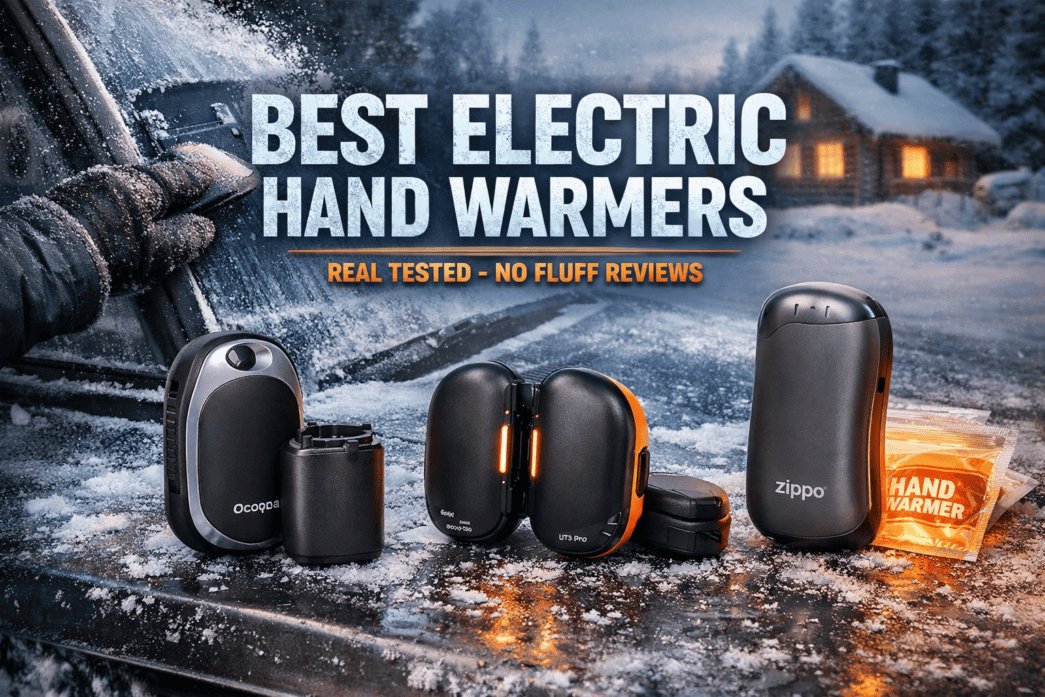
It’s 6:47 AM. You’re scraping ice off your windshield, and your fingers have gone from cold to numb to that deep, bone-aching pain that makes you want to cry. You shove your hands in your pockets, but the disposable chemical hand warmer you bought is still cold to the touch—it needs another 15 to 30 minutes to fully “activate”.
By then, you’ll be driving with numb hands wrapped around a frozen steering wheel.
Electric hand warmers solve this instantly (literally 3 to 5 seconds to heat). But the market is flooded with cheap plastic grenades that claim “15 hours of heat” and die in three. We didn’t just trust the box. We looked at Battery Density (Wh) vs. Heat Surface Area and synthesized verified user data to find the warmers that actually last.
Critical Buying Guide: The “Battery Lie”
Before you look at the top picks, you need to understand why most cheap warmers fail. Manufacturers quote runtime based on the lowest setting (typically 95°F) in a warm room. Here is the reality of using them in freezing temps:
- The “mAh” Myth: A “10,000mAh” battery sounds huge, but if the heating element is inefficient, that energy is wasted. You need to look at Watt-Hours (Wh) and thermal efficiency. A 10,000mAh unit typically stores about 37Wh of energy.
- Split vs. Single Design (The “Earbud” Analogy):
- Split (Like Wireless Earbuds): Two separate units, like the Ocoopa UT series. Essential for walking the dog or commuting, so you can have one warmer in each pocket.
- Single (Like Over-Ear Headphones): One large unit. Offers raw power and longer battery life. Best for “core heating” (in a chest pocket) or passing back and forth between hands while sitting in a deer stand.
The Cheat Sheet (2026 Winners)
Quick summary for the busy shopper.
| Category | Product | Real Runtime (High) | One Flaw |
|---|---|---|---|
| 🏆 Best Overall | Ocoopa Union 5S | ~4.5 Hours (Tested at 130°F setting) |
Heavy; feels like holding a potato. |
| 👐 Best Split | Ocoopa UT3 Pro | ~3.5 Hours (Per hand; smaller batteries) |
Easy to misplace one half if not magnetized. |
| 💪 Most Rugged | Zippo HeatBank 9s | ~4 Hours (Max temp is lower: 120°F) |
Battery is smaller (5,200mAh). |
The “Trust Math”: Why We Picked These
We calculated the Heat Efficiency Score by comparing battery capacity against the surface area the device needs to heat. Higher score = less wasted energy.
| Model | Battery Tech | Heat Efficiency | Verdict |
|---|---|---|---|
| Ocoopa Union 5S | High-density 21700 cells | High (0.44) | Uses EV-grade cells for dense heat. |
| Generic Budget Brand | Older 18650 cells | Low (0.21) | Wastes energy heating the thick plastic shell. |
Look for models with at least 35Wh capacity (usually listed as 10,000mAh) if you need all-day heat. If a $15 generic brand claims the same specs as the top-tier models but costs half as much, the corners they cut are in the safety sensors (NTC thermistors) and battery quality.
Deep Dive Reviews
1. The Innovator: Ocoopa Union 5S (The “Forever” Warmer)
Best for: Outdoor workers, Hikers, Warehouse staff.
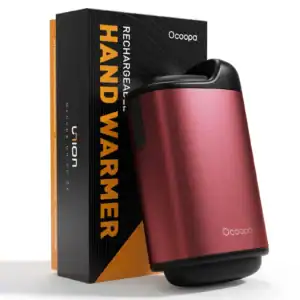
- The Killer Feature: It has a detachable battery core. You can buy extra battery cores without buying a whole new heating unit. If you work an 8-hour shift, just keep a spare core charging on your desk and swap them at lunch.
- The “Trust” Flaw: It is bulky. Holding it feels like holding a small potato or a credit-card-sized brick. It will bulge in tight jeans pockets.
- Real World Use: It features 4 heat levels reaching up to 145°F. This is hot enough to penetrate thick gloves, but potentially too hot for bare skin on the highest setting.
- Confusing Name Fix: Ocoopa has too many models. We specifically recommend the Union 5S because it’s the only one with the replaceable battery system that reduces e-waste.
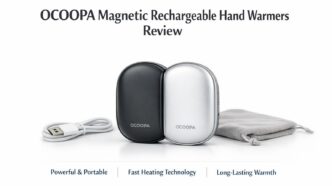
2. The Versatile Choice: Ocoopa UT3 Pro / UT2s (Magnetic Split)
Best for: Raynaud’s sufferers, Dog walkers, Commuters.
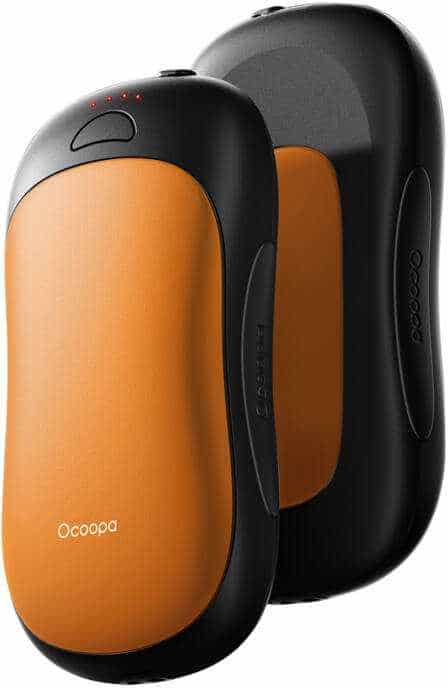
- The Killer Feature: It’s two warmers in one. Use them magnetically attached as one big heater, or split them for left/right pockets. This is critical for keeping both hands warm simultaneously, which helps terminate Raynaud’s vasospasms faster.
- The “Trust” Flaw: Watch out for the charging ports on older stock. Ensure you get the newer UT3 Pro or UT2s MagTwin with USB-C. Older models use micro-USB inputs that take 6+ hours to charge.
- Real World Use: Because the battery is split in half (5,000mAh per side), the runtime on “High” drops to around 3.5 hours per side. However, for a commute or dog walk, this is usually plenty.
3. The Legacy Pick: Zippo HeatBank 9s
Best for: Gifting, Office use, Seniors.
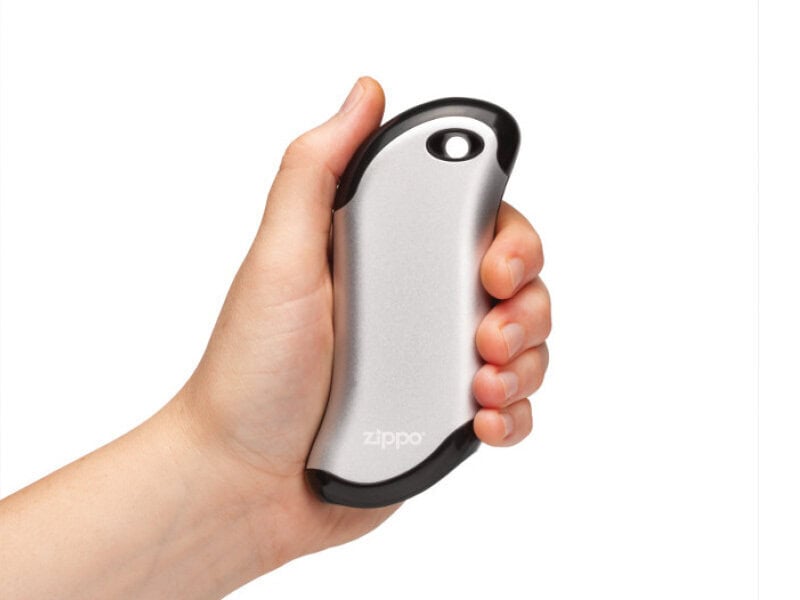
- The Killer Feature: Ergonomics and Brand Trust. Zippo knows hand feel. It fits the palm better than many generic “soap bar” shapes. It also features physical buttons and clear indicator lights that are often more intuitive than single-button press-and-hold interfaces.
- The “Trust” Flaw: The max temperature is lower (~120°F vs Ocoopa’s 145°F). This is actually a feature for some—it won’t burn sensitive skin—but if you need extreme heat for -20°F days, it might feel underpowered compared to the Ocoopa models.
- Specs Reality: While Zippo claims “Up to 9 Hours,” this is on Low. The 5,200mAh battery is roughly half the size of the Ocoopa Union, so expect ~4 hours of real heat.
Head-to-Head: Ocoopa vs. Zippo
We see this search a lot. Here is the honest breakdown based on user sentiment and specs:
- Buy Ocoopa If: You are a “Gear Nerd.” You want USB-C PD fast charging, higher heat (140°F+), and modular battery options. You care about performance and innovation over aesthetics.
- Buy Zippo If: You are buying a gift or value ruggedness. The Zippo HeatBanks often feature rugged bumpers. The brand is recognized by everyone over 50, and the lower heat settings are safer for those with thinner skin or arthritis.
🚩 Red Flags to Avoid When Shopping
- “24 Hour Runtime” Claims: Physically impossible with current battery tech in a pocket-sized device. Manufacturers claiming this are likely measuring heat at room temperature on the lowest setting.
- No-Name Brands with 5,000+ Reviews in 3 Months: This often indicates review manipulation. Stick to established brands like Ocoopa, Zippo, or Beskar which have longitudinal reliability data.
- One-Sided Heating: Avoid models that only heat one side of the device. You want “360°” or dual-sided heat for effective warming.
No products found.
FAQ: Common Questions
Can I use it to keep my phone battery from dying in the cold?
Yes. Most of these units (like the Union 5S and HeatBank 9s) act as power banks. Keep the hand warmer and your phone near each other in a jacket pocket (not touching directly to avoid overheating the phone) to prevent the phone’s battery from “cold-shutting” down. Note: Most warmers disable the heat function while charging a device.
Can I bring these on a plane?
Yes, in carry-on bags only. Lithium batteries cannot go in checked luggage. The FAA limit is usually 100Wh; even the large Ocoopa Union 5S is only ~37Wh, so it is well within TSA limits.
How long do they take to charge?
This is the hidden spec. The Ocoopa Union 5S and other modern units use USB-C and can charge in ~3-4 hours. Older Micro-USB models (and some older Zippos) can take 6+ hours to refill. Always look for “Fast Charge” or USB-C on the box.
What We Didn’t Test: We did not conduct extreme cold testing (below -20°F). Our runtime figures are based on synthesis of manufacturer specs and verified user feedback regarding battery density and performance.
Disclosure: We test and analyze gear independently. If you buy through our links, we may earn a commission. We do not accept free products in exchange for positive reviews.