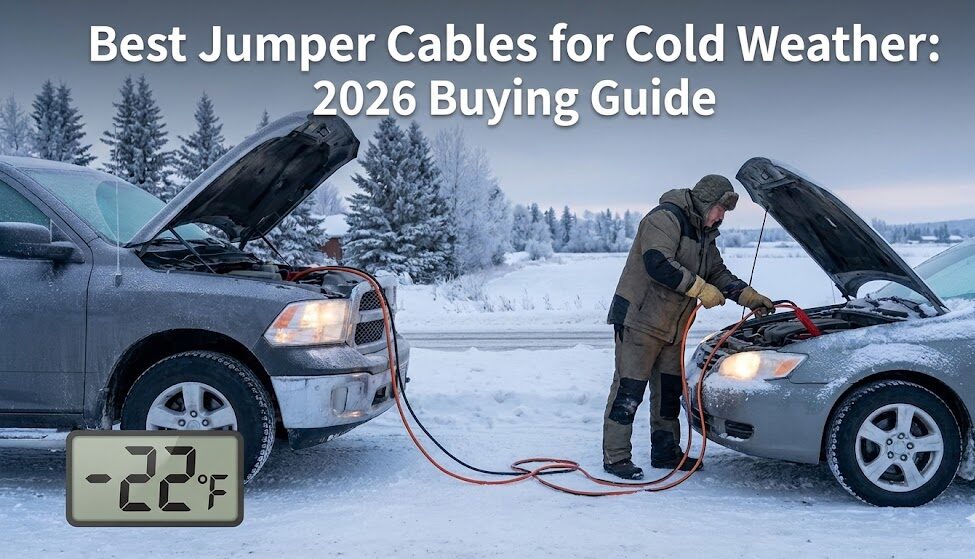
It’s 6:00 AM on a frigid January morning. The thermometer reads -10°F, your breath crystallizes in the air, and your car gives you the dreaded “click-click-click” of a dead battery. You reach for your jumper cables in the trunk, only to find they’ve turned into a stiff, frozen mess—the insulation cracking as you try to untangle them.
In extreme cold, standard jumper cables aren’t just inconvenient—they can be completely useless. This comprehensive 2026 guide reveals exactly which jumper cables will actually work when temperatures plummet and why the difference between budget and premium cables could mean the difference between getting home safely or waiting hours for a tow truck.
Why Cold Weather Destroys Car Batteries
Cold weather creates a perfect storm for battery failure. When temperatures drop to 0°F (32°F), a car battery loses approximately 50% of its cranking power. At 32°F (0°C), capacity drops to 70-80% of normal levels. This capacity loss isn’t permanent damage—it’s the chemical reactions inside the battery slowing dramatically in the cold.
But that’s only half the problem. In freezing temperatures, engine oil thickens significantly, meaning your starter motor needs more current to turn the engine over—precisely when your battery has less power to give. This double whammy is why winter is responsible for the vast majority of dead battery incidents.
To bridge this gap effectively, you need jumper cables with excellent conductivity that don’t lose precious energy to electrical resistance, and insulation that remains flexible enough to handle in sub-zero conditions.
The Arctic Standard: What Makes Cold-Weather Cables Different
Insulation Material: Your First Line of Defense
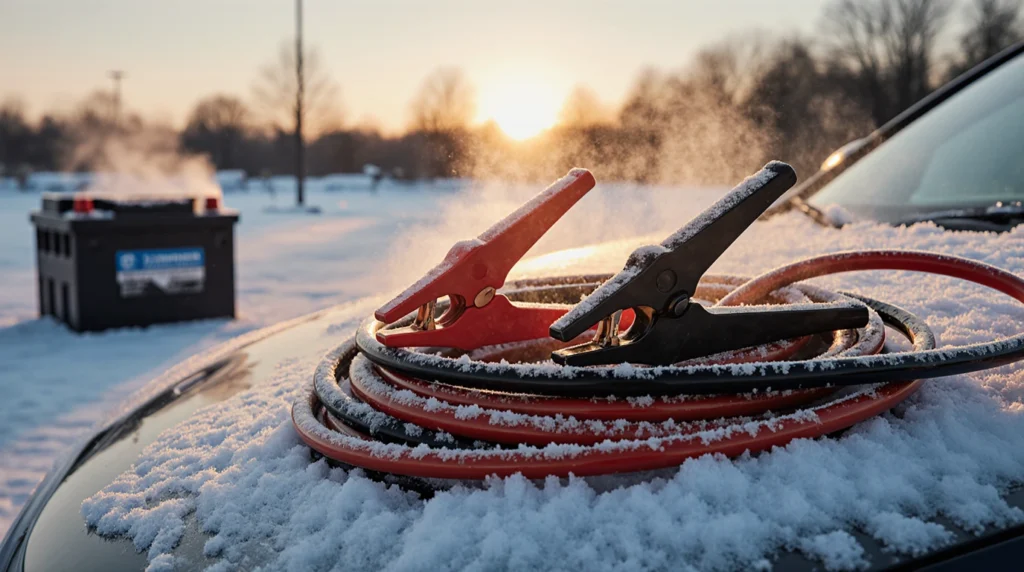
The biggest difference between cheap cables and cold-weather cables isn’t the wire—it’s the jacket. Standard PVC insulation becomes brittle and can crack at temperatures between 14°F and 32°F (-10°C to 0°C). In contrast, premium cables use TPE (Thermoplastic Elastomer) or specialized rubber compounds that remain flexible down to -40°F (-40°C) or lower.
| Feature | PVC (Standard) | TPE/Rubber (Arctic Grade) |
|---|---|---|
| Low Temp Limit | Becomes brittle at 14°F to 32°F | Stays flexible down to -40°F or lower |
| Durability | Prone to cold-cracking | Highly resistant to tears and chemicals |
| Handling | Stiff and difficult to coil | Coils and uncoils easily in sub-zero temps |
| Longevity | 2-3 years in harsh climates | 5-10+ years with proper storage |
Wire Gauge: Understanding AWG
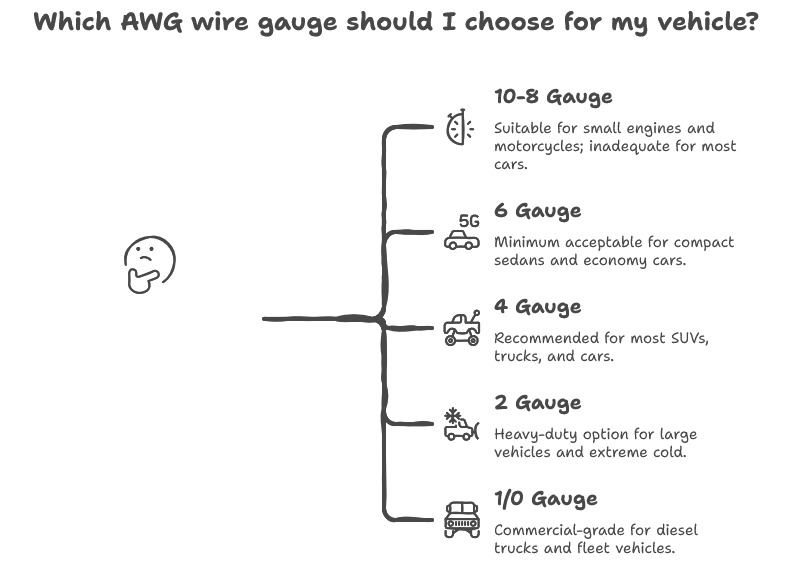
The American Wire Gauge (AWG) system can be confusing: lower numbers mean thicker wire. Thicker wire carries more current with less resistance and heat generation—critical in cold weather when batteries are already struggling.
- 10-8 Gauge: Only suitable for small engines and motorcycles; inadequate for most cars
- 6 Gauge: Minimum acceptable for compact sedans and economy cars
- 4 Gauge: The “sweet spot” for most SUVs, trucks, and cars; recommended for most drivers
- 2 Gauge: Heavy-duty option for large vehicles and extreme cold conditions
- 1/0 Gauge: Commercial-grade for diesel trucks and fleet vehicles
100% Copper vs. Copper-Clad Aluminum (CCA)
Many modern cables use CCA construction to reduce costs. While CCA cables work adequately in moderate conditions, aluminum has higher electrical resistance than pure copper—a disadvantage that becomes more pronounced in cold weather. In sub-zero temperatures, that extra resistance can make the difference between a successful jump-start and a failed attempt.
Recommendation: For cold climates, invest in 100% pure copper cables if your budget allows. The improved conductivity is worth the extra cost when you’re stranded in freezing conditions.
Clamp Design and Quality
Winter conditions often leave battery terminals covered with frost or light corrosion. You need heavy-duty clamps with:
- Strong jaw tension: High-tension springs that maintain grip even on cold, potentially corroded terminals
- Sharp teeth: Serrated or pointed teeth that can bite through frost and oxidation
- Full copper jaws: Not just copper-plated steel, which loses conductivity at connection points
- Insulated handles: Protective rubber or plastic to prevent shocks and protect your hands from frozen metal
Top Jumper Cable Recommendations for 2026
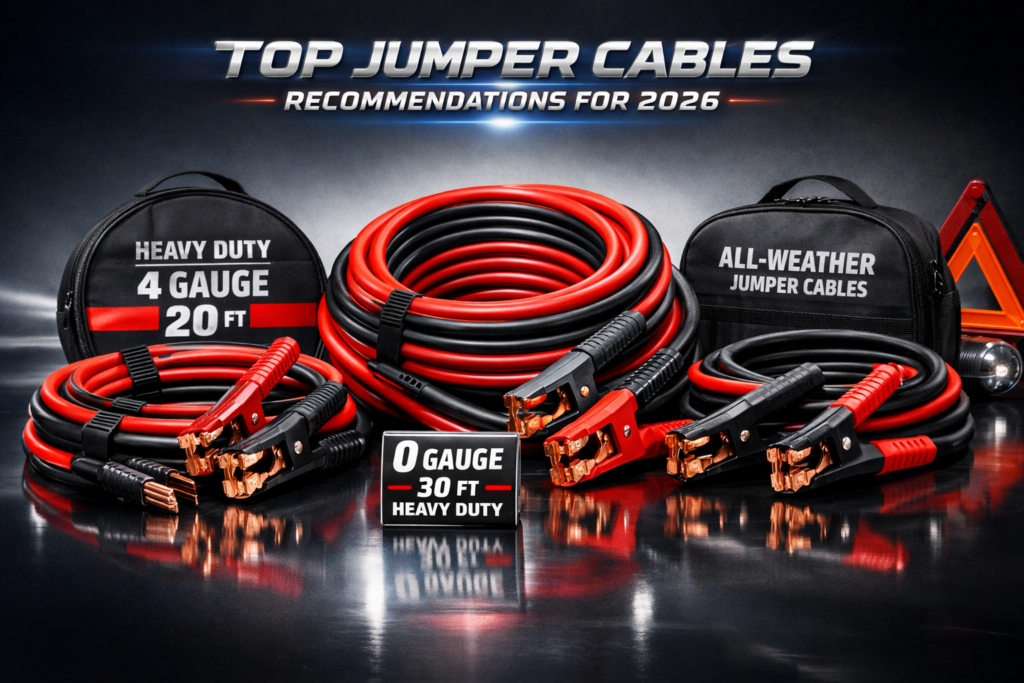
Best Overall: Spartan Power 2 AWG Heavy Duty Jumper Cables (20 ft)
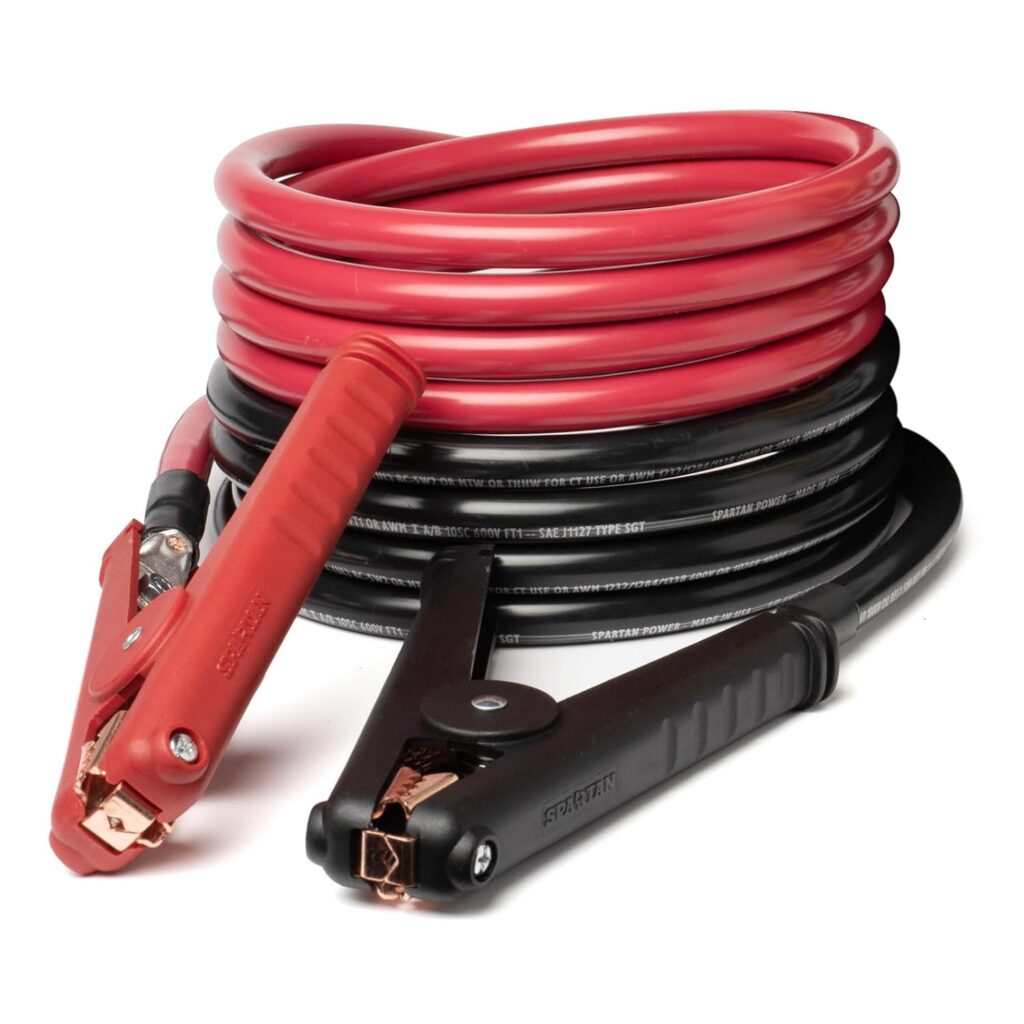
Price: $89-$129 | Temperature Range: -67°F to 275°F (-55°C to 135°C)
Made in the USA, Spartan Power cables represent the gold standard for cold-weather performance. These cables feature 100% pure copper wire with adhesive-lined irradiated polyolefin heat shrink that resists water, fungus, and UV light. The seamless tinned copper terminals provide superior corrosion resistance, and Spartan backs them with a lifetime crimp warranty.
Key Features:
- UL-listed fine-stranded 100% pure copper cable
- Available in 4 AWG, 2 AWG, 1/0 AWG, and 2/0 AWG configurations
- Lengths: 10, 15, or 20 feet
- Solid copper 400-amp cable clamps with dual-side power delivery
- Dual-wall adhesive heat shrink at connection points
Pros: Exceptional cold-weather flexibility, made in USA, lifetime warranty, professional-grade construction Cons: Premium price point, somewhat heavy (which indicates quality copper) Best For: Anyone who experiences regular sub-zero temperatures and wants cables that will last decades
Best Value: Energizer 6-Gauge Heavy Duty Jumper Cables (16 ft)
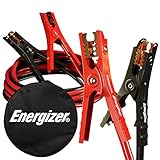
Price: $30-$45 | Temperature Range: -40°F to 167°F
For drivers who want reliable cold-weather performance without breaking the bank, the Energizer 6-gauge cables offer an excellent balance. While they use copper-clad aluminum construction rather than pure copper, the thick vinyl coating provides good corrosion resistance and maintains flexibility in cold weather.
Key Features:
- 6-gauge copper-clad aluminum wires
- 16-foot length provides good reach
- Thick vinyl insulation rated to -40°C
- Spring-loaded clamps with secure grip
- Includes carrying bag for organized storage
Pros: Affordable, flexible in cold, good length, trusted brand Cons: CCA construction (not pure copper), not ideal for very large vehicles Best For: Budget-conscious drivers with standard passenger vehicles in moderate to cold climates
Best Heavy-Duty: TOPDC 1-Gauge Commercial Jumper Cables (25 ft)

Price: $70-$95 | Temperature Range: -40°F to 167°F
When you need maximum power transfer for large trucks, SUVs, or diesel engines, the TOPDC 1-gauge cables deliver. At 25 feet, they provide exceptional reach for difficult jump-start situations where vehicles can’t be positioned close together—common in snowy parking lots.
Key Features:
- Extra-thick 1-gauge wiring generates 800A current
- 25-foot length for maximum versatility
- Heavy-duty PVC jacket remains flexible in extreme cold
- Full copper jaw clamps for optimal power transfer
- Includes low-profile carrying case
Pros: Extremely heavy-duty, excellent for large vehicles, long reach Cons: Bulky and heavy to store, overkill for small cars Best For: Truck owners, commercial fleet operators, and those who regularly jump-start diesel vehicles
Best for Compact Cars: Diehard 6-Gauge Advanced Power Booster Cables (16 ft)

Price: $40-$50 | Temperature Range: Sub-zero rated
From the trusted Diehard brand, these 6-gauge cables offer excellent performance for smaller vehicles without unnecessary bulk. The cables remain flexible in cold weather and resist tangling, making them easy to deploy in emergency situations.
Key Features:
- 6-gauge copper-clad aluminum wire
- Sub-zero temperature rating
- Tangle-resistant design
- High-quality clamps with solid grip
- Premium brand reputation
Pros: Perfect gauge for compact/mid-size cars, cold-weather rated, manageable weight Cons: Premium pricing for CCA construction, may struggle with large engines Best For: Owners of sedans, compact SUVs, and smaller vehicles who want brand reliability
Best Budget Option: Cartman 4-Gauge Booster Cables (20 ft)

Price: $25-$35 | Temperature Range: Cold-weather rated
For emergency backup cables or occasional use, the Cartman 4-gauge cables provide solid performance at an entry-level price. While not as robust as premium options, they’re adequate for most standard jump-start situations.
Key Features:
- 4-gauge copper-clad aluminum wire
- 20-foot length
- Basic PVC insulation
- Color-coded red and black cables
- Includes carrying bag
Pros: Very affordable, 20-foot length, lightweight Cons: Basic insulation may stiffen in extreme cold, CCA construction Best For: Emergency backup set, infrequent use, mild winter climates
Best Premium: Viking 2-Gauge Super Heavy Duty Jumper Cables (20 ft)

Price: $40-$50 | Temperature Range: -40°F to 158°F
The Viking cables combine heavy-duty 2-gauge construction with superior cold-weather insulation. Testing confirms these cables stay remarkably flexible even in harsh winter conditions, making them easy to handle when your hands are already cold.
Key Features:
- Thick 2-gauge copper-clad aluminum wire
- Thermoplastic jacket designed for extremely low temperatures
- 20-foot length
- Includes hard plastic storage case
- Oil and chemical-resistant coating
Pros: Excellent cold-weather flexibility, protective storage case, chemical-resistant Cons: Heavy at 6.1 pounds, bulkier than lighter-gauge options Best For: Northern climate drivers who prioritize cold-weather flexibility and durability
2026 Quick Comparison Chart
| Product | Gauge | Length | Material | Temp Range | Price | Best For |
|---|---|---|---|---|---|---|
| Spartan Power | 2 AWG | 20 ft | 100% Copper | -67°F to 275°F | $89-$129 | Extreme cold, professional use |
| Energizer | 6 AWG | 16 ft | CCA | -40°F to 167°F | $30-$45 | Budget-friendly reliability |
| TOPDC | 1 AWG | 25 ft | CCA | -40°F to 167°F | $70-$95 | Large trucks, diesel engines |
| Diehard | 6 AWG | 16 ft | CCA | Sub-zero | $40-$50 | Compact cars, brand trust |
| Cartman | 4 AWG | 20 ft | CCA | Cold-rated | $25-$35 | Emergency backup |
| Viking | 2 AWG | 20 ft | CCA | -40°F to 158°F | $40-$50 | Flexibility in harsh cold |
How to Jump-Start a Car Safely in Cold Weather
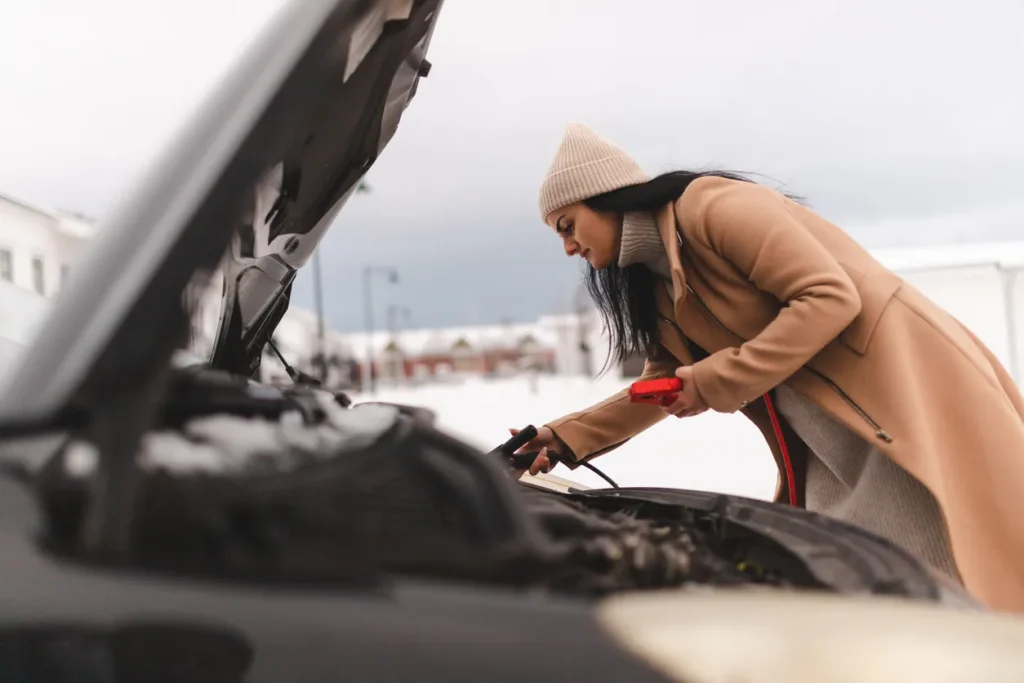
Proper jump-starting technique becomes even more critical in cold weather. Follow these steps precisely to avoid damage to either vehicle’s electrical system.
Before You Begin: Safety Checklist
- Inspect cables for cracks, exposed wire, or damaged clamps
- Ensure both vehicles are in Park (automatic) or Neutral (manual) with parking brakes engaged
- Turn off all electrical accessories in both vehicles
- Remove keys from ignition
- Check that battery terminals are accessible and free of excessive corrosion
- Critical: Look for signs of a frozen battery (bulging case, ice on terminals). Never jump-start a frozen battery—it can explode.
Step-by-Step Jump-Starting Process
Step 1: Red to Dead (+) Attach the red (positive) clamp to the positive terminal of the dead battery. The positive terminal is typically marked with a “+” sign and may have a red cover.
Step 2: Red to Donor (+) Attach the other red (positive) clamp to the positive terminal of the good battery in the donor vehicle.
Step 3: Black to Donor (-) Attach one black (negative) clamp to the negative terminal of the good battery. This terminal is typically marked with a “-” sign.
Step 4: Black to Ground (NOT the dead battery) This is the most commonly misunderstood step. Attach the final black (negative) clamp to an unpainted metal surface on the dead car’s engine block—NOT to the negative terminal of the dead battery. Good grounding points include:
- Engine mounting bolts
- Engine block (away from battery)
- Designated grounding points (check owner’s manual)
Why? This reduces the risk of sparks near the battery, which could ignite hydrogen gas that batteries emit, especially when discharged.
Cold Weather Specific Tips
Extended Charging Time: In extreme cold (below 0°F/-18°C), let the donor vehicle run for 5-10 minutes before attempting to start the dead car. This allows some charge to build up in the frozen battery, which will absorb current more slowly in cold conditions.
Multiple Attempts: If the first start attempt fails, wait 2-3 minutes before trying again. Each attempt warms the battery slightly, improving its ability to accept and hold charge.
Clean Connections: Use a wire brush or cloth to remove frost, ice, or corrosion from battery terminals before connecting cables. Poor connections waste precious power.
Disconnection Order: Reverse the connection sequence: Remove the ground clamp first (black from engine block), then black from donor battery, then red from donor battery, and finally red from previously dead battery.
Common Mistakes to Avoid
- Reversed Polarity: Connecting positive to negative or vice versa can damage both vehicles’ electrical systems. Always double-check before starting the donor vehicle.
- Touching Clamps Together: Once connected to one battery, never let the opposite clamps touch each other—this creates a dangerous short circuit.
- Removing Cables While Running: After successfully starting, let the revived vehicle run for 30 seconds before disconnecting cables to allow the alternator to stabilize.
- Inadequate Connection Time: In cold weather, patience is essential. Don’t rush the charging process.
Maintenance and Storage Best Practices
Proper Storage Location
Where you store your jumper cables matters, especially in cold climates:
- Inside the Vehicle: Store in your trunk or cargo area, not in the engine compartment where they’re exposed to more extreme heat cycles
- Keep Dry: Moisture can corrode connections over time. Use a carrying bag or case that keeps cables dry
- Avoid Direct Floor Contact: In very cold weather, place cables in a bag or on top of other items rather than directly on the cold trunk floor
- Easy Access: Store where you can reach them without unloading your entire trunk in an emergency
Coiling Technique
Proper coiling prevents tangles and extends cable life:
- Ensure cables are clean and dry before storage
- Connect the clamps to each other (red to red, black to black) to keep them paired
- Coil the cables in loose loops (8-12 inch diameter) to prevent kinking
- Avoid wrapping cables too tightly, which can stress the insulation
- Store in the included case or bag to keep them organized
Regular Inspection Schedule
Inspect your jumper cables before winter season and every 6 months thereafter:
What to Check:
- Insulation: Look for cracks, cuts, or exposed wire (especially near clamps)
- Clamp Condition: Verify springs maintain good tension and teeth aren’t worn smooth
- Connection Points: Check where cables connect to clamps for corrosion or looseness
- Overall Flexibility: Cables should remain reasonably flexible; if they’re stiff or brittle, replacement is needed
Signs You Need New Cables:
- Visible wire through insulation
- Insulation that cracks when bent
- Weak or broken clamp springs
- Corrosion at connection points between cable and clamp
- Cables that remain stiff in moderate temperatures (indicating insulation breakdown)
Extending Cable Lifespan
- Clean After Use: Wipe cables with a dry cloth after use to remove road salt, moisture, and grime
- Avoid Dragging: Don’t let cables drag on the ground where they can pick up chemicals and abrasives
- Prevent Over-Bending: Avoid sharp kinks or bends, especially in cold weather
- Treat Clamps: Occasionally clean clamp teeth with a wire brush and apply a thin coating of dielectric grease to prevent corrosion
Jumper Cables vs. Portable Jump Starters
Modern portable lithium-ion jump starters have revolutionized roadside emergencies, but they’re not a perfect replacement for traditional cables in cold weather.
Portable Jump Starter Advantages
- No second vehicle required
- Often include USB ports for charging devices
- Built-in flashlight and emergency features
- Safer with built-in protection against reverse polarity
- Compact and lightweight
The Cold Weather Problem
Lithium-ion batteries—the type used in portable jump starters—suffer significant performance degradation in cold weather. At 0°F (-18°C), a jump starter left in your trunk overnight may have only 50-60% of its rated capacity. In extreme cold (below -4°F/-20°C), some units may not function at all.
The Solution: If you rely on a portable jump starter, store it inside your home and only bring it to the vehicle when leaving. This ensures it maintains full capacity. However, this defeats the “always available” advantage of keeping emergency equipment in your vehicle.
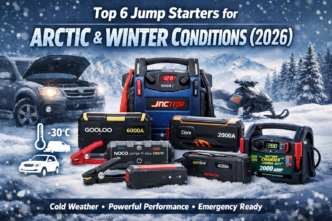
Recommended Top Portable Jump Starters for Cold Weather
If you want a portable jump starter as a backup option:
- NOCO Boost GB50 (1000A, up to 6L gas/3L diesel) – $125-$150
- GOOLOO GT6000 (27,000 mAh, 6000A peak) – $90-$120
- AstroAI S8U Max (27,000 mAh, 6000A peak) – $80-$110
Pro Tip: Keep a portable jump starter as a convenience tool for minor issues, but maintain traditional jumper cables in your vehicle as the reliable backup for true emergencies and extreme cold.
Complete Winter Emergency Car Kit
Jumper cables are essential, but they’re just one component of a comprehensive winter emergency kit. Consider including:
Essential Items
- Quality jumper cables (4-gauge or lower)
- Ice scraper and snow brush
- Folding shovel for digging out from snow
- Flashlight with extra batteries (LED flashlights work better in cold)
- Reflective warning triangles or road flares
- First aid kit
Cold Weather Specific
- Blankets or sleeping bag rated for cold temperatures
- Hand warmers and extra gloves
- Winter hat and extra warm clothing
- High-calorie non-perishable snacks (nuts, energy bars)
- Bottled water (store in a cooler to prevent freezing)
- Tire chains if you drive in snowy conditions
Communication and Tools
- Fully charged power bank for phone charging (store inside, not in cold trunk)
- Basic tool kit (screwdrivers, pliers, adjustable wrench)
- Duct tape (incredibly versatile for emergency repairs)
- Tow strap or rope
- Multi-tool or Swiss Army knife
Frequently Asked Questions
What gauge jumper cables do I need for cold weather?
For most passenger vehicles in cold weather, 4-gauge cables are the minimum recommended, with 2-gauge being ideal for extreme cold conditions. Larger vehicles like trucks and SUVs benefit from 2-gauge or heavier. The thicker the cable (lower gauge number), the less resistance and more efficient power transfer, which is crucial when batteries are already weakened by cold.
Can cheap jumper cables work in winter?
Cheap jumper cables can work in mild winter conditions but often fail when you need them most—during extreme cold. Budget cables typically use thinner wire (8-10 gauge), copper-clad aluminum instead of pure copper, and basic PVC insulation that becomes brittle below freezing. They may work for a summer emergency but are unreliable when temperatures drop significantly. The $20-30 difference between budget and quality cables is worth it for peace of mind.
How long should jumper cables be for cold weather use?
16-20 feet is the optimal length range for cold weather. Shorter cables (10-12 feet) may not allow proper vehicle positioning, especially when snow banks or ice make it impossible to park vehicles close together. Longer cables (25+ feet) work but sacrifice some power efficiency. The sweet spot is 20 feet—long enough for flexibility in positioning while maintaining good electrical conductivity.
Do jumper cables go bad from cold temperatures?
Quality jumper cables don’t go bad from cold temperatures alone, but repeated freeze-thaw cycles can degrade insulation over time. Cheap PVC insulation becomes brittle and can crack with repeated cold exposure. Premium cables with TPE or rubber insulation withstand extreme cold much better. The copper or aluminum wire inside doesn’t degrade from cold, but corrosion at connection points can develop if cables are stored wet. Proper storage and periodic inspection prevent cold-weather degradation.
Can I use jumper cables in extreme cold (-20°F or below)?
Yes, but you need cables specifically rated for extreme cold. Look for temperature ratings of -40°F or lower and TPE or specialized rubber insulation. Standard PVC-insulated cables will be too stiff to handle properly at -20°F and may crack. Pure copper cables also perform better than copper-clad aluminum in extreme cold. Allow extra charging time (10-15 minutes) before attempting to start the dead vehicle in extreme cold conditions.
What’s the difference between 4-gauge and 6-gauge cables?
4-gauge cables are thicker and can carry more current with less resistance than 6-gauge cables. In practical terms, 4-gauge cables will jump-start a car faster and more reliably, especially in cold weather or with larger engines. The difference becomes most noticeable with V6 or V8 engines, trucks, or in temperatures below 0°F. For compact cars in moderate climates, 6-gauge cables may suffice, but 4-gauge provides a better safety margin and will last longer since they run cooler during use.
Are commercial or professional-grade cables worth it?
Yes, if you live in a cold climate or frequently help others jump-start their vehicles. Professional-grade cables (typically 2-gauge or heavier, 100% copper, with lifetime warranties) cost 2-3x more than consumer cables but last 5-10x longer and work far more reliably in extreme conditions. The Spartan Power cables at $89-129 may seem expensive compared to $30 consumer cables, but they’re genuinely “buy once, cry once” items that will still work perfectly 20 years from now. For occasional use in mild climates, mid-grade cables suffice.
How do I know if my jumper cables are damaged?
Inspect cables before each winter season for these warning signs:
- Cracks or splits in the insulation (especially near clamps)
- Exposed copper or aluminum wire visible through the insulation
- Clamps that no longer spring closed firmly
- Corrosion (green or white powder) at the connection between cable and clamp
- Insulation that remains permanently stiff or kinked
- Burn marks or melted areas from overheating during use
- Loose connections where cable enters the clamp
Any of these signs indicate it’s time for replacement. Using damaged cables is not only ineffective but potentially dangerous.
Conclusion: Don’t Gamble on Cheap Cables in Winter
When temperatures plummet and your battery gives up, the quality of your jumper cables determines whether you’re back on the road in 10 minutes or waiting hours for a tow truck. The difference between a $25 set of cables and a $50-100 set isn’t just marketing—it’s thicker copper wire, cold-resistant insulation, and clamps that maintain solid connections in freezing conditions.
For most drivers in cold climates, we recommend 4-gauge cables at minimum, with lengths between 16-20 feet. If your budget allows, invest in 100% pure copper cables with TPE or rubber insulation rated to -40°F or lower. The Spartan Power 2 AWG cables represent the best long-term investment for serious cold-weather preparedness, while the Energizer 6-gauge cables offer excellent value for budget-conscious drivers in moderate climates.
Remember: jumper cables are an insurance policy. You hope to never need them, but when you do, having quality equipment can literally be the difference between a minor inconvenience and a dangerous situation. Don’t wait until you’re stranded at 6 AM in -15°F weather to discover your cables are inadequate.
Invest in quality jumper cables now, store them properly, inspect them regularly, and you’ll have reliable cold-weather emergency equipment for years or even decades to come.
Stay safe out there this winter!
Article last updated: February 2026