Picture this: You’re two hours into a winter hike when your headlamp flickers, dims, and dies. The temperature’s sitting at -15°C, you’ve got another hour to the trailhead, and your “reliable” headlamp just became a expensive paperweight. We’ve all been there—or heard the horror stories.
Here’s the truth: most headlamps are designed for room temperature testing, not real winter. When the mercury drops, cheap batteries quit, plastic housings crack, and those tiny buttons become impossible with gloves on. A true winter headlamp isn’t just brighter—it’s engineered to survive the conditions that kill ordinary lights.
This guide cuts through the marketing fluff to show you what actually matters for cold-weather performance, then breaks down the 8 best winter headlamps you can buy in 2026—from budget-friendly compact models to expedition-grade beasts built for Arctic conditions.
Quick Picks: Best Winter Headlamps at a Glance
- Best overall winter headlamp: Fenix HM60R
- Best compact / budget winter headlamp: Fenix HM50R V2.0
- Best for winter trail running & ski touring: Moonlight Bright As Day 800
- Best ultra-durable workhorse: Armytek Wizard C2 Pro Magnet USB
- Best with powerful red light: Armytek Wizard C2 WR
- Best for extreme cold & expeditions: Fenix HP30R V2.0 (remote battery pack)
- Best AA-powered winter headlamp: Black Diamond Icon 700
- Best for ultra-distance winter running: Petzl NAO RL
These aren’t just “good headlamps”—they’re proven cold-weather performers with low-temperature ratings, remote battery options, or documented field use in serious winter conditions.
What Makes a Headlamp “Winter-Ready”?
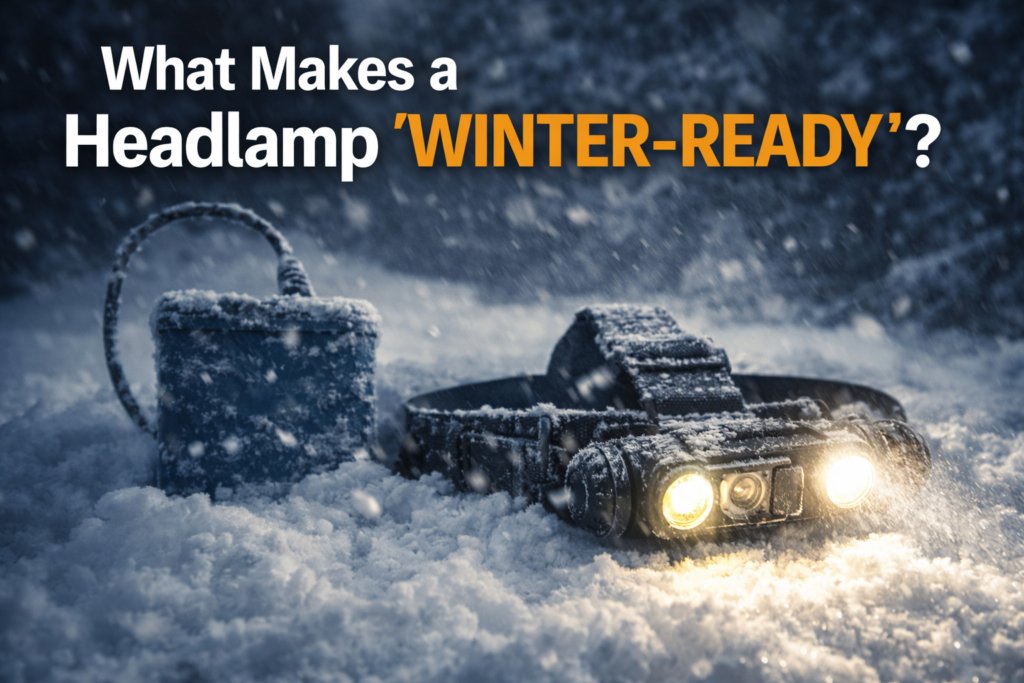
Before we dive into specific models, let’s talk about what separates a winter headlamp from the rest of the pack. Spoiler: it’s not just about lumens.
1. Battery Chemistry and Placement
Cold is brutal on batteries. At sub-zero temperatures, voltage drops and usable capacity plummets—especially with cheap alkaline cells. Here’s what you need to know:
Avoid alkalines in real winter. They’re nearly useless below -10°C. Instead, use lithium primary cells (like Energizer Ultimate Lithium AA/AAA) or lithium CR123 batteries—they maintain voltage and capacity far better in the cold.
Li-ion rechargeables work if you keep them warm. Standard 18650 and 21700 rechargeable cells lose capacity when cold-soaked, but if you charge them at room temperature and keep them warm during use (inside pocket, under jacket), they perform well for most winter activities.
Remote battery packs are game-changers below -20°C. Models like the Moonlight Bright As Day 800 and Fenix HP30R V2.0 let you run an extension cable so the battery stays tucked under your jacket. This dramatically improves runtime in deep cold.
Low-temperature Li-ion cells exist. Specialized batteries like Nitecore’s NL1835LTHP are engineered to maintain higher discharge efficiency down to -40°C. If you’re running 18650-powered headlamps in extreme conditions, these are worth the investment.
2. Operating Temperature Rating
Many headlamps are only tested around room temperature. For winter reliability, look for published operating ranges:
- Fenix HM60R: rated down to -35°C
- Armytek Wizard C2 series: rated for roughly -25°C
- Moonlight Bright As Day 800: marketed for extreme cold, with retailer claims of usability down to -20°C and some promotional materials mentioning -40°C
If a manufacturer publishes a wide operating range, they’ve designed for winter reliability—not just hoped for the best.
3. IP Rating and Durability
Winter means wet snow, ice, and the occasional face-plant into a snowbank:
- Minimum: IPX4 (splash-proof)
- Better: IP67–IP68 (dust-tight and submersible)—standard on Fenix HM60R, HM50R V2, Armytek Wizard C2 series, and Moonlight Bright As Day 800
- Look for 2m+ impact ratings and aluminum housings for serious backcountry use
4. Beam Pattern and Color Temperature
Snow reflects light like crazy. A harsh, cool-white beam creates glare and eye fatigue fast.
Neutral or warm white flood modes improve contrast and reduce eye strain in snow and fog. Several Fenix and Moonlight models use neutral-white emitters specifically for this reason.
Mixed spot + flood beams give you both distance vision (spot) and close-up detail (flood)—ideal for technical terrain, ski touring, or fast movement in variable conditions.
5. Glove-Friendly Controls
Fiddly buttons and complex interfaces are deal-breakers in winter:
- Large, glove-friendly buttons let you change modes without removing gloves (all our top picks have this)
- Top straps and balanced design keep heavier lamps stable when worn over beanies or helmets
- Simple UI—winter is not the time for memorizing 5-click sequences
The 8 Best Winter Headlamps of 2026 (Detailed Reviews)
1. Fenix HM60R – Best Overall Winter Headlamp

Why it wins: The HM60R is the Goldilocks headlamp for winter—powerful enough for serious use, compact enough for everyday trips, and versatile enough to handle everything from snowshoe hikes to ice fishing. It’s rated down to -35°C and accepts both rechargeable 18650s and CR123 lithium primaries, giving you flexibility when conditions get nasty.
Key specs:
- Max output: 1200–1300 lumens (spotlight turbo)
- Battery: 1× 18650 (included) or 2× CR123 lithium
- Operating temperature: -35 to +45°C
- IP rating: IP68 (submersible to 2m)
- Weight: ~157g with battery
Winter-friendly features:
- Three LED types in one housing: white spotlight for distance, neutral-white flood for close work, and red light for preserving night vision—eliminates the need to carry multiple lights
- Stride-sensing technology auto-adjusts brightness to your pace, handy for running or fast hiking when you don’t want to fiddle with controls
- Protected USB-C charging port under silicone cover keeps snow and moisture out
Who it’s for: If you want one do-everything winter headlamp that won’t let you down on hikes, camps, or ski tours, this is it. The HM60R offers the best balance of performance, features, and cold-weather reliability without breaking the bank or weighing you down.
2. Fenix HM50R V2.0 – Best Compact / Budget Winter Headlamp

Why it wins: Don’t let the size fool you—this tiny headlamp is a tank. At just 79g, the HM50R V2.0 punches way above its weight class with IP68 sealing, aluminum construction, and compatibility with CR123A lithium batteries—known for exceptional cold-weather performance.
Key specs:
- Max output: 700 lumens
- Battery: 1× 16340 rechargeable (included) or 1× CR123A lithium primary
- Runtime: up to 42 hours on low
- IP rating: IP68
- Weight: ~79g with battery
Winter-friendly features:
- CR123A compatibility means you can swap to lithium primaries for better sub-zero performance than any AAA-powered light
- Detaches from headband to work as a right-angle flashlight—useful around camp or inside a tent
- Aluminum body handles impacts and temperature extremes without cracking
Who it’s for: Budget-conscious buyers who still want serious cold-weather capability. Perfect for winter camping, night hikes, or as a reliable backup light. If you’re operating in the -15 to -20°C range and want something light and affordable, this is hard to beat.
3. Moonlight Bright As Day 800 – Best for Winter Trail Running & Ski Touring
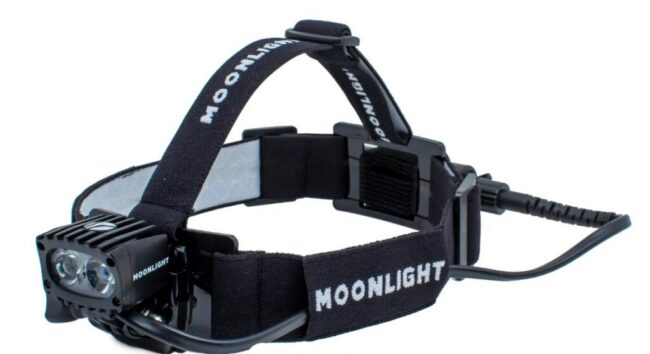
Why it wins: Built by a Norwegian company that knows winter, the Bright As Day 800 is purpose-designed for fast movement in brutal cold. It delivers 800 constant lumens (not marketing lumens that drop after 30 seconds) and includes an extension cable so you can keep the 21700 battery warm in a vest pocket or inside your jacket—a huge advantage in deep cold.
Key specs:
- Output: 800 lumens (constant, regulated)
- Battery: 1× 21700 Li-ion (4600 mAh)
- Runtime: ~2 hours at 800lm; up to 40 hours on low modes
- IP rating: IP67
- Weight: ~248g with battery
Winter-friendly features:
- Extension cable included—keep the battery inside your layers while the light stays on your head; this alone can double runtime in -20°C temps
- Designed specifically for running, hiking, and mountaineering with a stable headband and top strap for helmets or beanies
- Durable aluminum head housing for better heat management and ruggedness than plastic alternatives
Who it’s for: Winter trail runners, ski tourers, and fast-packers who need reliable, constant output during long efforts in cold temps. This is one of the most “winter-native” headlamps on the market. Why choose this over the HM60R? The extension cable makes it superior for sustained movement below -15°C, and the constant 800-lumen output is better for maintaining pace than the HM60R’s stepped modes.
4. Armytek Wizard C2 Pro Magnet USB – Best Ultra-Durable Workhorse

Why it wins: This is the headlamp equivalent of a Land Cruiser—overbuilt, versatile, and nearly indestructible. The Wizard C2 Pro is a right-angle multi-tool that works as a headlamp, clip light, or magnetic work light. With IP68 sealing, 10m impact resistance, and a -25°C operating rating, it shrugs off abuse that would kill lesser lights.
Key specs:
- Output: up to 2500 lumens (with thermal step-down)
- Battery: 1× 18650 (3500 mAh, included)
- IP rating: IP68 (submersible to 10m)
- Operating temperature: roughly -25 to +40°C
- Runtime: up to ~200 days on firefly mode
Winter-friendly features:
- Heavy-duty aluminum body with active temperature control prevents overheating and optimizes runtime
- Magnetic tail cap sticks to metal surfaces—great for vehicle repairs, ice fishing shelters, or camp setups
- Comfortable headband works over hats and helmets without slipping
Who it’s for: People who want one bombproof light for winter camping, work, hunting, and general outdoor abuse. If you’re comfortable managing 18650 batteries (pair it with Nitecore’s low-temp cells for best results), this will outlast almost anything else on the market. Why choose this over the Fenix HM60R? The Wizard wins on pure durability and versatility (magnetic tail, right-angle design), while the HM60R is lighter and more hiker-focused.
5. Armytek Wizard C2 WR – Best Winter Headlamp with Powerful Red Light

Why it wins: Most headlamps treat red light as an afterthought—a dim glow barely useful for reading maps. The Wizard C2 WR puts out an impressive 230 lumens of red light, making it genuinely useful for camp tasks, astronomy, or any situation where preserving night vision matters. Plus you get all the winter ruggedness of the Wizard platform.
Key specs:
- White output: up to ~1100 lumens
- Red output: up to 230 lumens (unusually bright)
- Beam pattern: 70° hotspot, 120° spill (very wide and comfortable)
- IP rating: IP68 (10m submersion)
- Operating temperature: roughly -25 to +40°C
Winter-friendly features:
- Same -25°C rating and IP68 ruggedness as other Wizard models
- Multiple white and red brightness levels with simple side-switch control
- Wide beam pattern reduces harsh shadows and glare on snow
Who it’s for: Winter campers, ice fishers, or anyone who spends significant time at camp in the dark. The powerful red modes are also excellent for wildlife observation or stealth approaches. Why choose this over the standard Wizard C2 Pro? If you value red light functionality, this is the obvious pick. Otherwise, the Pro offers slightly higher white output.
6. Fenix HP30R V2.0 – Best for Extreme Cold & Expeditions

Why it wins: When temperatures plunge below -30°C, standard headlamps struggle or die. The HP30R V2.0 solves this with a separate battery pack connected via cable, letting you keep 2× 18650 cells inside your jacket. There’s documented use of this light at McMurdo Station in Antarctica around -50°C—when the battery pack stayed inside layers, it remained functional in conditions that would kill any standard headlamp.
Key specs:
- Max output: around 3000 lumens (burst mode)
- Battery: 2× 18650 Li-ion in cabled remote pack
- Beam distance: up to ~270m
- Designed specifically for expeditions and professional use
Winter-friendly features:
- Remote battery pack with generous cable—the defining feature for extreme-cold performance
- Combination spot and flood beams suitable for search & rescue, mountaineering, and backcountry skiing
- Very high output with long runtimes when throttled to sustainable levels
Who it’s for: Polar expeditions, high-latitude winter travel, serious mountaineering, or search and rescue operations in extreme cold. This is overkill for dog walks, but if you’re heading somewhere truly cold for extended periods, it’s one of the most capable headlamps available. Why choose this over the Moonlight Bright As Day 800? The HP30R has higher max output and a more robust battery pack system, while the Moonlight is lighter and better-balanced for running.
7. Black Diamond Icon 700 – Best AA-Powered Winter Headlamp

Why it wins: In an era dominated by rechargeable li-ion, the Icon 700 makes a strong case for good old AA batteries—specifically lithium AAs, which perform exceptionally well in cold and are available almost anywhere. The Dual-Fuel system gives you flexibility: run rechargeable packs at home, swap to lithium primaries for remote winter trips.
Key specs:
- Max output: 700 lumens
- Batteries: 4× AA (alkaline or lithium) or BD rechargeable pack
- IP rating: IP67
- Runtime: up to 190 hours on low settings
Winter-friendly features:
- Lithium AA support for excellent cold-weather performance without worrying about charging
- Comfortable, stable headband suitable for helmets and beanies
- Multiple colors (white, red, green, blue) with Brightness Memory—restores your last setting automatically
Who it’s for: Multi-day winter backpackers who prefer the simplicity and availability of AA batteries, or anyone heading somewhere remote where USB charging isn’t practical. Lithium AAs are easy to find, pack light for spares, and perform reliably down to -20°C. Why choose this over rechargeable options? Battery logistics. If you’re doing a week-long winter traverse with no power access, carrying spare AAs is simpler than managing rechargeables.
8. Petzl NAO RL – Best for Ultra-Distance Winter Running

Why it wins: The NAO RL is engineered for fast movement over long distances. Its REACTIVE LIGHTING system automatically adjusts beam pattern and output based on ambient light, delivering up to 1500 lumens while intelligently preserving battery life. In standard Reactive mode, you get 5+ hours of smart illumination—perfect for ultra-distance winter races or long mountain traverses.
Key specs:
- Max output: 1500 lumens
- Battery: 3200 mAh Li-ion rear-mounted pack
- Weight: ~145g
- IP rating: IPX4 (weather-resistant)
Winter-friendly features:
- REACTIVE LIGHTING automatically optimizes output—conserves battery on long efforts without manual fiddling
- Rear battery pack balances weight for comfortable, bounce-free running on rough winter trails
- Red rear light for visibility in traffic or group runs on winter roads
Who it’s for: Ultra-runners and fast-packers tackling long winter efforts. The auto-adjusting beam is brilliant for maintaining pace without constantly managing brightness. Note: Like all rear-mounted li-ion headlamps, battery drains faster in extreme cold—best suited to active movement rather than static camp use below -20°C. Why choose this over the Moonlight Bright As Day 800? The NAO RL’s automatic brightness and lighter weight make it superior for racing and fast running, while the Moonlight offers more raw output and better extreme-cold performance.
How to Choose the Right Winter Headlamp for Your Needs
Match brightness and beam to your activity
Dog walking / casual winter use (200–400 lumens): A wide flood beam is all you need. The Fenix HM50R V2 with lithium batteries is perfect—compact, affordable, and plenty bright for sidewalks and trails.
Hiking, snowshoeing, winter camping (400–800 lumens): Mixed spot/flood beams give you confidence on uneven terrain. The Fenix HM60R, Moonlight Bright As Day 800, or Armytek Wizard C2 are all excellent choices.
Mountaineering, ski touring, search & rescue (800–3000 lumens): You need both throw (for route-finding) and runtime. Look at the Bright As Day 800, Fenix HP30R V2, or high-output Armytek models.
Prioritize battery strategy for your climate
Mild winters (-5 to -10°C): Standard li-ion headlamps work fine. Just start with a full charge and keep spares warm in a pocket.
Cold winters (-15 to -25°C): Choose headlamps that accept CR123 or lithium AA/AAA primaries, OR models with extension cables/remote packs you can keep under your jacket.
Extreme cold (below -30°C): Remote-pack systems are essential (Fenix HP30R V2, Moonlight Bright As Day with extension cable). Keep the battery inside your layers. Consider low-temperature-rated li-ion cells like Nitecore’s NL1835LTHP for compatible 18650 headlamps.
Don’t overlook comfort and usability
- Big, glove-friendly buttons are non-negotiable—fussy multi-click interfaces are miserable with gloves on
- Check headband compatibility with beanies, balaclavas, and helmets. Heavier lamps benefit from top straps (Moonlight, Icon 700, HP30R V2)
- Verify tilt range—the lamp needs to angle enough to light your feet when worn over a helmet or thick hat
Pro Tips: Getting the Most from Your Winter Headlamp
Even the best headlamp can underperform if you don’t manage it properly in cold conditions:
Pre-warm batteries indoors. Start every trip with fully charged, room-temperature cells. Cold-soaked batteries provide noticeably less runtime from the start.
Carry spares in an inside pocket. Keep backup cells close to your body. Swap warm and cold batteries periodically to extend total runtime.
Use lower modes when possible. High turbo modes cause voltage sag in cold batteries. Medium modes often deliver far better real-world runtime in freezing temps.
Never charge li-ion in deep cold. Charge at room temperature whenever possible. Charging frozen batteries can cause permanent damage.
Tuck lights inside layers during breaks. If you’re stopped for a rest, slip a headlamp with an external battery pack under your jacket to keep it warm and ready.
Frequently Asked Questions
Can I use my regular headlamp in winter?
Maybe—it depends on the temps. Down to -10°C, most modern rechargeable headlamps will work, though runtime will be shorter. Below -15°C, standard li-ion headlamps start struggling unless you keep the battery warm. If you’re heading into serious cold regularly, invest in a winter-specific model.
Are rechargeable headlamps bad in the cold?
Not bad, just less efficient. Li-ion batteries lose capacity as temperatures drop. But if you keep them warm (inside pocket, under jacket, or using a remote pack), they perform reasonably well. For casual winter use above -15°C, rechargeables are fine. For colder temps, consider models that accept lithium primaries as backup.
What batteries should I use at -30°C?
Your best options: (1) Remote battery packs kept inside your jacket, (2) Lithium CR123 or lithium AA primaries (Energizer Ultimate Lithium), or (3) Low-temperature li-ion cells like Nitecore’s NL1835LTHP in compatible 18650 headlamps. Avoid alkalines entirely—they’re nearly useless in serious cold.
Do I really need 3000 lumens?
Probably not. For most winter hiking and camping, 400–800 lumens is plenty. Ultra-high outputs (2000–3000 lumens) are useful for search & rescue, technical mountaineering, or large-area illumination, but they drain batteries fast and generate heat. More important than max lumens: reliable mid-level modes with good runtime.
How do I prevent my headlamp from fogging up?
Condensation happens when warm, humid air (from your breath or body heat) meets the cold lens. Best prevention: (1) Keep the lamp away from your face when possible, (2) Wipe the lens occasionally, (3) Store the lamp outside your jacket until you need it, so it stays cold and doesn’t fog when exposed to cold air.
The bottom line: Winter headlamps aren’t just about brightness—they’re about reliability when it matters most. Whether you’re trail running through a snowstorm, setting up camp at -25°C, or navigating a pre-dawn ski tour, the right headlamp should be one less thing to worry about.
For most readers, the Fenix HM60R offers the best balance of features, cold-weather capability, and value. But if you’re running long distances, the Moonlight Bright As Day 800 edges ahead. For extreme conditions, the Fenix HP30R V2.0 is unmatched. And if you want something compact and affordable, the Fenix HM50R V2.0 punches well above its weight.
Whichever you choose, invest in good batteries, keep them warm, and you’ll have reliable light through the darkest, coldest months of the year.