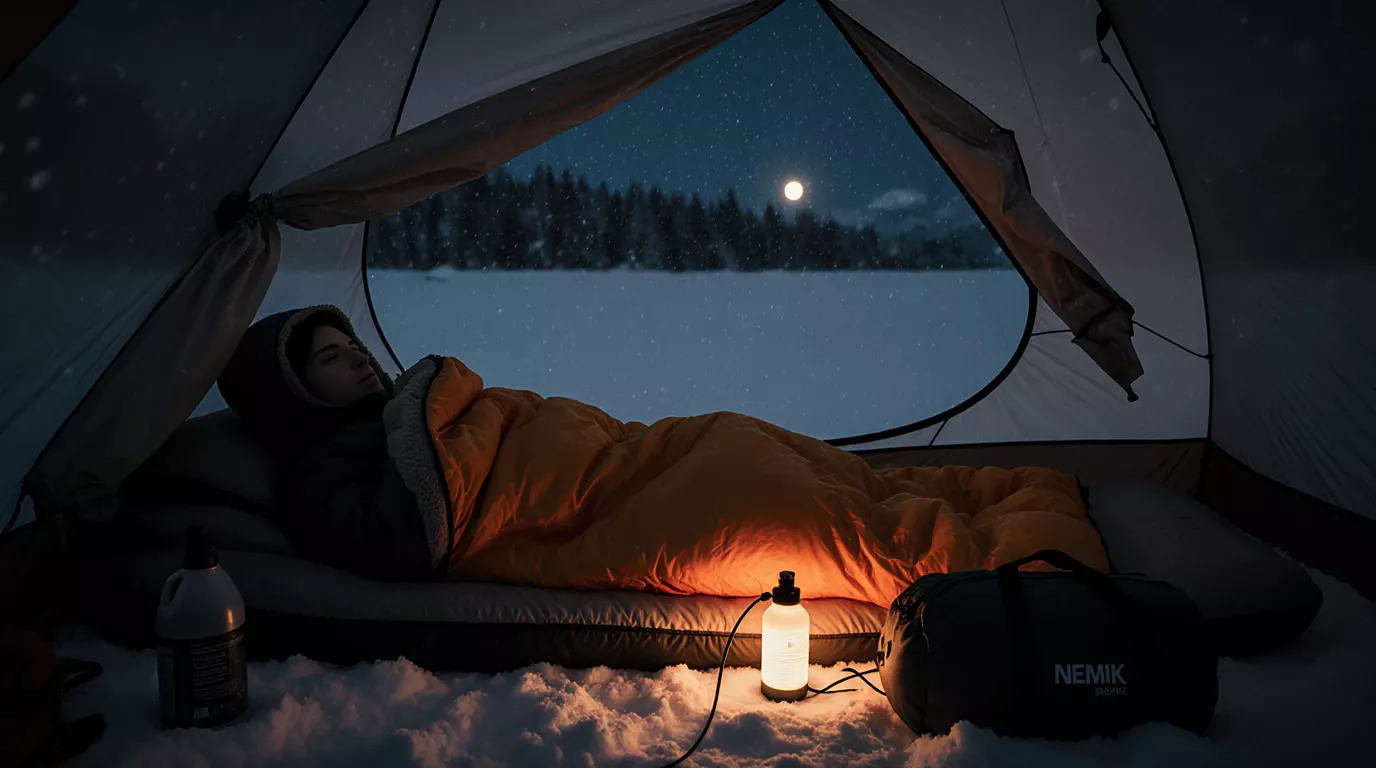
Winter camping has changed. It used to be about suffering through the night, hoping your body heat alone could battle the dropping mercury. In 2026, the strategy has shifted from just trapping heat to actually generating it.
Going to sleep is the easy part. You’re warm from the fire and maybe a little whiskey. But at 3:00 AM, the fire is dead, and your body metabolism slows down. Suddenly, that “0°F” bag feels like a thin windbreaker.
The Cold Truth: 80% of campers wake up freezing not because of the air temperature, but because of ground conduction. The frozen earth steals heat from your body 50 times faster than the air does. Before we even talk about bags or blankets, we have to fix your foundation.
The Silent Killer: Why Your Pad Matters More Than Your Bag
If you put a $900 expedition sleeping bag directly on the frozen ground, you will freeze. You need to look at R-Value (Thermal Resistance). The Winter Rule: Do not buy a pad with an R-Value lower than 4.
🏆 The Pad Tier List
- Gold Standard: Therm-a-Rest NeoAir XTherm (R-7.3). The warmest per ounce on the market.
- Best Comfort: Nemo Tensor Insulated (R-4.2). Thick, stable, and quiet.
- Budget Hack: The Stacking Method. Buy a cheap closed-cell foam mat (like a Z Lite, R-2.0) and place it under your standard 3-season air pad (R-3.0). The values combine (2 + 3 = 5), giving you a winter-ready system for cheap.
Pick Your Strategy: Hiker vs. Car Camper
Don’t buy a 10-pound sleeping bag if you have to carry it up a mountain. Don’t spend $500 on an ultralight bag if you’re sleeping in a truck.
| Strategy | The Gear Setup | Best Bag | Heat Source |
|---|---|---|---|
| 🚙 Car Camper (Active Heat) | Synthetic Bag + 12V Blanket + Power Station | Teton Celsius XL (~$80) |
Ignik 12V Blanket |
| 🥾 Backpacker (Passive) | Down Bag + High R-Pad + Nalgene Trick | Nemo Sonic 0° (~$450) |
Hot Water Bottle |
1. The Car Camper Strategy: Active Heat
If weight isn’t an issue, you can cheat the cold with electricity.
The Heat Source: Ignik Topside Heated Blanket (~$200)
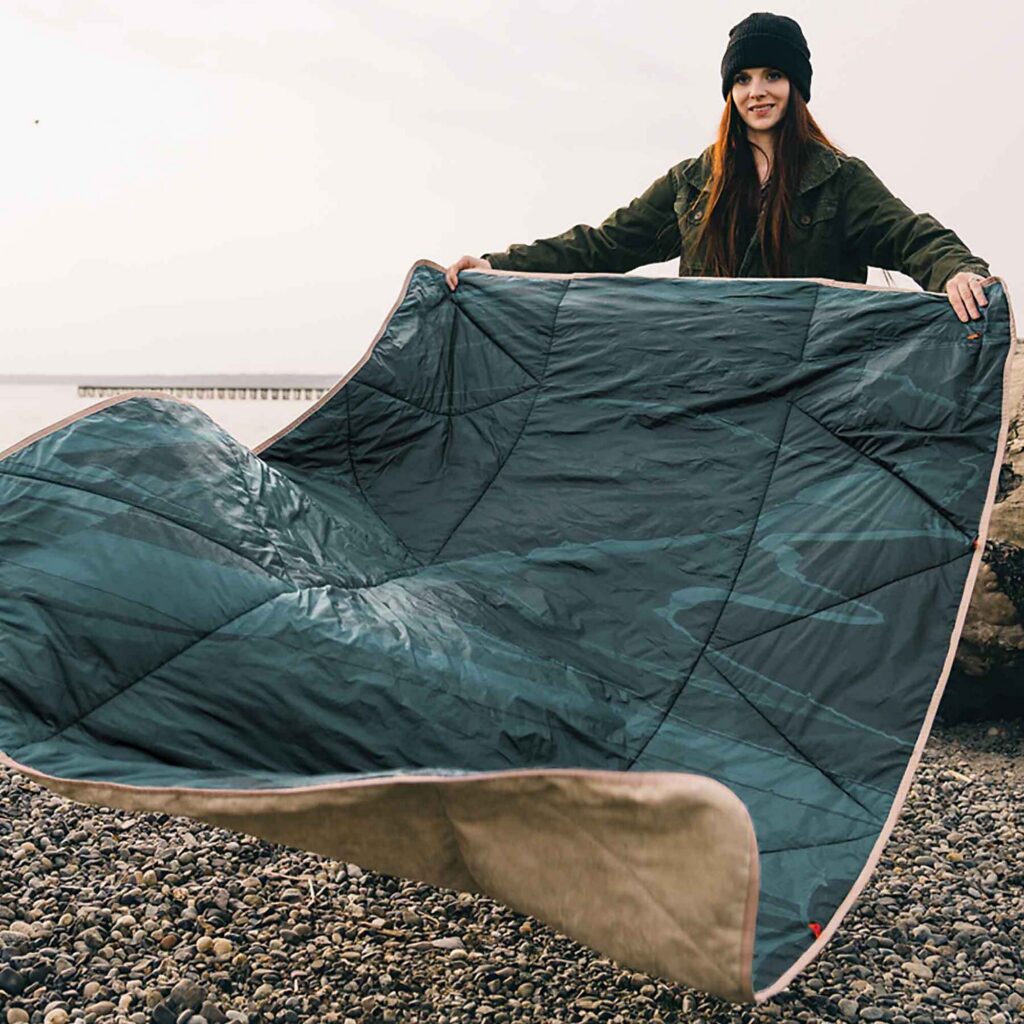
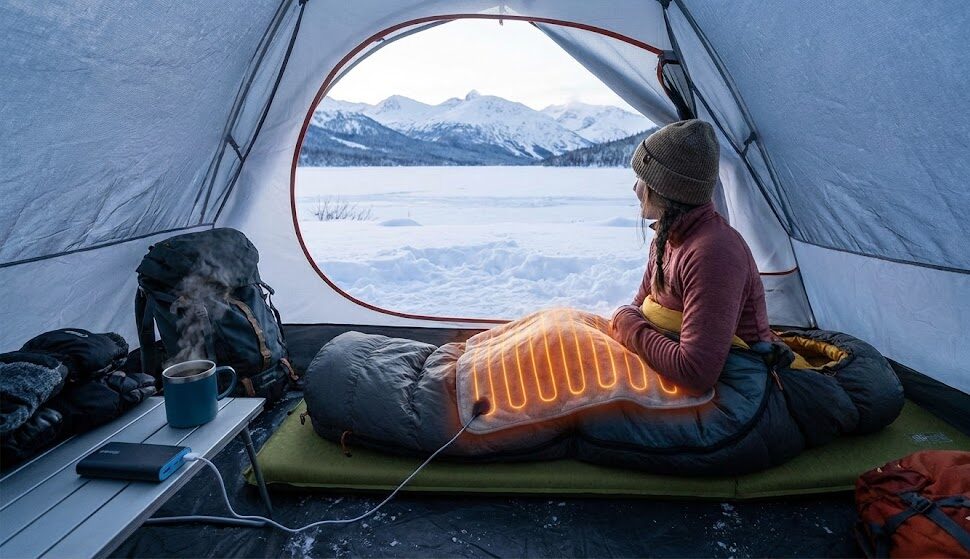
This isn’t a wimpy USB throw. It is a 48W beast that runs off a 12V car port or portable power station. It gets genuinely hot (up to 140°F). You use this over your sleeping bag to trap heat, or under you as a heated mattress pad.
🔋 Power Math:
- Jackery 240 (250Wh): Runs for 1 night (6-8 hours on medium).
- Goal Zero Yeti 500 (500Wh): Runs for a full weekend (2 nights).
- No Power Station? You can plug it into your car’s 12V port to pre-heat, but do not run it overnight with the engine off, or you will drain your starter battery and be stranded.
We tested several cheap “Heated Sleeping Bag Liners” from Amazon. Most fail because:
- Wire placement creates hot spots that burn your legs.
- Tiny batteries drain in under 90 minutes.
- They add bulk without meaningful warmth.
Stick to a heated blanket on top or the pre-heating strategy below.
The Bag: Teton Sports Celsius XL (~$80)
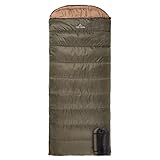
This is the king of car camping. It weighs over 7 lbs and rolls up to the size of a beer keg, so do not hike with it. However, it feels like a real bed. It is lined with brushed flannel—not that cold, slippery nylon—and uses massive amounts of synthetic fill. Crucially, because it is synthetic, it stays warm even if it gets damp from condensation.
2. The Backpacker Strategy: Passive Insulation
You can’t carry a heavy battery, so you need premium insulation that traps every calorie your body produces.
The Bag: Nemo Sonic 0° (~$450)
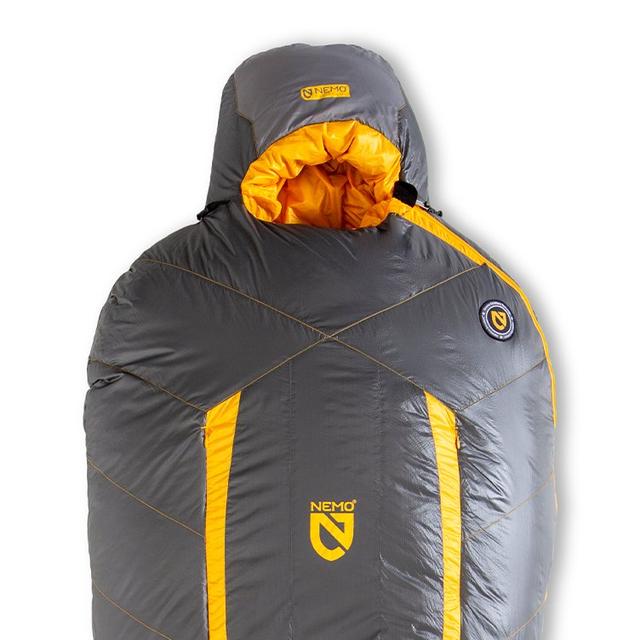
This bag solves the classic winter problem: the “Sweat/Freeze” cycle. If you overheat, you sweat; if you sweat, you freeze when you stop moving. The Sonic features “Thermo Gills”—zippered vents on the torso that let you dump heat without letting cold drafts in. It uses 800-fill hydrophobic down and features a waterproof/breathable footbox to protect against tent wall condensation.
The Upgrade Pick: Western Mountaineering Kodiak MF (~$895)
If you are serious about winter trekking, Western Mountaineering is the gold standard. The Kodiak MF is rated to 0°F but is widely considered conservative—it will keep you warm well below that. It uses 30oz of 850+ fill power goose down to create a massive loft. It is spacious enough to wear a puffy jacket inside without compressing the insulation.
Since you can’t run a heater all night hiking, bring a smaller USB-heated blanket (like a Rumpl e-Puffy | ~$180) just to pre-heat your bag. Turn it on 20 minutes before bed using a small phone bank. Crawling into a warm bag is psychologically massive.
The Budget Survivor: Coleman 0°F Mummy (~$50)
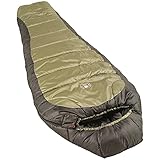
Best for: Car camping on a budget OR first-time winter campers.
Not ready to drop $500? The Coleman 0°F Mummy is bulky (5+ lbs), the zipper is annoying, and it won’t win design awards. But it has enough fill to keep you alive for the price of a nice dinner.
Verdict: It works fine for sleeping next to the car, but it is too heavy and bulky for long-distance backpacking. Pair it with a good R-value pad, and you’ll be fine.
3 Cheap Hacks for Warmth
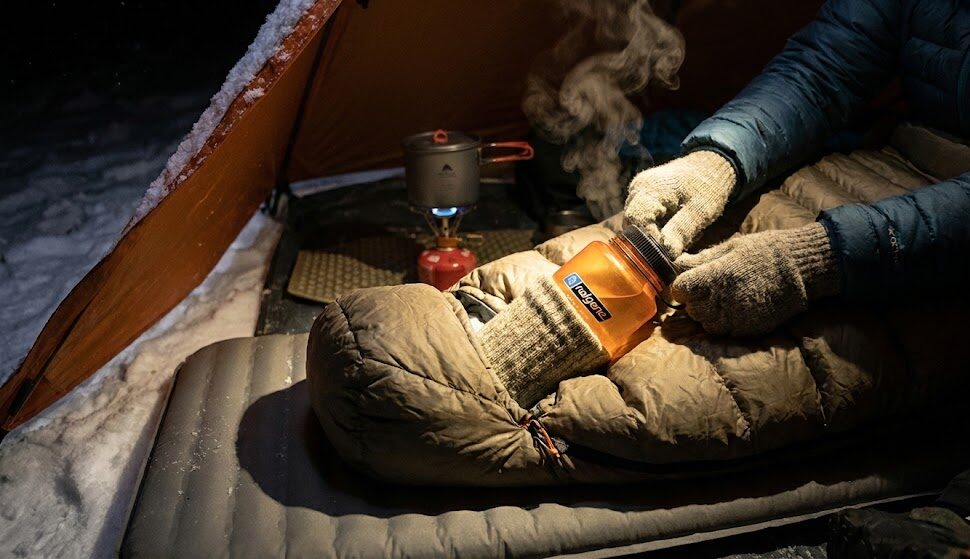
- The Nalgene Trick: Boil water right before bed, fill a Nalgene bottle, put it inside a spare wool sock, and throw it in the bottom of your sleeping bag. It will radiate heat for 4-6 hours. Cost: $0.
- The “Tomorrow Clothes” Pillow: Stuff the clothes you plan to wear the next day inside your sleeping bag. It fills empty space (reducing the air your body has to heat up) and means you don’t have to put on frozen underwear in the morning.
- Eat Fat: Right before bed, eat a chunk of cheese or a scoop of peanut butter. Digestion generates body heat, and fat burns slowly throughout the night.
FAQ: Winter Sleep Systems
What does a “0°F Rating” actually mean?
It usually refers to the “Lower Limit”—the temp at which a standard male can sleep without waking up. It does not mean you will be comfortable. Rule of thumb: Add 10-15°F to the rating. A 0°F bag is comfortable at 15°F.
Do I need a sleeping bag liner?
For warmth? Maybe (adds ~10°F). For hygiene? Absolutely. It is much easier to wash a liner than a heavy down bag. The Sea to Summit Thermolite Reactor is a solid choice because it adds tangible warmth.
Can I use a heated blanket with a down bag?
Yes. If it is a small USB blanket, place it inside to pre-heat. If it is a heavy 12V blanket (Ignik), place it on top of the bag. You do not want a heavy blanket inside compressing the down feathers, as that kills the insulation.
Disclosure: We test gear in real freezing conditions. If you buy through our links, we may earn a commission. We do not accept free gear for positive reviews.
Never sleep with a propane heater (like a Mr. Buddy) turned on inside a sealed tent. Carbon Monoxide (CO) is odorless and kills campers every year. The only safe overnight heat source inside a sleeping bag is electric (batteries) or passive (body heat).