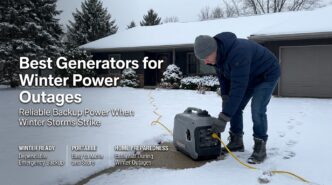
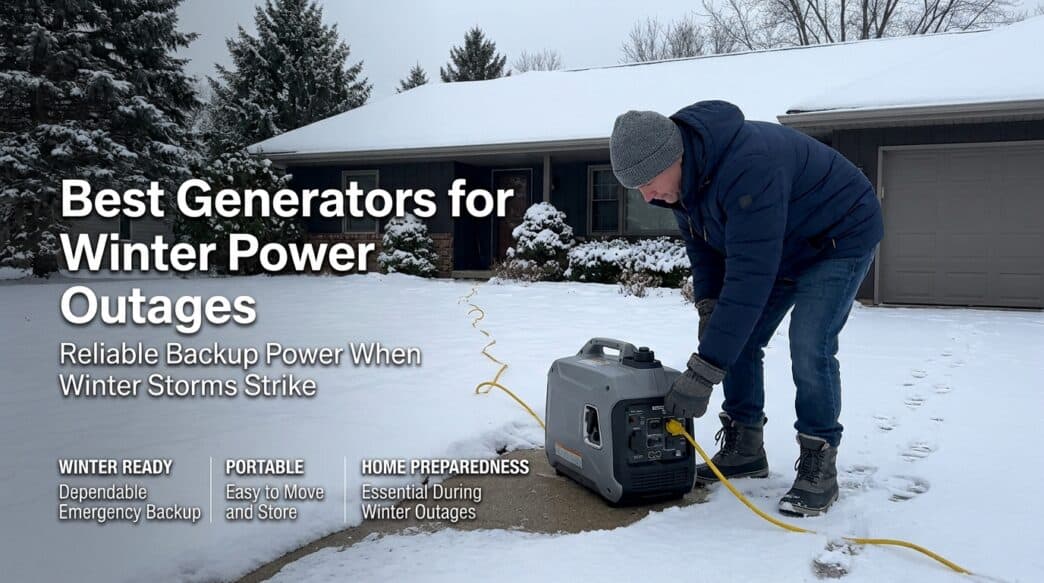
When a winter storm takes down the power grid, the outage rarely lasts an hour. Ice storms bring trees down onto lines faster than crews can clear them, and in a bad event, whole counties can sit dark for a week or more. A generator is the difference between riding that out in a cold, dark house and keeping the fridge running, the furnace blower turning, and your phone charged until the lights come back.
We looked at 13 generators spanning the full range a winter-prepared household actually needs – from a 1,500-watt unit that fits in a closet to an 11,000-watt tri-fuel machine built to run a whole house, plus one battery-powered option with zero fumes. Below, we break them into tiers by how much power they deliver, what fuel they run on, and who each one actually fits, so you can skip the units that are wrong for your situation instead of reading past them.
Running a Generator Safely – This Comes First
Before anything else: a gas or propane generator produces carbon monoxide, and CO is invisible, odorless, and can kill in a closed space in minutes. This is not a footnote.
- Never run a generator indoors, in a garage, in a carport, or near an open window or door – even with the garage door up. CO pools and drifts back into the house.
- Run it at least 20 feet from the house, pointed so exhaust blows away from doors and windows.
- Install battery-powered CO detectors on every floor of the home, not just near the generator.
- A built-in CO sensor (several models below have one) is a helpful backstop, not a substitute for correct placement.
- The one exception in this guide is the Jackery HomePower 3600 Plus – it’s a battery, not a combustion engine, and produces zero exhaust, which is why it’s the only unit here that’s genuinely safe to run inside during a storm.
How Much Generator Do You Actually Need
Most people oversize or undersize because they think in terms of “the whole house” instead of the specific loads that matter during a winter outage. Add up running watts for what you actually need, then add extra headroom for the highest single starting surge (usually the fridge or a well pump compressor kicking on).
| Load Level | Typical Watts Needed | What It Covers |
|---|---|---|
| Essentials only | 1,500-2,500W | Fridge, some lights, phone/laptop charging, a CPAP or medical device, wifi router |
| Essentials + furnace | 3,000-5,000W | Everything above, plus a gas furnace blower motor (the surge on ignition matters here) or a small window AC/heater |
| Multiple circuits | 5,000-7,500W | Fridge, furnace, well pump, sump pump, some lighting circuits, microwave |
| Whole-home partial | 8,000-11,000W | Most of a house running at once through a transfer switch, including an electric water heater or central AC compressor |
The number on the box is almost always the peak/starting wattage – the momentary surge when a motor first kicks on. The number that actually matters for what you can run continuously is the running/rated wattage, which is meaningfully lower. We list both for every product below.
Gas vs. Dual-Fuel vs. Tri-Fuel vs. Battery – The Decision That Matters Most
This is the choice that determines whether your generator is actually usable three days into a storm, not just on paper.
Gasoline-only is the cheapest option up front and the most common. The problem in a real winter emergency: gas stations lose power too, pumps stop working, and stored gas degrades within about 30 days without a stabilizer. If you’re relying on a gas can in the garage, check it every season.
Dual-fuel (gasoline + propane) solves the storage problem. Propane doesn’t go stale sitting in a tank for years, and a spare 20-lb propane tank – the same kind used for a grill – gives you a fuel source that’s ready the moment you need it, no trip to a gas station required.
Tri-fuel (gasoline + propane + natural gas) adds a third option: if your home already has a natural gas line, a tri-fuel generator can hook directly into it for functionally unlimited runtime, no fuel storage or refueling at all. This is the single biggest advantage tri-fuel has in a multi-day winter outage, and it’s under-explained in most buying guides.
Battery/solar generators produce no exhaust, no noise beyond a light hum, and can be run safely indoors – genuinely useful for winter storms specifically, since running extension cords out to a garage-stored gas generator in deep snow is its own hassle. The tradeoff is finite stored capacity: once the battery is drained, you’re waiting on a wall outlet, solar panels, or a separate generator to recharge it, not just topping off a tank.
Connecting to Your House Safely
- Extension cord method: Simplest and cheapest. Run heavy-duty, outdoor-rated 12-gauge (or thicker) cords from the generator to specific items – fridge, a lamp, a space heater. Fine for light use, not practical for a furnace or anything hardwired.
- Interlock kit: A code-compliant device (roughly $50-150 installed) that bolts into your existing breaker panel and mechanically prevents the main breaker and generator breaker from being on at the same time. Lets you power selected circuits through your home’s existing wiring.
- Transfer switch (manual or automatic/ATS): The most complete solution. A manual transfer switch lets you select which circuits draw generator power; an automatic transfer switch (ATS) senses an outage and switches over on its own, no one needs to go outside in a storm to start it. Several generators below are explicitly “ATS ready.”
Whichever method you choose, never plug a generator directly into a wall outlet (“backfeeding”) without an interlock or transfer switch – it can send power back down the line and electrocute utility workers.
Quick Comparison – All 13 Generators
| Model | Tier | Peak / Running Watts | Fuel | Noise | ATS/RV Ready |
|---|---|---|---|---|---|
| Gidrox 11000W Tri-Fuel | Whole-Home | 11,000W / n/a | Gas/Propane/NG | Quiet-rated | ATS Ready, 50A |
| DuroMax XP11000iH | Whole-Home | 11,000W / 9,000W (gas) | Gas/Propane | 61-62 dBA | 50A, transfer-switch ready |
| maXpeedingrods 10500W Tri-Fuel | Whole-Home | 10,500W / 7,800W (gas) | Gas/Propane/NG | 70 dB | 120/240V, 50A |
| Yamaha EF7200D | Mid-Size | 7,200W / 6,000W | Gas only | 74.5 dBA | Not RV-ready (adapter needed) |
| GENMAX GM6000iED | Mid-Size | 6,000W / 5,250W | Gas/Propane | 62 dBA | No RV port; home/camp use |
| Efurden 4400W Open Frame | Mid-Size | 4,400W / 3,400W | Gas only | 72-78 dBA | 30A RV Ready |
| EFURDEN 4300W | Mid-Size | 4,300W / 3,300W | Gas only | 60 dB | 30A RV Ready |
| Honda EU2200i | Compact | 2,200W / 1,800W | Gas only | 48-57 dBA | No RV port |
| BILT HARD 2500W | Compact | 2,500W / 2,000W | Gas only | 65 dB | No RV port |
| maXpeedingrods 2500W Dual Fuel | Compact | 2,500W / 1,850W (gas) | Gas/Propane | Not disclosed | RV-ready |
| Oxseryn 2800W | Compact | 2,800W / 2,000W | Gas only | 58 dBA | No RV port |
| Aceup Energy 1500W | Compact | 1,500W / 1,200W | Gas only | 55 dB | No RV port |
| Jackery HomePower 3600 Plus | Battery | 3,600W (7,200W parallel) | Battery/Solar | ~30 dB | Indoor-safe, no ATS needed |
Whole-Home Backup (10,000W+)
This tier is for households that want to keep most of the house running through a real multi-day outage – furnace, well pump, fridge, and general circuits together, usually through a transfer switch.
1. Gidrox 11000W Tri-Fuel Inverter Generator – Best for Whole-Home Backup with ATS
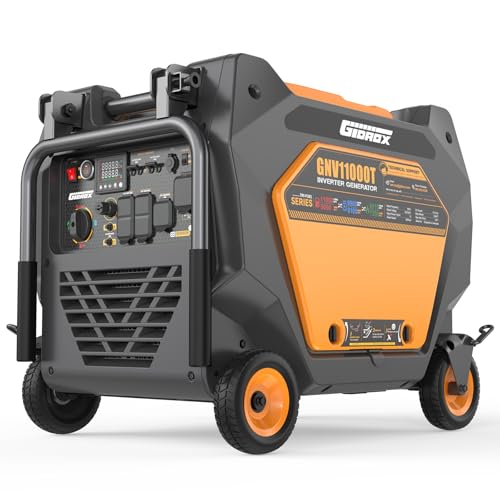
Of the three whole-home units here, this is the one built specifically around automatic transfer switch compatibility and true three-fuel flexibility – gasoline, propane, or a direct natural gas line. That third option is the real winter advantage: if your house already has a gas line, you’re not managing stored fuel at all during an extended outage, you’re just running the line. It’s rated at 11,000 peak watts with a 50A outlet, remote start (so you’re not walking out into the storm to pull-start it), and a built-in CO sensor.
What we like for cold-climate use: ATS compatibility means the generator can kick in automatically during a nighttime outage without anyone going outside in the cold and dark to start it. Natural gas capability removes fuel storage entirely as a winter-prep concern, which is the single biggest failure point in most generator plans – people run out of stored gas on day three of a storm.
What to know for cold climates: Verify the natural gas hookup requires a licensed installer in most jurisdictions – budget for that if you want the NG connection ready before you need it, not during the storm. As with any tri-fuel unit, running watts vary by fuel source (gasoline delivers the most power, natural gas the least), so size your load planning around whichever fuel you’ll actually use most.
Best for: Homeowners who want automatic whole-home backup and either have a natural gas line already or want the flexibility to switch fuels as availability changes during a long outage.
2. DuroMax XP11000iH – Best Established Brand, Dual-Fuel Reliability

DuroMax has been in the backup-power space long enough to have a real track record, and the XP11000iH is their flagship dual-fuel inverter. It delivers 11,000 peak/9,000 running watts on gasoline, or 10,450 peak/8,550 running on propane, through a 50A plug designed for an interlock or transfer switch. The standout feature is Switch On Demand – you can change from gasoline to propane (or back) while the generator is running, without shutting it down first.

What we like for cold-climate use: Being able to switch fuels on the fly matters in a real multi-day storm – if you start on gasoline and your stored fuel runs low, you can swap to a propane tank without an interruption in power. The all-copper windings and remote-start key fob mean you can start it from inside the house rather than walking out into freezing weather.
What to know for cold climates: At 61-62 dBA it’s louder than the inverter-only competitors in this tier, worth factoring in if you have close neighbors. Runtime drops noticeably on propane (about 8 hours vs. up to 18 on gasoline at a full tank), so plan propane tank quantity accordingly for a multi-day event.
Best for: Buyers who want a proven, widely-supported brand with a genuine on-the-fly fuel switch and don’t need natural gas capability.
3. maXpeedingrods 10500W Tri-Fuel Inverter Generator – Best Value Tri-Fuel, 120/240V E-Start
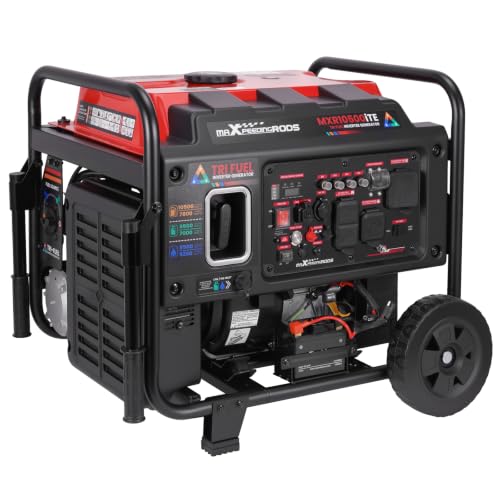
This is the budget-friendlier entry into tri-fuel territory, and it’s the only unit in this tier with switchable 120V/240V output built in, useful if you’re powering both standard household circuits and 240V equipment like a well pump or electric dryer. The 312cc engine delivers 10,500 peak watts on gasoline, dropping to 9,500 on propane and 8,500 on natural gas, with three start methods – recoil, electric, and remote.
What we like for cold-climate use: 13.5 hours of runtime at 25% load on gasoline is strong for this tier, meaning fewer overnight refuels during a storm. Wheels and a telescopic handle make it realistically moveable by one person despite the size, which matters when you’re setting it up in snow.
What to know for cold climates: This model isn’t sold in California, so confirm shipping availability for your state before ordering. maXpeedingrods is a newer entrant to generators (their background is automotive performance parts) – it lacks the decades-long track record of DuroMax or Honda, worth weighing if brand history matters to you for a whole-home investment.
Best for: Buyers who want tri-fuel flexibility and dual voltage output without the premium price of the Gidrox or DuroMax units.
Mid-Size Power (4,000-7,200W)
This tier covers a fridge, furnace blower, several lighting circuits, and a well pump – enough for most of the “must-haves” without whole-home wattage or price.
4. Yamaha EF7200D – Best Premium Reliability

Yamaha’s reputation for engine reliability carries over from their small inverter line into this larger conventional unit. The 358cc MZ360 engine delivers 7,200 peak/6,000 running watts at 120/240V, giving it genuine multi-circuit capacity in this tier. Note this is a conventional generator, not a pure inverter – its THD (total harmonic distortion) runs under 7%, higher than the inverter units in this guide, so it’s not the choice if you’re running especially sensitive electronics without a separate surge protector.
What we like for cold-climate use: A 6.9-gallon tank delivers roughly 12 hours of runtime at 50% load, meaningfully longer between refuels than the smaller open-frame units in this tier – useful overnight during a storm when you don’t want to be topping off fuel at 3am.
What to know for cold climates: It’s not natively RV-ready – it has an L5-30R receptacle that needs an adapter for standard RV plugs, and it’s a recoil pull-start only (no electric start button), which is worth testing in cold gloves before you actually need it in a storm. Yamaha discontinued production of this model, so availability may tighten over time.
Best for: Buyers prioritizing engine reliability and multi-circuit capacity who don’t need RV-specific plugs or ultra-low THD for sensitive electronics.
5. GENMAX GM6000iED – Best Mid-Size Dual-Fuel for Multiple Appliances
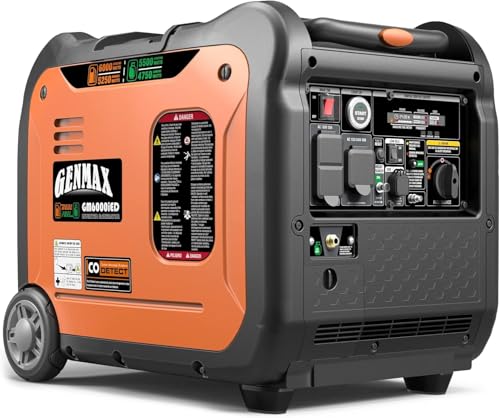
The GM6000iED pairs real inverter technology (under 3% THD, safe for sensitive electronics) with dual-fuel flexibility – a meaningful step up from most units in its wattage class, which are gasoline-only. It delivers 6,000 peak/5,250 running watts from a 312cc engine, with a 5-in-1 digital display showing hours, voltage, load, fuel level, and frequency at a glance, plus remote start.

What we like for cold-climate use: Built-in CO Detect automatically shuts the unit down if dangerous carbon monoxide levels build up nearby – a real backstop, though correct outdoor placement is still the primary safety measure. The dual-fuel design means you can run it on a propane tank if gasoline supply gets unreliable during an extended storm.
What to know for cold climates: At 117.9 lbs, this is genuinely heavy for a “portable” generator – the telescopic rod and wheels help, but this is not a one-person lift-and-carry unit like the smaller Efurdens. There’s no RV outlet, so it’s better suited to home backup and job-site use than RV/camping trips.
Best for: Households that want real inverter-clean power at mid-size wattage with fuel flexibility, without needing an RV connection.
6. Efurden 4400W Open Frame – Best Open-Frame Value, RV + Home Combo
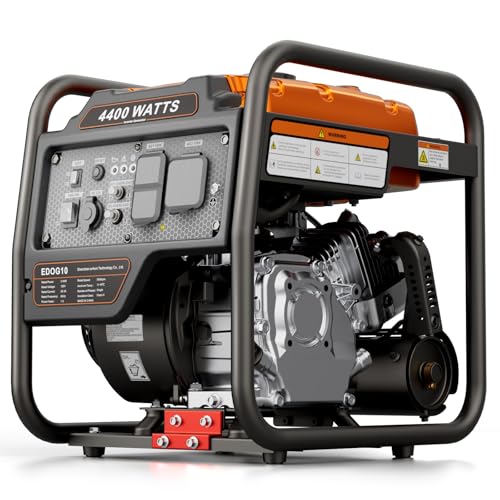
The larger of the two Efurden units in this guide, the 4400W delivers 4,400 peak/3,400 running watts from a 208cc engine in an open-frame design – meaning better engine cooling and typically lower cost than an enclosed inverter cabinet at this wattage. It includes a 30A RV port alongside two standard 120V outlets, making it a genuine dual-purpose unit for both home backup and RV trips.
What we like for cold-climate use: A 2-gallon tank with ECO mode delivers up to 14 hours of runtime at 25% load – long enough to get through most nights without refueling. The 30A RV port and 3,400 running watts give it enough headroom for an RV air conditioner or multiple home essentials at once.
What to know for cold climates: Open-frame design means it’s louder than enclosed inverter units – published noise ratings for this model range from 72 to 78 dBA depending on the source, so verify current listing specs before assuming it’s whisper-quiet. At 56 lbs it’s heavier than its 4300W sibling below, worth factoring in if you’ll be moving it through snow.
Best for: RV owners and homeowners who want one generator that does both jobs and don’t mind slightly more noise than a fully-enclosed inverter.
7. EFURDEN 4300W – Best Quiet Compact Pick in This Tier
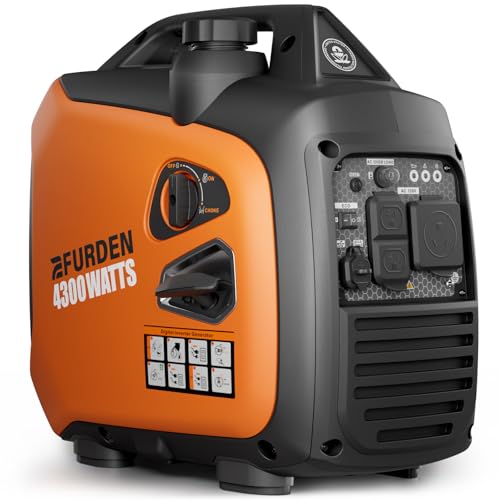
Efurden’s smaller, quieter sibling trades a little running wattage (3,300W vs. 3,400W) for a meaningfully quieter, lighter package – 60 dB at 23 feet versus the 4400W’s 72-78 dBA, and 45 lbs versus 56. It also adds ports the 4400W doesn’t have: a USB port and a QC 3.0 Type-C port alongside the standard 120V and 30A RV outlets, useful for directly charging phones and laptops without needing a separate adapter.
What we like for cold-climate use: THD under 2% is genuinely clean power, good for laptops, routers, and any medical device you’re relying on during an outage. At 45 lbs it’s realistically liftable by one person into and out of a car trunk, unlike most units in this wattage range.
What to know for cold climates: The slightly lower running wattage (3,300W vs. the 4400W’s 3,400W) is a minor difference, but if you’re right at the edge of your load calculation, the extra 100W on the 4400W could matter. This is a sealed-case rather than open-frame design, which trades slightly less airflow for the noise reduction.
Best for: Buyers who want the quietest, lightest option in the 4,000W-class tier and value USB-C charging ports over the extra 100 running watts.
Compact and Portable (1,500-2,900W)
This tier covers the essentials – fridge, lights, phone charging, a CPAP – in the smallest, quietest, most liftable packages. None of these will run a furnace blower or well pump on their own.
8. Honda EU2200i – Best Overall, Benchmark Reliability
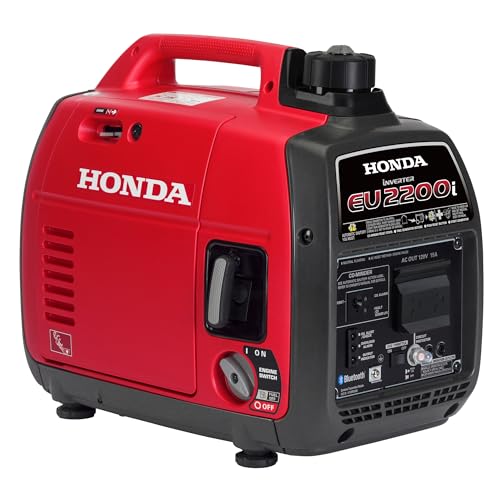
The EU2200i is the generator other small inverter generators get compared against, and for good reason – Honda’s 121cc GXR120 engine has a reputation built over more than a decade of the EU-series line. It delivers 2,200 peak/1,800 running watts, runs 3.2 to 8.1 hours per tank depending on load (0.95-gallon tank), and includes CO-MINDER, Honda’s advanced carbon monoxide detection system that automatically shuts the unit down before nearby CO levels become dangerous.

What we like for cold-climate use: At 48-57 dBA, this is among the quietest gas generators in this guide – genuinely quieter than a normal conversation, which matters if you’re running it through the night next to a house full of sleeping people. Bluetooth connectivity through Honda’s My Generator app lets you check status and stop the unit remotely without going back outside in the cold.
What to know for cold climates: 1,800 running watts is enough for a fridge, some lights, and device charging, but not a furnace blower or well pump – this is an essentials-tier unit, priced closer to mid-tier generators for the Honda name and reliability. There’s no built-in RV outlet on this base model (Honda sells an RV-specific companion version separately).
Best for: Buyers who want the most proven name in small inverter generators and are willing to pay for it, running essentials-only loads.
9. BILT HARD 2500W – Best Safety Feature (Built-In CO Sensor)
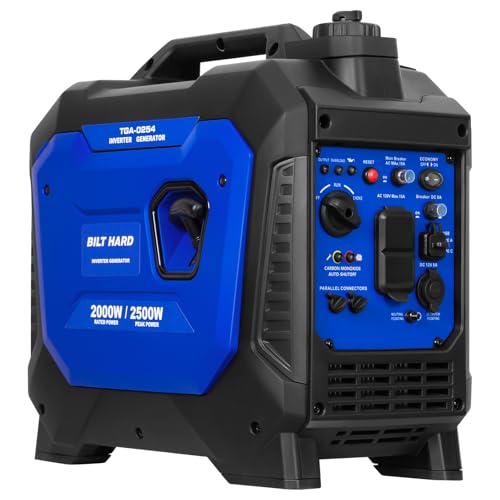
Given how central carbon monoxide safety is to generator use, the BILT HARD’s built-in CO sensor is a genuine differentiator at this price point – it automatically shuts the engine down if dangerous CO levels are detected nearby. It delivers 2,500 peak/2,000 running watts from an 80cc engine, with clean sub-3% THD power safe for laptops, phones, and TVs.
What we like for cold-climate use: The CO sensor is a real backstop safety feature, not just marketing language – worth the modest premium over otherwise-similar units without one, especially for anyone new to generator ownership who might be less careful about placement. It’s parallel-ready, so you can add a second unit later with a parallel kit instead of buying a bigger generator up front.
What to know for cold climates: A CO sensor is a backstop, not a substitute for placing the generator outdoors and away from windows – don’t let the feature create false confidence about running it closer to the house than you should. The 1.11-gallon tank is small, giving roughly 5.5 hours at 50% load, so plan on more frequent refueling than the larger units in this tier.
Best for: Safety-conscious first-time generator buyers who want a built-in CO shutdown as a second line of defense.
10. maXpeedingrods 2500W Dual Fuel – Best Budget Dual-Fuel Small Unit

Most generators in this compact tier are gasoline-only; this is the exception, delivering 2,500 peak/1,850 running watts on gasoline or 2,300 peak/1,650 running on propane from a 79.7cc engine. That fuel flexibility at a small-unit price point is the main reason to pick this over the otherwise-similar gasoline-only competitors in this tier.
What we like for cold-climate use: Propane capability at this size and price is unusual – useful if you already keep spare propane tanks on hand for a grill and want to skip gasoline storage entirely for your backup unit. It includes a built-in CO sensor and is RV-ready out of the box.
What to know for cold climates: Running watts drop by about 11% on propane versus gasoline (1,650W vs. 1,850W), so if you’re running this at the edge of its capacity, plan around the lower propane figure rather than the gasoline number. Noise level isn’t clearly disclosed by the manufacturer – if quiet overnight operation matters to you, the Honda or Oxseryn below have clearer, lower published ratings.
Best for: Buyers who want dual-fuel flexibility in the smallest, most affordable package in this guide.
11. Oxseryn 2800W – Best Super-Quiet Small Pick
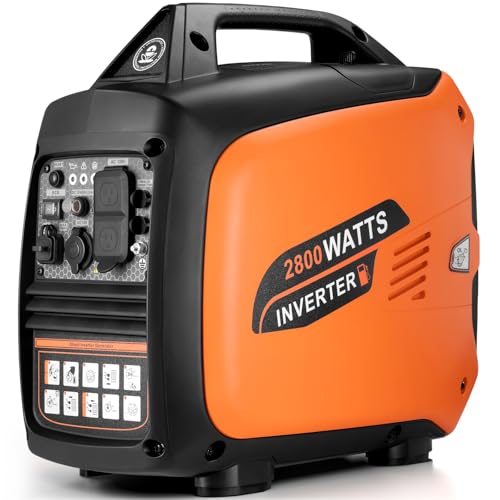
At 58 dBA from 23 feet, the Oxseryn is one of the quietest gasoline units in this guide outside of the Honda, while delivering slightly more running wattage (2,000W) than the Honda’s 1,800W. Its 79.8cc engine runs up to 9 hours at 25% load on a 1.1-gallon tank, and clean sub-3% THD power protects sensitive electronics.
What we like for cold-climate use: The combination of 2,000 running watts, 58 dBA noise, and a 39-40 lb weight makes this a genuinely well-rounded pick for essentials-tier backup without the Honda’s price premium. Parallel capability means you can pair two units later if your needs grow.
What to know for cold climates: Oxseryn is a newer brand without the decades of track record that Honda or DuroMax carry – if long-term reliability history matters most to you, weigh that against the lower price. No RV outlet is included, so this is a home-and-camping unit rather than a dedicated RV companion.
Best for: Buyers who want near-Honda quiet levels and slightly more running wattage at a lower price point, without needing an RV connection.
12. Aceup Energy 1500W – Best Ultra-Portable, Lightest Pick
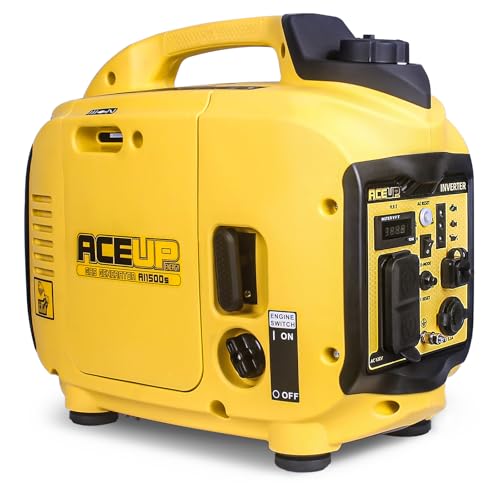
The smallest generator in this guide by wattage and weight, the Aceup 1500W delivers 1,500 peak/1,200 running watts from a compact 53.2cc engine at just over 30 lbs – light enough to carry one-handed. At 55 dB, it’s also among the quietest units here.
What we like for cold-climate use: At 30.3 lbs, this is realistically portable for anyone, including someone who might struggle with the 45-117 lb units elsewhere in this guide – genuinely useful if physical portability is your top constraint. THD under 1.5% is very clean power for its size, good for charging phones and running a router or small device.
What to know for cold climates: 1,200 running watts is enough for lights, phone charging, and maybe a laptop and small fan together, but won’t run a full-size refrigerator’s startup surge reliably – check your fridge’s specific starting wattage before counting on this as fridge backup. The 0.6-gallon tank means frequent refueling (about every 6 hours at half load), so this suits short outages or supplemental use more than multi-day backup.
Best for: Buyers who need the lightest, most grab-and-go option for charging devices and running small loads, not full home backup.
Battery and Solar – Fume-Free, Indoor-Safe Backup
13. Jackery HomePower 3600 Plus – Best No-Fumes, Indoor-Safe Backup
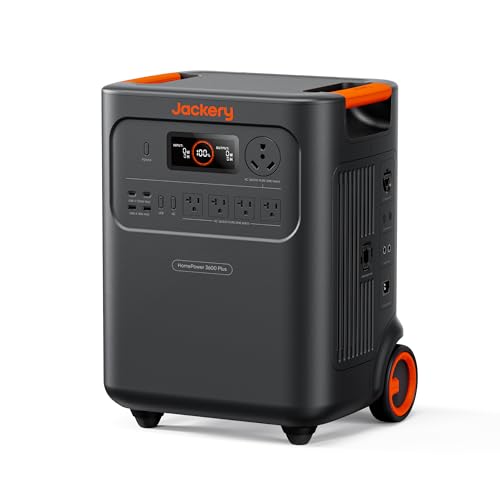
Every other generator in this guide has a carbon monoxide safety section for a reason – this is the one exception. The HomePower 3600 Plus is a battery power station, not a combustion generator, so it produces zero exhaust and is genuinely safe to run inside the house during a storm. It stores 3,584Wh in LiFePO4 (LFP) cells, delivers 3,600W continuous AC output (7,200W if you run two units in parallel), and supports both 120V and 240V output in parallel mode for larger appliances like a well pump or dryer.

The cold-weather angle matters specifically here: this unit uses LFP battery chemistry, which is meaningfully more cold-tolerant than the NMC lithium chemistry used in some competing power stations, and Jackery rates it for operation down to -4°F. That’s a real distinction in a winter storm, where a battery backup that can’t perform in the cold defeats the purpose.
What we like for cold-climate use: At roughly 30 dB, it’s dramatically quieter than any gas unit in this guide – quiet enough to run overnight in a bedroom without disturbing sleep, which no combustion generator can match. The luggage-style design with wheels and a telescopic handle makes it easy to roll between rooms or out to a car, and it recharges in as little as 2.5 hours from a wall outlet if utility power returns intermittently during a storm.
What to know for cold climates: Unlike every gas or propane unit here, this has a fixed, finite capacity – once 3,584Wh is used, you need a wall outlet, solar panels, or a car to recharge it, not just a fuel can. For genuinely multi-day whole-home backup without any recharge opportunity, a fuel-based generator in the tiers above will outlast it; this shines for shorter outages, sensitive-load backup (medical devices, a home office), or as a quiet supplement to a gas generator rather than a full replacement for one.
Best for: Households that want indoor-safe, silent backup for essential circuits and can recharge periodically, or anyone specifically avoiding combustion exhaust and generator noise.
Cold-Weather Generator Operation – What Competitors Skip
Cold Starting a Gas Generator
Small engines are harder to pull-start in cold weather because engine oil thickens and the fuel-air mixture is denser. Use the choke fully on a cold start regardless of outdoor temperature, and consider switching to a lighter-weight synthetic oil (check your manual for cold-weather oil recommendations) if you’re in a climate that regularly sees single digits or below. Electric and remote start models remove most of this friction – worth weighing if you live somewhere winter starts are a regular event rather than a rare one.
Stored Fuel Degradation
Gasoline begins breaking down within about 30 days without a stabilizer, and cold temperatures don’t slow this meaningfully. If your generator sits idle most of the year waiting for a storm, add fuel stabilizer to stored gas and rotate it seasonally, or lean toward one of the dual-fuel or tri-fuel units above where propane or natural gas removes the degradation problem entirely.
Battery Behavior in Cold (for the Jackery)
LFP battery chemistry, like the Jackery uses, tolerates cold meaningfully better than older lithium chemistries, but capacity and charge rate still drop somewhat at very low temperatures. Where possible, store the unit in an unheated-but-enclosed space (garage, mudroom) rather than fully outdoors in exposed cold, and bring it fully charged into a storm rather than topping it off during one.
5 Common Mistakes When Buying a Winter Backup Generator
Mistake 1: Undersizing based on peak watts instead of running watts. The number on the box is almost always the surge rating. Size your purchase around the running/rated wattage of everything you plan to power simultaneously, with headroom for the single largest starting surge.
Mistake 2: Running it in the garage “with the door open.” This is one of the most common causes of CO poisoning deaths during winter storms. Carbon monoxide pools and drifts back indoors even with a door or window cracked. Run it outside, at distance, exhaust pointed away from the house.
Mistake 3: No interlock or transfer switch plan. Buying an 11,000-watt whole-home generator and then running extension cords to individual appliances wastes most of its capacity. Budget for an interlock kit or transfer switch as part of the purchase, not an afterthought.
Mistake 4: Letting stored gasoline go stale. A generator that won’t start because the fuel gummed up the carburetor is useless exactly when you need it. Stabilize and rotate stored gas, or choose dual-fuel/tri-fuel to sidestep the problem.
Mistake 5: Buying based on wattage alone and ignoring fuel availability. A gasoline-only generator is only as reliable as your ability to get gasoline – which becomes uncertain exactly when a winter storm knocks out power to local gas stations. If you’re prone to multi-day outages, dual-fuel or tri-fuel capability is worth more than a slightly higher peak wattage number.
Frequently Asked Questions
How many watts do I need to run a house during a power outage?
For essentials only (fridge, some lights, device charging), plan on 1,500-2,500 running watts. To add a furnace blower or well pump, budget 3,000-5,000W. For most of a house running through a transfer switch, look at 8,000-11,000W. Always size around running watts, not the higher peak/starting number on the box.
Is it safe to run a generator in a garage during a snowstorm?
No. Never run a gas or propane generator in a garage, even with the door open – carbon monoxide builds up and drifts back into the house. Run it outdoors, at least 20 feet from the home, with exhaust directed away from doors and windows. The Jackery HomePower 3600 Plus in this guide is the exception, since it’s a battery with no combustion exhaust.
Gas, propane, or natural gas – which is better for winter backup?
Gasoline is cheapest but degrades in storage and depends on gas stations that may also lose power. Propane stores indefinitely and is ready instantly from a spare tank. Natural gas, if your home already has a line, gives functionally unlimited runtime with no fuel storage at all. Dual-fuel or tri-fuel units give you the flexibility to use whichever is available.
How long will a generator run on a full tank?
It varies widely by size and load – anywhere from about 5.5 hours (BILT HARD 2500W at 50% load) to roughly 18 hours (DuroMax XP11000iH on gasoline at low load). ECO mode, where available, extends runtime by adjusting engine speed to actual demand rather than running at full speed constantly.
Do I need a transfer switch, or can I just use extension cords?
Extension cords work fine for powering a few specific items – a fridge, a lamp, device chargers. For a furnace, well pump, or anything hardwired into your home’s circuits, you need an interlock kit or transfer switch to connect the generator through your existing panel safely. Never backfeed through a wall outlet without one.
What’s the advantage of a battery generator over gas in winter?
No exhaust means it’s safe to run indoors, it’s dramatically quieter, and there’s no fuel to stabilize or degrade in storage. The tradeoff is finite capacity – once the battery is drained, you need a wall outlet, solar panels, or a vehicle to recharge it, so it suits shorter outages or supplemental backup better than open-ended multi-day whole-home power.
Final Verdict
| Best For | Our Pick | Why |
|---|---|---|
| Whole-Home with ATS | Gidrox 11000W Tri-Fuel | ATS ready, natural gas capable for unlimited runtime |
| Whole-Home, Proven Brand | DuroMax XP11000iH | Switch-on-demand dual fuel, established reliability |
| Whole-Home Value | maXpeedingrods 10500W Tri-Fuel | Tri-fuel and 120/240V at a lower price point |
| Mid-Size Reliability | Yamaha EF7200D | Trusted engine, strong multi-circuit runtime |
| Mid-Size Dual-Fuel | GENMAX GM6000iED | Real inverter power with fuel flexibility |
| RV + Home Combo | Efurden 4400W Open Frame | 30A RV port, strong running watts |
| Quiet Compact Mid-Size | EFURDEN 4300W | 60 dB, lightest in its wattage class |
| Best Overall Small Unit | Honda EU2200i | Benchmark reliability, CO-MINDER, quietest gas option |
| Best Built-In Safety | BILT HARD 2500W | Integrated CO sensor shutdown |
| Best Small Dual-Fuel | maXpeedingrods 2500W | Propane capability at a small-unit price |
| Best Quiet Value | Oxseryn 2800W | Near-Honda quiet at a lower price |
| Lightest / Most Portable | Aceup Energy 1500W | 30 lbs, grab-and-go |
| Indoor-Safe, No Fumes | Jackery HomePower 3600 Plus | Silent, cold-tolerant LFP battery, zero exhaust |
The single most important decision here isn’t wattage – it’s fuel. A generator that’s undersized but has fuel on hand beats an 11,000-watt unit sitting dead because the gas station down the road lost power too. Match your pick to how long your outages actually run, plan your connection method (interlock or transfer switch) before the storm, and never skip the carbon monoxide precautions, whatever size you land on.
Internal linking notes for publishing (remove before/after publish per your workflow):
- Add 1-2 contextual links from this article to: Best Garage Heater, Top 6 Jump Starters for Arctic & Winter Conditions, DREO Space Heater Review, DR. Infrared Heater Review – natural overlap as winter power-loss/home-protection content.
- Add a forward link from those same existing articles back to this one where a natural “you’ll also want backup power” mention fits (e.g., end of the Garage Heater article: “if the power itself goes out, see our guide to the best generators for winter power outages”).
If your winter prep also means handling bulk deliveries yourself, propane cylinders, cordwood, or feed dropped off with no dock and no crew, see our guide to pallet jacks for rural and off-grid supply deliveries.