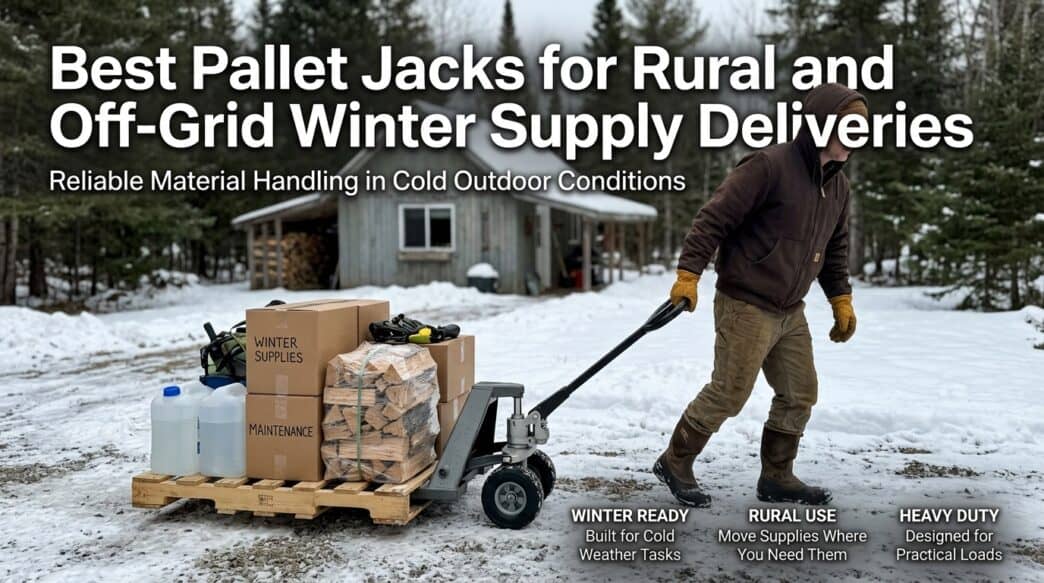
A pallet of firewood, propane cylinders, livestock feed, or bulk pantry stock shows up on a flatbed at a rural property, and there’s no loading dock, no forklift, and no crew coming to unload it – just you, the driver, and whatever the ground looks like that day. That’s a real, recurring scenario for anyone living remote or off-grid, and it’s exactly the situation a pallet jack solves, provided you buy one built for the ground you’re actually working on, not the smooth warehouse floor most pallet jacks are designed around.
Why This Matters More Than Most People Think
Rural and off-grid households take bulk deliveries other homeowners simply don’t: cordwood by the pallet ahead of winter, 20 or 100-lb propane cylinders for heat and cooking, bagged salt or sand for the driveway, canned goods and bulk pantry stock before roads get bad, generator fuel drums (see our guide to winter backup generators if you have not sorted that out yet), livestock feed. Delivery trucks drop these curbside or in the driveway and leave – there’s no dock worker on the other end. Without a pallet jack, that means hand-carrying hundreds of pounds of material box by box, bag by bag, often across gravel, packed snow, or a muddy driveway, which is slow, hard on your back, and genuinely riskier on icy ground than most people account for.
The One Spec That Matters Most Outdoors: Wheel Type
This is the detail almost every generic pallet jack buying guide skips, because most of them are written for warehouse floors. A standard pallet jack, manual or electric, comes with small, hard nylon or polyurethane wheels built for smooth, flat concrete. Those wheels sink into gravel, get stuck in ruts, and struggle on packed snow or an unpaved driveway – genuinely frustrating and sometimes impossible to push once loaded. An all-terrain pallet jack solves this with large pneumatic (air-filled) tires, typically 15-22 inches, that roll over gravel, dirt, grass, and light snow the way a wheelbarrow with a real tire does, instead of the tiny hard wheels standard jacks use. If your delivery point is gravel, dirt, an unpaved driveway, or anywhere snow accumulates, this isn’t an upgrade, it’s the difference between a jack that works and one that doesn’t.
Manual vs. Electric for Occasional Rural Use
Warehouse buying guides usually push toward electric for anything beyond light use, but that calculus is different for a rural household. If you’re taking a handful of palletized deliveries a year, propane in fall, firewood before winter, maybe a bulk feed order, a manual jack is almost always the better choice: no battery to keep charged and maintained through an off-grid winter, no cold-weather battery performance to worry about, and meaningfully less to go wrong sitting unused in a barn or shed for months between deliveries. Electric only starts to make sense if you’re running something closer to a small farm store or regularly handling loads heavy enough that manual pumping becomes a genuine physical strain multiple times a month. For most rural and off-grid households, a manual all-terrain jack is the practical choice.
Quick Comparison
| Product | Wheel Type | Capacity | Best For |
|---|---|---|---|
| biosp All Terrain Pallet Jack | 16″ pneumatic | 2,500 lb | Gravel, dirt, and light snow |
| Hymula All Terrain Pallet Jack | 16″ pneumatic | 2,500 lb | Same category, alternate listing |
| Global Industrial Industrial Duty | Standard poly | 5,500 lb | Paved driveway or garage floor |
| NORTHSKY Narrow | Standard PU | 5,500 lb | Narrow barn doors or aisles |
| Tory Carrier Standard | Standard nylon | 5,500 lb | Budget concrete-pad use |
All-Terrain Pallet Jacks (Gravel, Dirt, Snow, Uneven Ground)
1. biosp All Terrain Manual Pallet Jack with Guardrail – Best for Gravel, Dirt, and Snow
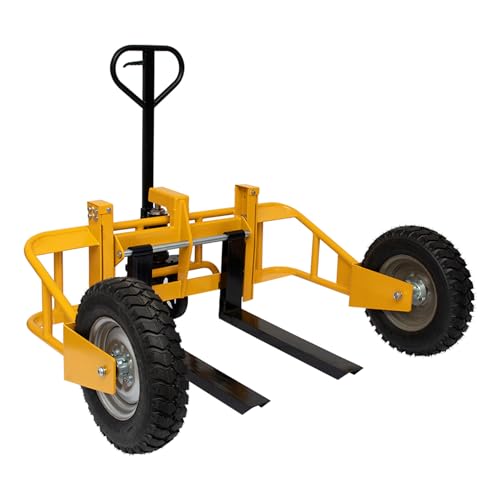
This is the pick that actually solves the rural delivery problem: large 16-inch pneumatic front tires instead of the small hard wheels standard jacks use, rated to 2,500 lb, with adjustable-width forks to handle different pallet sizes. The three-function hand control (raise, lower, neutral) works the same as any standard jack, the difference is entirely in what the wheels can roll over without getting stuck.
What we like for cold-climate use: Pneumatic tires flex and absorb impact from ruts, frozen ground, and packed snow in a way that solid wheels simply can’t, which means less jarring on the frame and less risk of getting physically stuck mid-delivery in your own driveway. The guardrail adds a real safety margin when you’re maneuvering a loaded pallet on uneven or icy ground where a slip matters more than it would on flat warehouse concrete.
What to know for cold climates: Pneumatic tires can be punctured by sharp debris and lose pressure in extreme cold the way any air-filled tire does, so check tire pressure before a big delivery rather than assuming it’s still where you left it in the fall. At 2,500 lb capacity, it’s lower than the standard warehouse jacks in this guide, more than enough for a pallet of firewood or canned goods, but check your actual load weight if you’re taking heavier deliveries like bagged concrete or dense feed.
Best for: Anyone whose delivery point is gravel, an unpaved driveway, a dirt yard, or anywhere snow and mud are a regular reality, not an occasional inconvenience.
2. Hymula Manual Pallet Jack with Guardrail All Terrain – Same Category, Alternate Listing
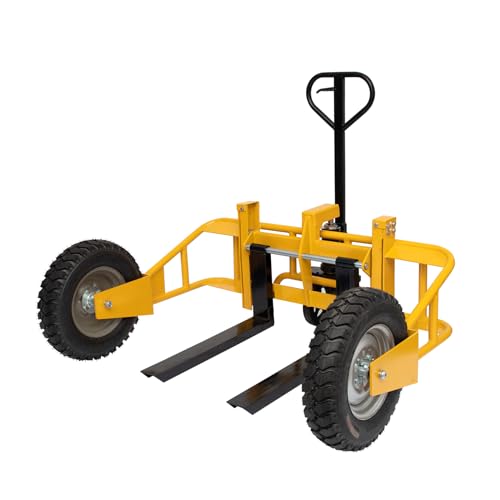
Worth being upfront about: this shares nearly identical dimensions, capacity, and pneumatic wheel spec with the biosp unit above, and appears to come from the same manufacturing source sold under a different storefront name, a common pattern with this kind of equipment on Amazon. It’s listed here as a genuine alternative in case stock, price, or delivery timing favors one listing over the other, not as a functionally distinct product.
What we like for cold-climate use: Same core advantage as the biosp unit, 16-inch pneumatic front tires built to handle gravel and uneven ground that would stop a standard warehouse jack cold.
What to know for cold climates: Since this and the biosp listing appear to be the same underlying equipment, check current price and shipping estimates on both before ordering rather than assuming either is the better deal by default.
Best for: Buyers who want the same all-terrain capability as the pick above but find better pricing or faster shipping on this listing.
Standard Pallet Jacks (Paved Driveway, Garage Floor, or Concrete Pad)
If your delivery point is a paved driveway, a concrete garage floor, or a barn with a poured slab, a standard pallet jack works fine, and costs less than an all-terrain unit. These are the same style of jack used in warehouses, with small polyurethane or nylon wheels that need a flat, hard surface to roll well.
3. Global Industrial Industrial Duty Pallet Jack – Best Overall for Paved Surfaces
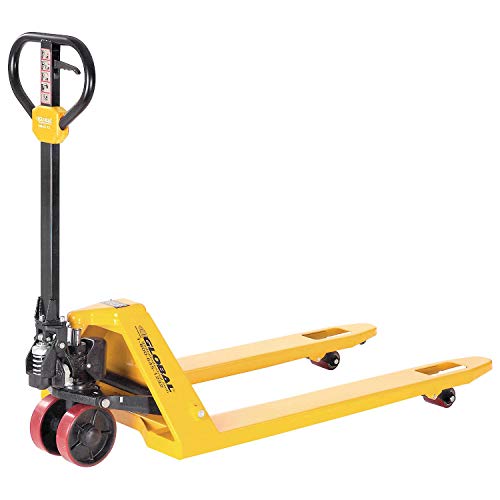
Global Industrial is one of the most established names in this equipment category, and this Industrial Duty tier comes with tapered entry rollers and a reinforced frame built for regular use, not occasional light duty. At 5,500 lb capacity, it handles a heavier pallet than either all-terrain option above, useful if you’re taking larger bulk deliveries.
What we like for cold-climate use: The higher capacity gives real headroom for dense winter deliveries like bagged salt, sand, or a full pallet of canned goods stocked up before roads get bad. Established brand support matters if a part needs replacing and you’re far from a dealer.
What to know for cold climates: The standard wheels here need a hard, flat surface, gravel or an unpaved driveway will fight you. Store it somewhere the hydraulic pump stays reasonably warm between uses; see the cold-weather section below for why that matters more than most people expect.
Best for: Rural households with a paved driveway or concrete pad at the delivery point, who want a proven brand and higher capacity than the all-terrain options offer.
4. NORTHSKY Manual Pallet Jack (Narrow) – Best for Narrow Barn Doors or Aisles
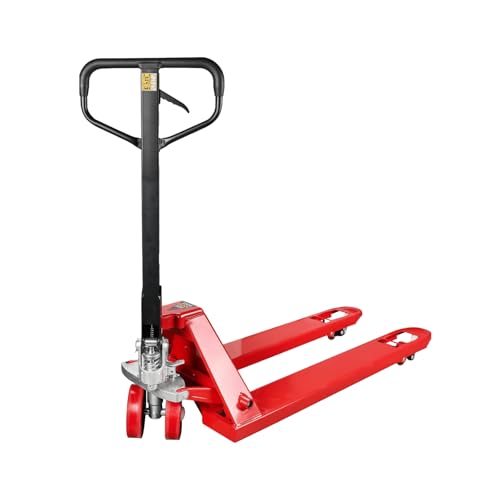
At 21 inches wide instead of the standard 27, this fits through narrower barn doors, shed entries, or tight aisles between stored feed and equipment where a standard-width jack won’t clear. It carries the same 5,500 lb rating as the wider standard jacks, with a one-piece hydraulic pump and overload relief valve.
What we like for cold-climate use: The narrow width solves a genuinely common rural problem, older barn doors and outbuildings often weren’t built with a 27-inch pallet jack in mind, and this fits where a standard one physically can’t.
What to know for cold climates: Like the other standard jacks here, it needs a reasonably flat, hard surface, this solves a width problem, not a terrain problem.
Best for: Anyone moving pallets through a narrow barn door, shed entrance, or tight storage aisle on a hard floor.
5. Tory Carrier Pallet Jack – Best Budget Standard Jack
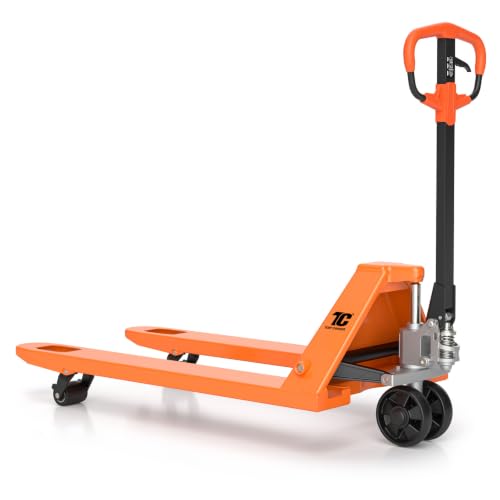
A straightforward 5,500 lb standard jack at a lower price point than the Global Industrial pick, with a rubber-wrapped handle for comfort. For a household taking two or three deliveries a year onto a paved driveway or garage floor, this covers the job without paying for capability you won’t use.
What we like for cold-climate use: Reasonable cost for genuinely occasional use, no reason to spend premium-brand money on a tool that sits in the shed most of the year.
What to know for cold climates: Same hard-surface limitation as any standard jack, and check the hydraulic fluid guidance below before leaving it in an unheated shed through a hard winter.
Best for: Budget-conscious buyers with a paved or concrete delivery surface and light, occasional use.
Cold-Weather Care – What Warehouse Guides Skip
Hydraulic Fluid Gets Sluggish in the Cold
This is the detail that catches people off guard the first time it happens: standard hydraulic fluid thickens significantly as temperatures drop, and pallet jacks left in an unheated shed or barn through a hard freeze can become genuinely difficult to pump, or stop lifting and lowering properly altogether, well before the fluid actually freezes solid. This isn’t a defect, it’s basic fluid physics, but it means a jack that worked fine in October can feel almost unusable in January if it’s been sitting in single-digit temperatures. If you can, store the jack somewhere that stays above freezing, an attached garage or insulated shed, rather than a fully exposed outbuilding. If that’s not possible, give it a few minutes of gentle pumping before loading it to help work some warmth into the fluid, and consider a low-temperature hydraulic fluid swap if your winters regularly drop well below freezing.
Wheels on Ice
Whichever wheel type you choose, ice changes the equation. Pneumatic tires grip better than hard wheels on packed snow, but neither is a substitute for clearing or sanding the path between the truck and your storage area before a delivery arrives, a loaded pallet jack on glare ice is a genuine fall risk regardless of wheel type.
Storage Between Uses
A pallet jack that only comes out a few times a year benefits from basic off-season care: wipe down exposed metal to prevent rust from condensation in an unheated space, and if it’ll sit for months, a light coat of oil on the fork pivot points and exposed hydraulic ram helps prevent seizing before your next delivery shows up.
Common Mistakes
Buying a standard jack for a gravel or dirt delivery point. The small wheels will fight you the entire time. If your ground isn’t paved or poured concrete, budget for an all-terrain unit from the start.
Assuming capacity ratings account for rough ground. A jack’s weight rating assumes a stable, even surface. On uneven or icy ground, treat the rating as a ceiling with real margin, not a target.
Leaving it in an unheated outbuilding all winter without expecting stiffness. See the hydraulic fluid section above, this is the single most common surprise first-time rural buyers report.
Not checking your actual pallet width before ordering a narrow-fork jack. Measure your barn door or aisle first; a 21-inch narrow jack is the wrong purchase if your doorway is wider and your pallets are standard width.
Frequently Asked Questions
Can a regular pallet jack work on a gravel driveway?
Not well. Standard pallet jack wheels are small and hard, built for smooth concrete, and they tend to sink into gravel or get caught in ruts once loaded. An all-terrain jack with large pneumatic tires is built specifically for this surface.
Do I need an electric pallet jack for occasional home deliveries?
Usually not. For a handful of deliveries a year, a manual jack avoids battery maintenance and cold-weather battery concerns entirely. Electric only makes sense if you’re handling frequent, heavy loads on a near-weekly basis.
Will cold weather damage a pallet jack left outside?
Extreme cold doesn’t damage the steel frame, but it thickens the hydraulic fluid enough to make pumping difficult or unreliable. Store it somewhere above freezing when you can, and expect stiffness after a hard freeze if you can’t.
What size pallet jack do I actually need for home use?
Most residential and small-property deliveries, firewood, propane, bulk pantry goods, fall well under the 2,500-5,500 lb range covered in this guide. Check your specific delivery weight if you’re regularly taking something denser, like bagged concrete or feed.
Can I tow a pallet jack behind an ATV or small tractor?
Some all-terrain models offer an optional tow bar accessory for exactly this, worth checking if you have a larger property and want to move pallets further than a short push. Confirm tow bar compatibility with the specific model before assuming it’s included.
Final Verdict
| Best For | Our Pick | Why |
|---|---|---|
| Gravel, Dirt, or Snow | biosp All Terrain Pallet Jack | Pneumatic tires built for exactly this ground |
| Paved Driveway, Higher Capacity | Global Industrial Industrial Duty | 5,500 lb rating, established brand support |
| Narrow Barn Door or Aisle | NORTHSKY Narrow | 21″ width fits where standard jacks can’t |
| Budget, Occasional Use | Tory Carrier Standard | Lower cost for a few deliveries a year |
Match the wheel type to your actual ground before anything else, that single spec determines whether the jack you buy actually works at your delivery point or sits unused in the shed. From there, size the capacity to your heaviest realistic load, plan for where it’ll sit through a cold winter, and a pallet jack becomes one of the more genuinely useful pieces of equipment a rural or off-grid property can own.